Plinio Zabala Hall
Cannava jujuy, Finca El Pongo, Jujuy, Argentina — 2021


Architecture
Finca El Pongo, Jujuy, Argentina — 2023
How do you design a complete pharmaceutical plant in less than six months, while 50 hectares of crops advanced toward a harvest impossible to stop?
In 2023, Cannava faced one of the greatest operational challenges of its entire industrial expansion: to process on time and within standards the harvest from more than 50 hectares of medical cannabis under strict pharmaceutical standards.
The magnitude of productive growth had completely surpassed the original capacity of the industrial plant. In just one year, the post-harvest processing operating system had become technically obsolete in the face of the new productive reality of the complex.
The challenge was not only to build new spaces.
It was necessary to completely redesign the operational functioning of a pharmaceutical plant in full expansion.
Medical cannabis is an extremely sensitive plant material.
Humidity, temperature, bacteria, and fungi can rapidly compromise the stability of the product and render it unviable for pharmaceutical use. In large-scale productions, the processing window is brief and unalterable.
The harvest had to be processed within days.
That implied rigorously coordinating:
without generating bottlenecks that would put tons of plant material at risk.
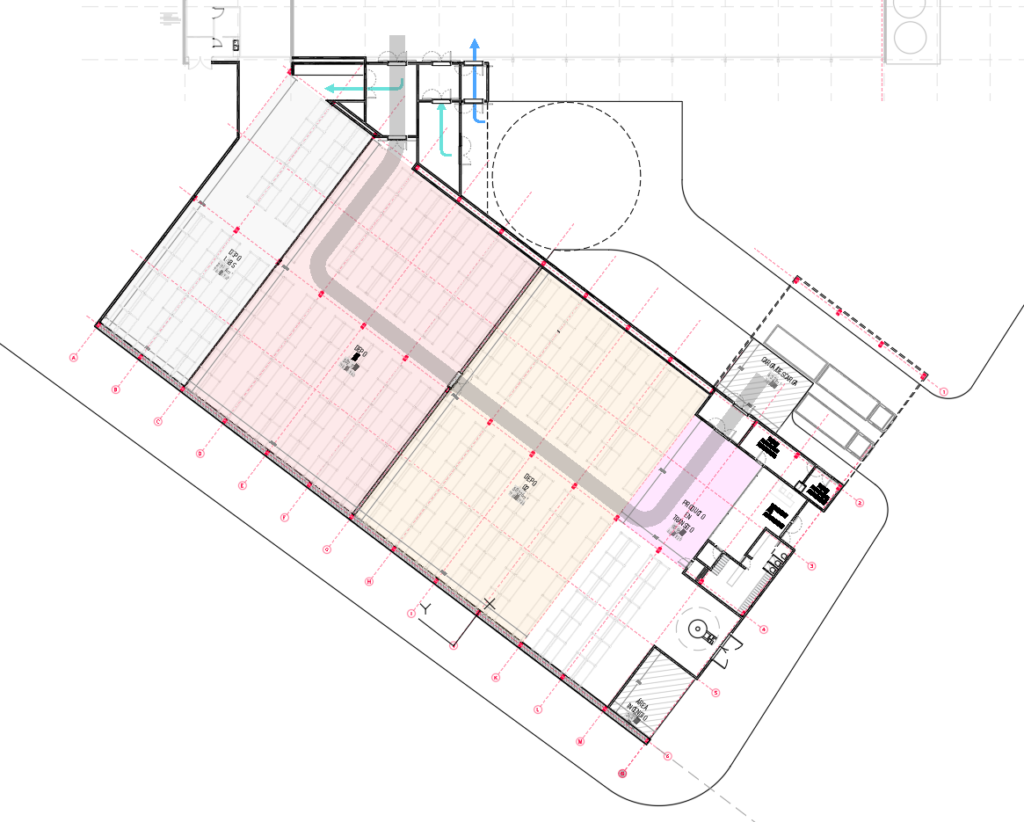
The operation urgently required incorporating a new industrial drying complex immediately after the destemming and trimming areas, completely reorganizing the operational flow of the plant.
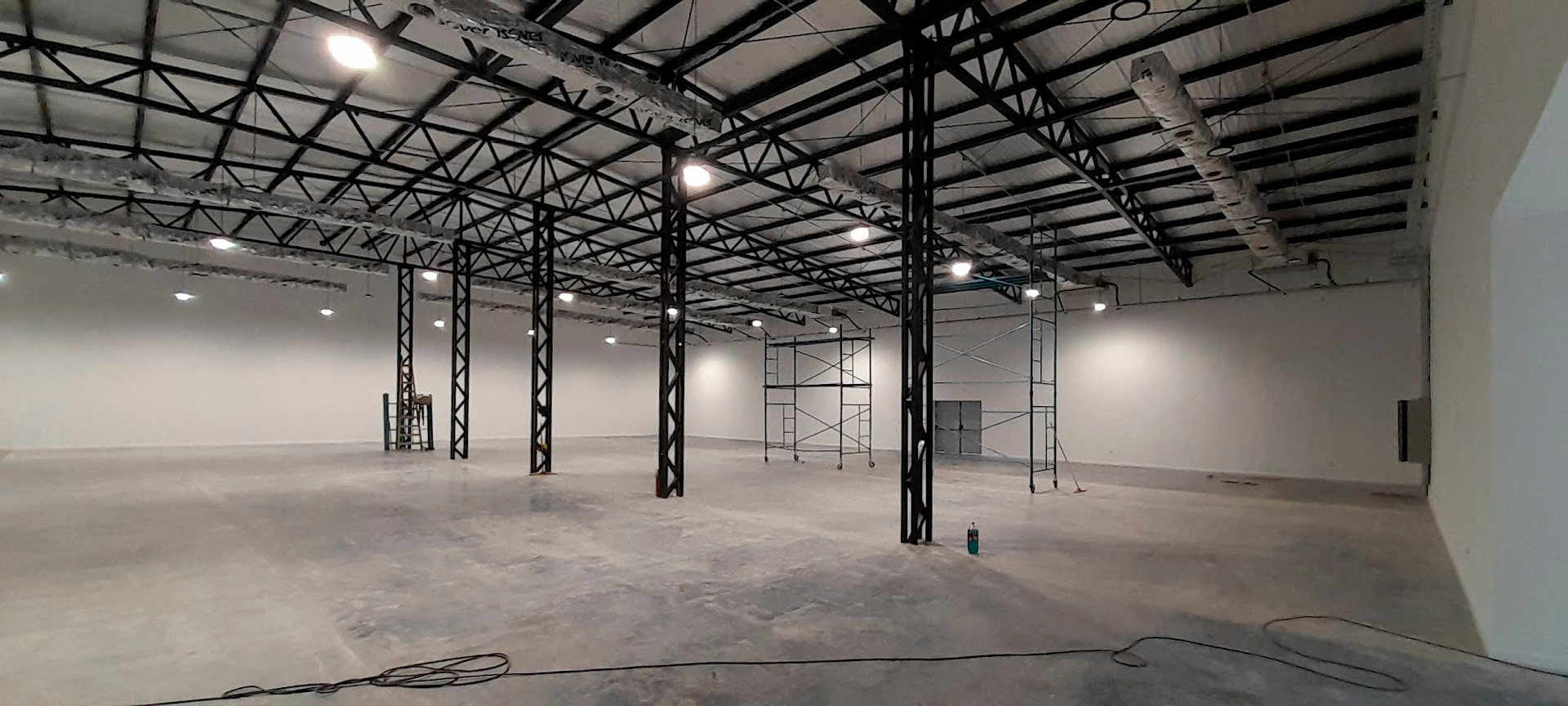
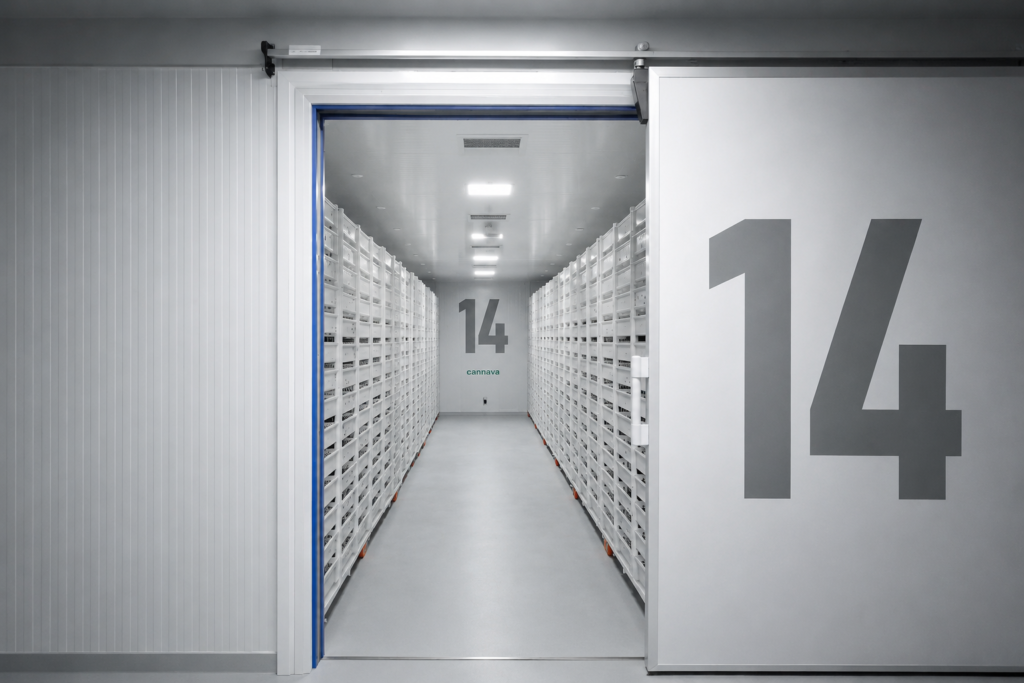
The strategic decision was radical: to transform the existing industrial warehouse of approximately 5,000 m² into a new system of 24 industrial controlled-drying chambers.
But that operation generated a new critical problem.
By occupying the existing warehouse with the new drying system, the entire industrial plant was left without storage capacity for the processed plant material.
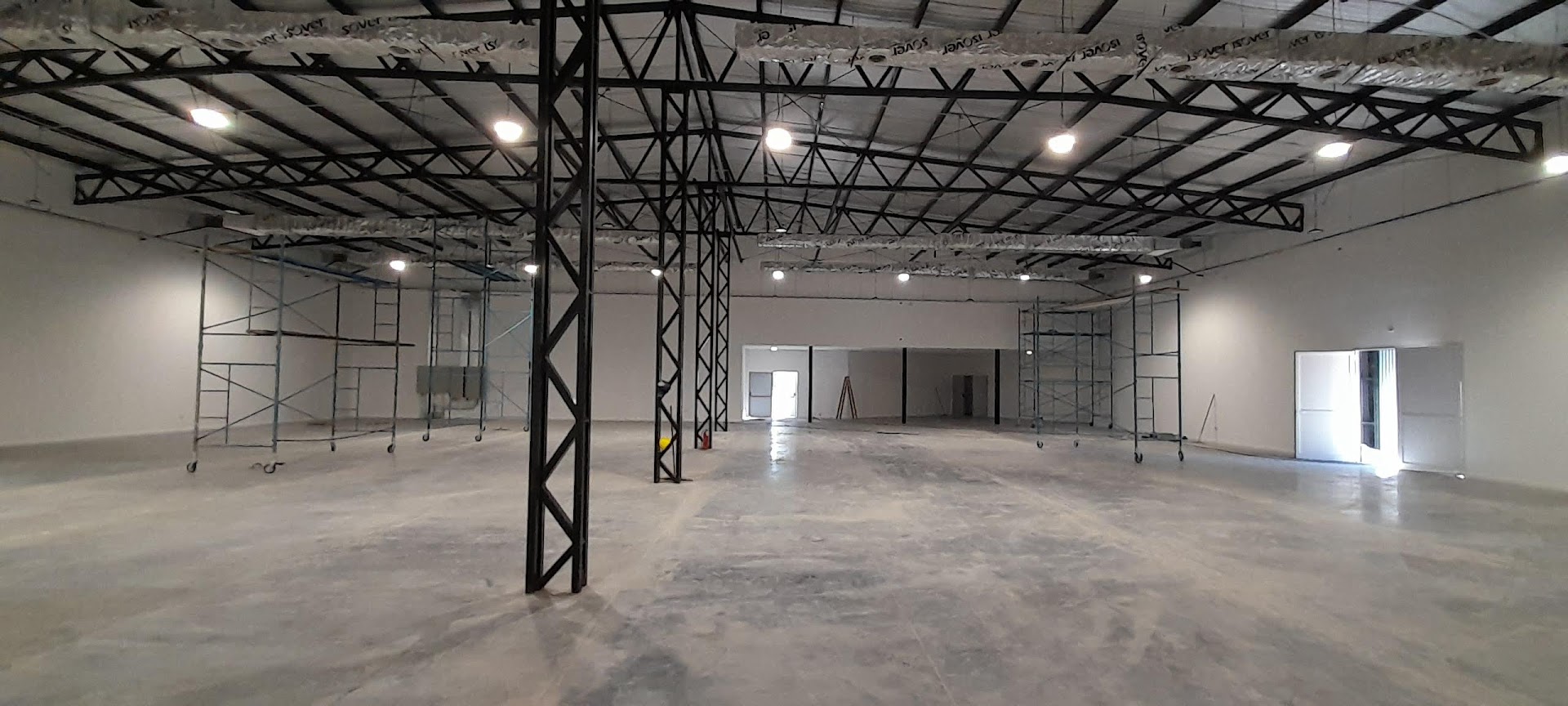
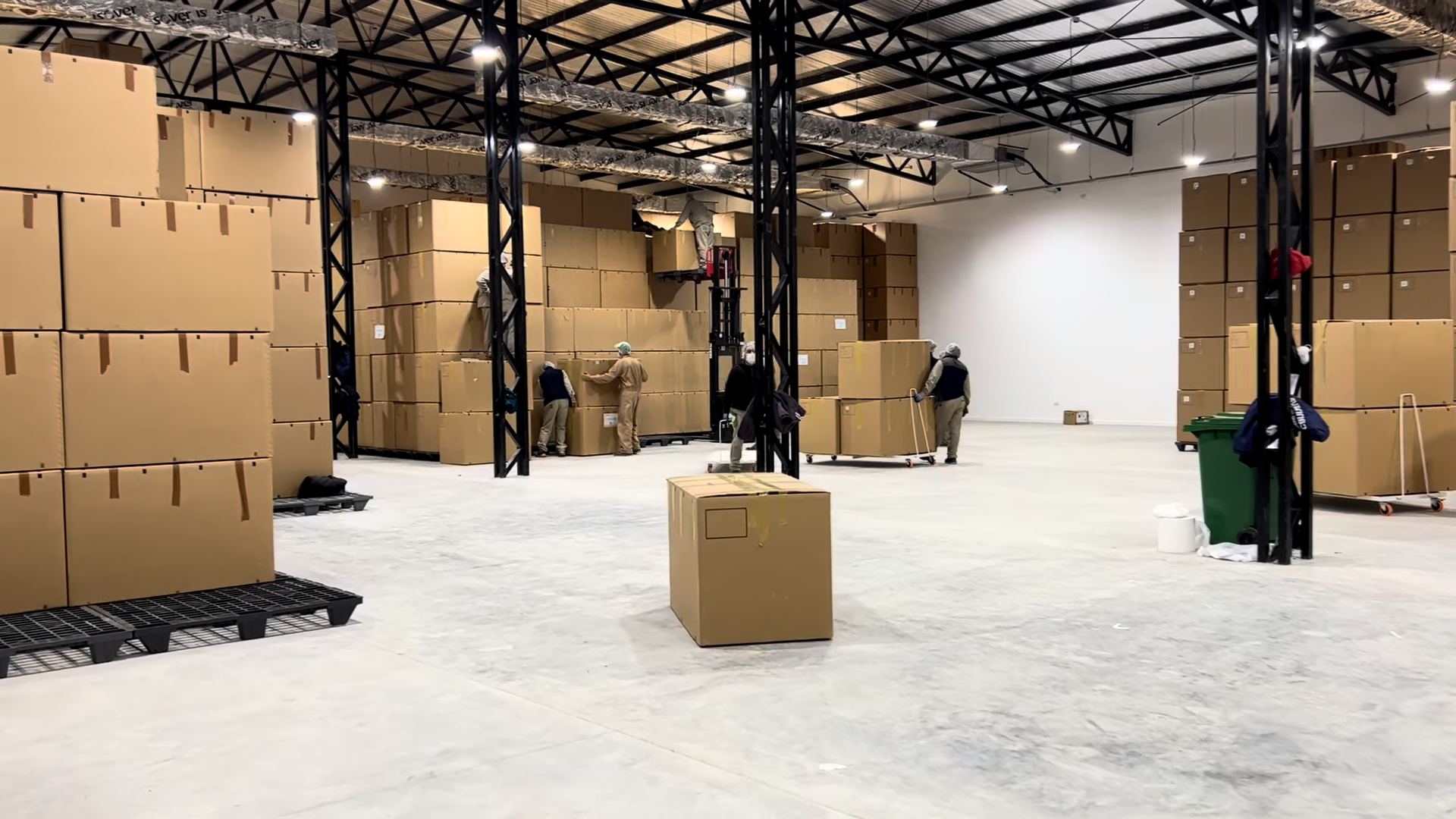
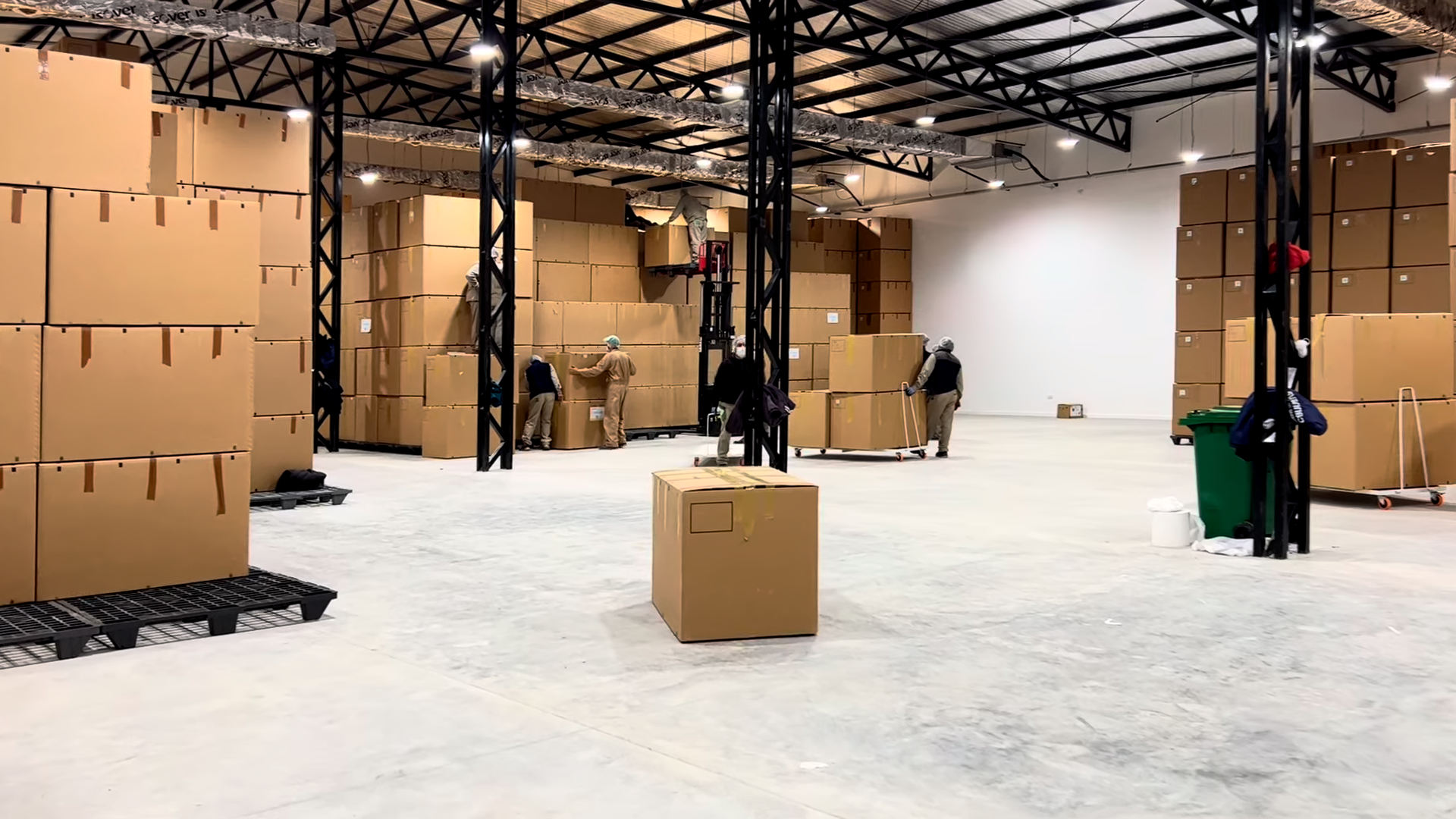
The only possible solution was to simultaneously develop a new large-scale industrial building for the packaging and regulated storage of plant material.
And it had to be done in record time.
The project for the new packaging and storage plant was developed under extraordinary conditions.
Unlike traditional industries with decades of consolidated technical precedents, much of the infrastructure for medical cannabis still does not have established universal standards.
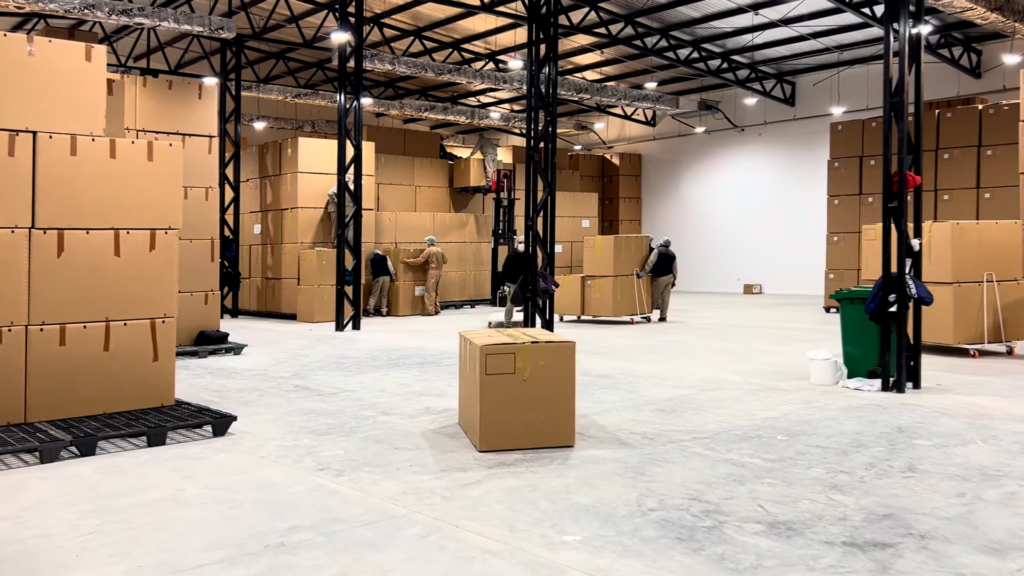
Many of the processes, layouts, operational sequences, and environmental systems had to be conceived specifically for this project.
Architecture thus began to operate simultaneously as:
Every spatial decision directly affected traceability, product stability, and the overall operational capacity of the plant.
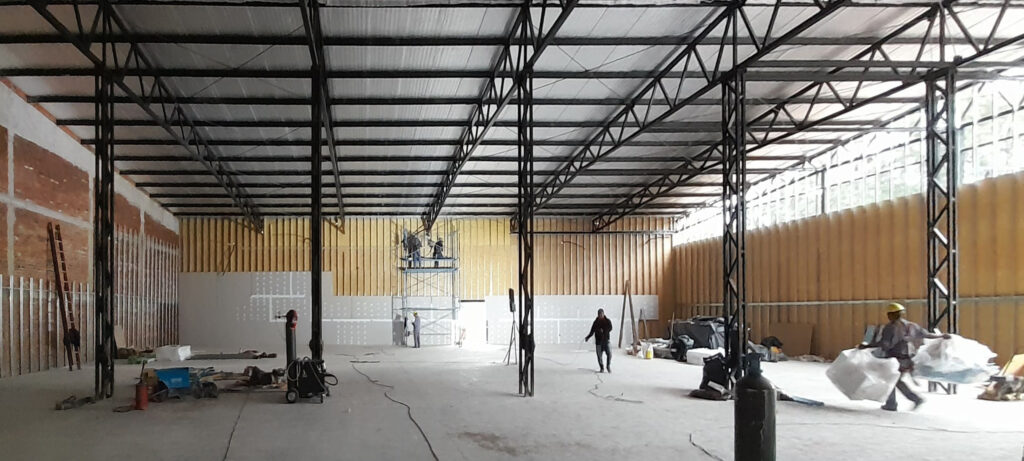
The new infrastructure was conceived as a comprehensive productive system.
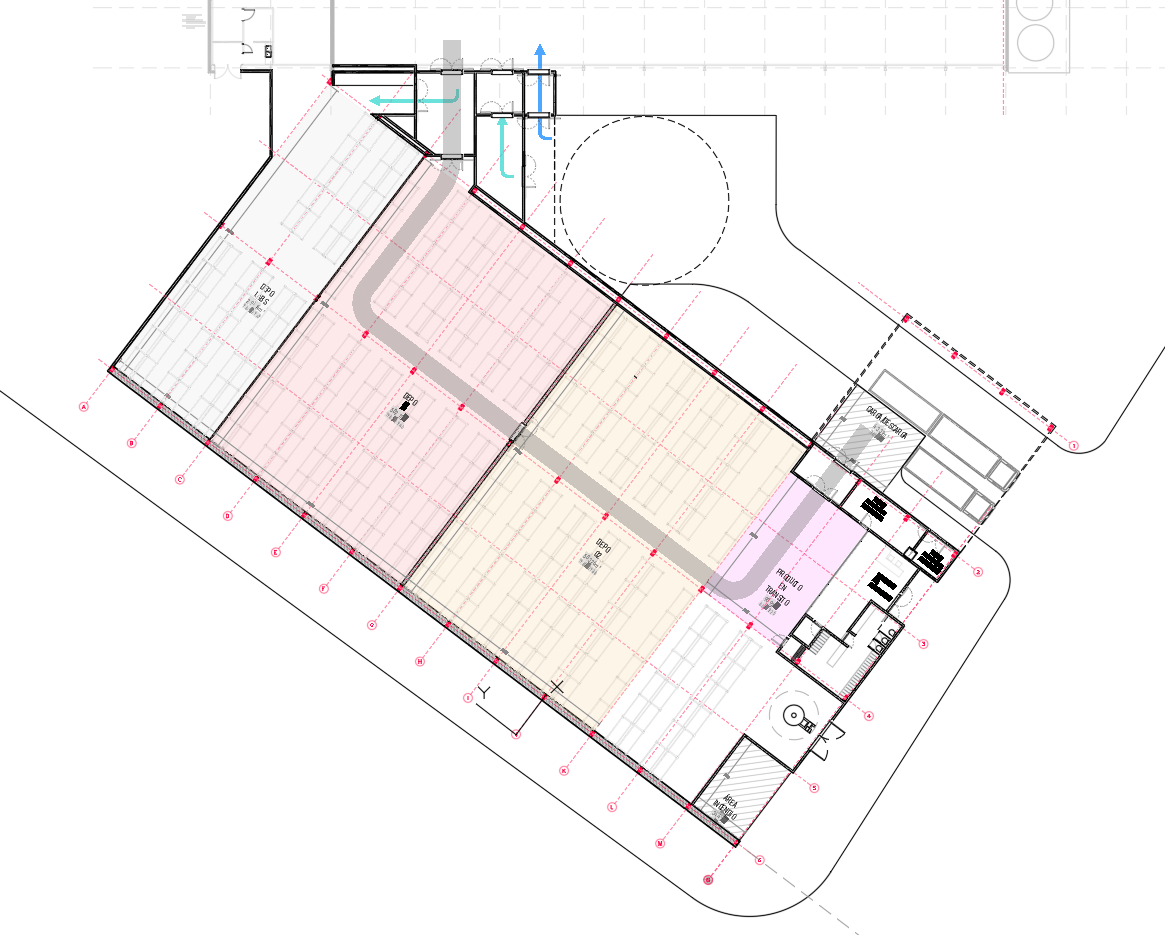
The complete work flows were designed from the initial entry of plant material through to its final packaging and storage.
The challenge was no longer only architectural or constructive.
It was deeply operational.
The plant had to allow:
The new areas of:
were organized through extremely rigorous logistical and sanitary schemes, following international pharmaceutical criteria.
The plant was designed to absorb enormous processing volumes while maintaining permanent environmental control over temperatures and relative humidity levels.
The complete project was developed in just a few months.
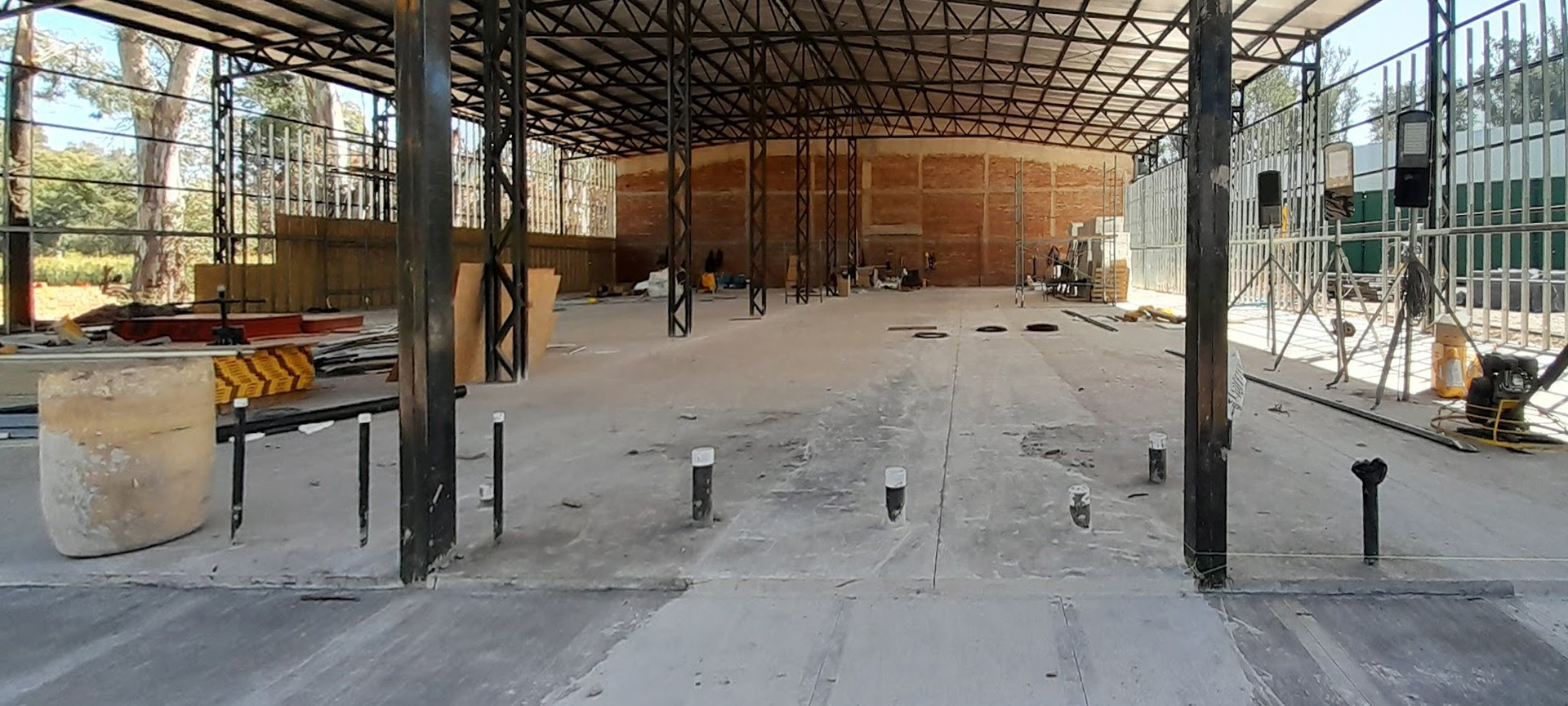
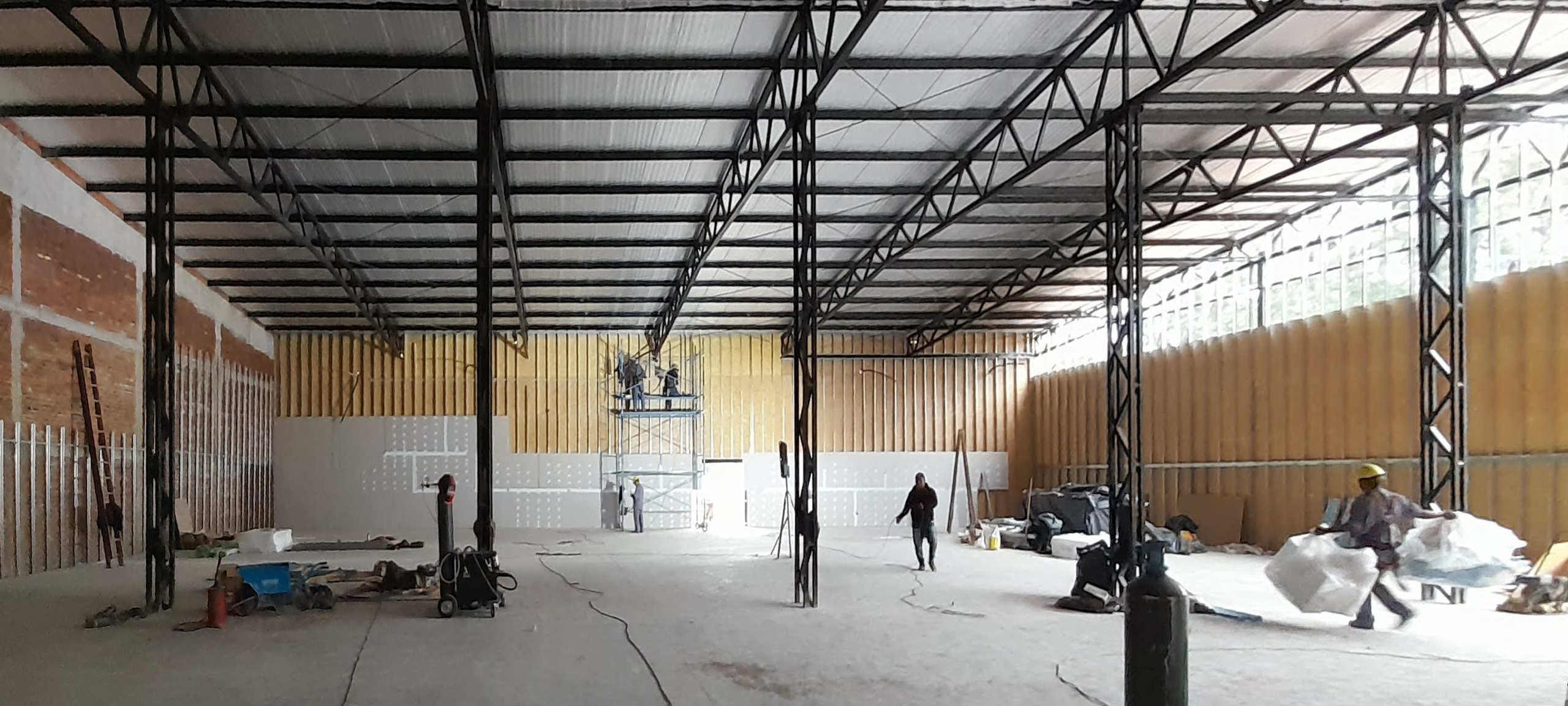
While air systems, layouts, and operational processes were being designed, construction had already begun.
The construction was carried out entirely using metal structures for rapid execution, allowing assembly times to be accelerated and construction risks minimized within an active industrial operation.
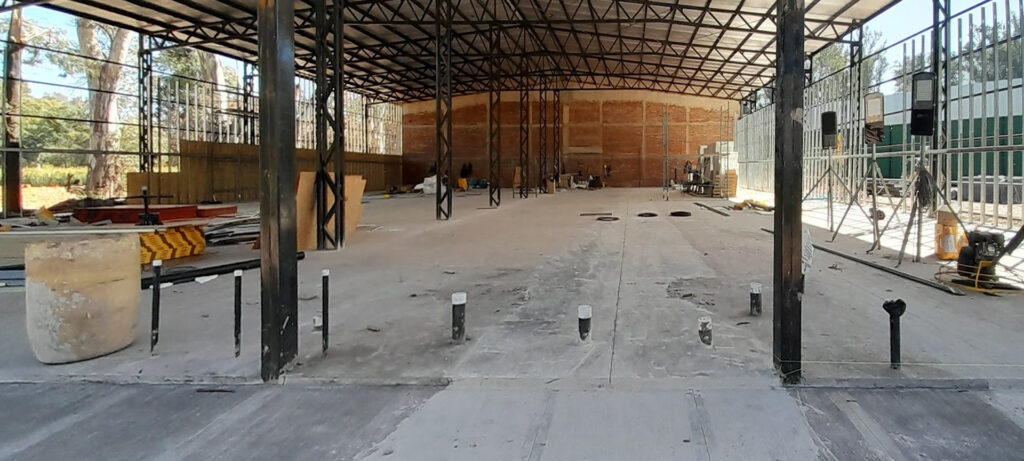
The system also required:
The capacity of the existing fire system had to be expanded by approximately 150% to respond to the new operational and regulatory conditions of the complex.
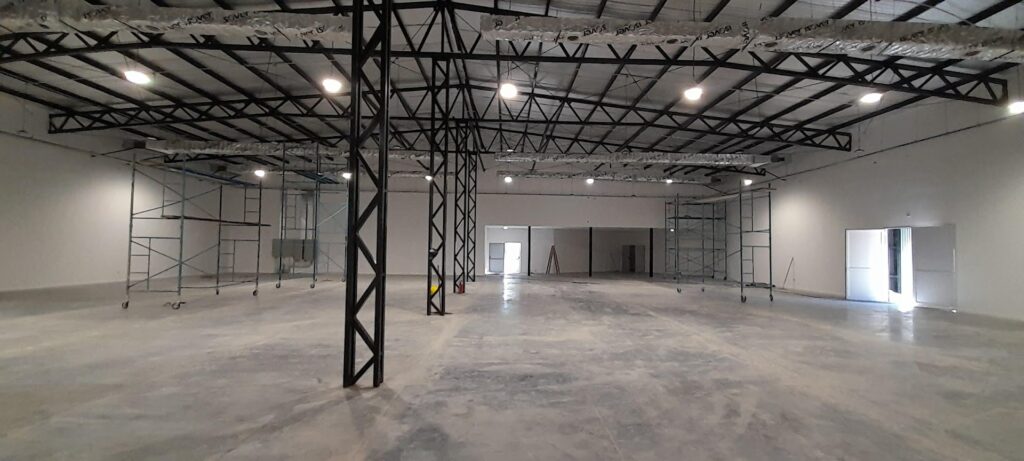
Simultaneously, industrial refrigeration systems were incorporated capable of maintaining tons of plant material under controlled conditions of pharmaceutical conservation and stability.
The scale and complexity of the project demanded the formation of an exceptional interdisciplinary team.
The development involved:
For months, architects, engineers, pharmaceutical specialists, cultivation teams, infrastructure, and post-harvest teams worked in a coordinated manner to build an infrastructure without precedent in Argentina.
Each operational modification implied simultaneously reviewing:
Architecture thus ceased to be only the design of spaces and became a tool for systemic integration between technology, production, and operation.
Beyond its technical scale, the project represents a profound change in the way industrial infrastructure is conceived in Latin America.
The new Cannava packaging and storage plant was not conceived as a static building, but as a flexible operational platform, capable of evolving alongside an industry that is still defining its own global standards.
El proyecto demuestra cómo la arquitectura puede operar simultáneamente sobre:
convirtiéndose en parte activa de la inteligencia del sistema industrial.
En un contexto donde las industrias biotecnológicas demandan cada vez mayores niveles de precisión y adaptabilidad, la arquitectura deja de ser un simple soporte físico para transformarse en infraestructura crítica de operación contemporánea.
 01 / 07