Cannava jujuy, Finca El Pongo, Jujuy, Argentina — 2023
Between late 2022 and mid-2023, Leguía Yias Arquitectos developed with Cannava one of the most complex and demanding industrial and biotechnological infrastructure projects recently executed in Argentina: a comprehensive industrial-scale drying system for medical cannabis, designed and built against a virtually impossible schedule.
TypologyIndustrial
LocationCannava jujuy, Finca El Pongo, Jujuy, Argentina
ClientCannava S.E.
Year2023
Area2600 m²
Infrastructure for a new scale of biotechnological production
The challenge was not only to design a building.
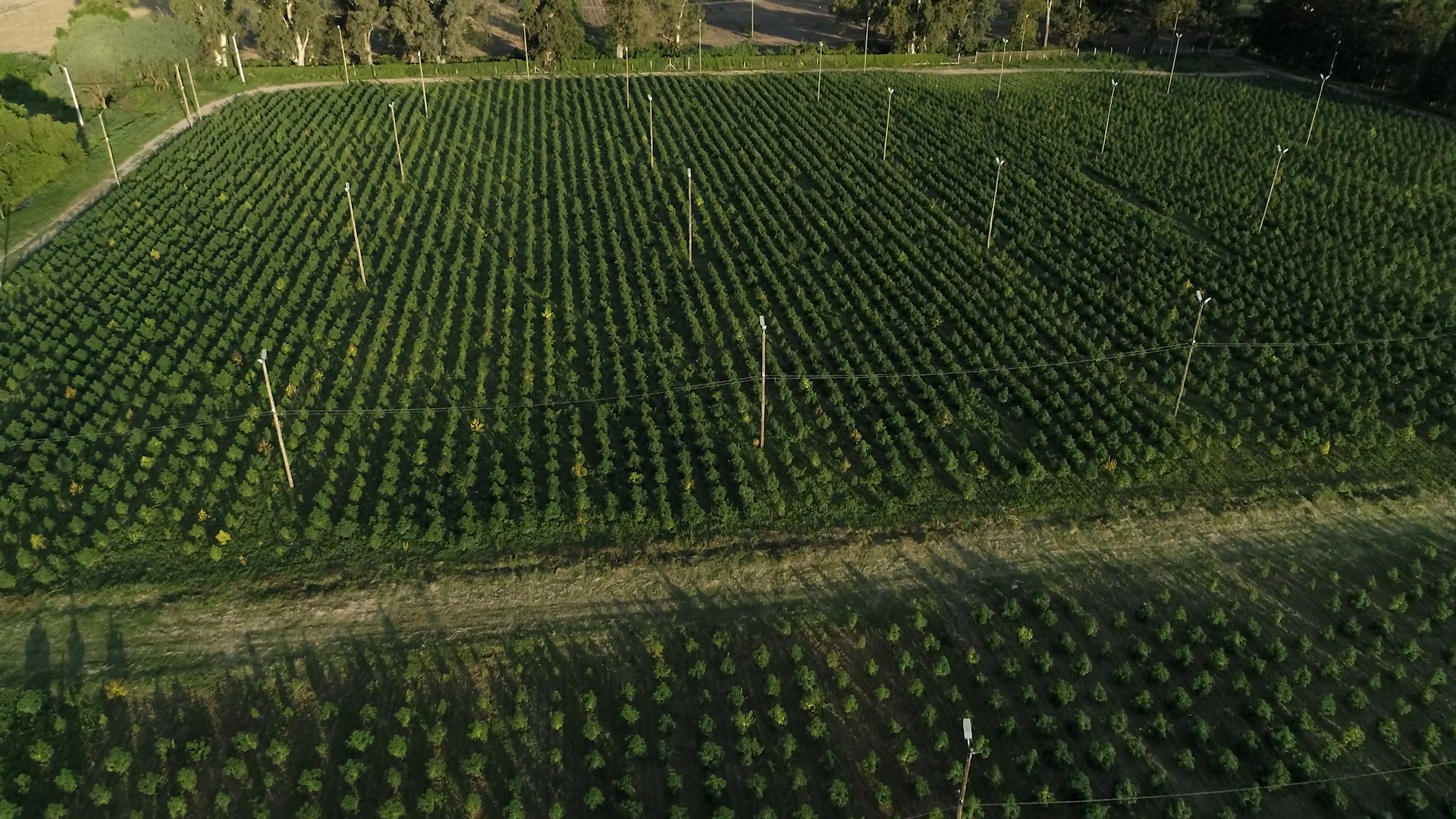
It involved designing, coordinating, and materializing in record time an infrastructure capable of processing the production from more than fifty hectares of medical cannabis within a biotechnological operation in full expansion.
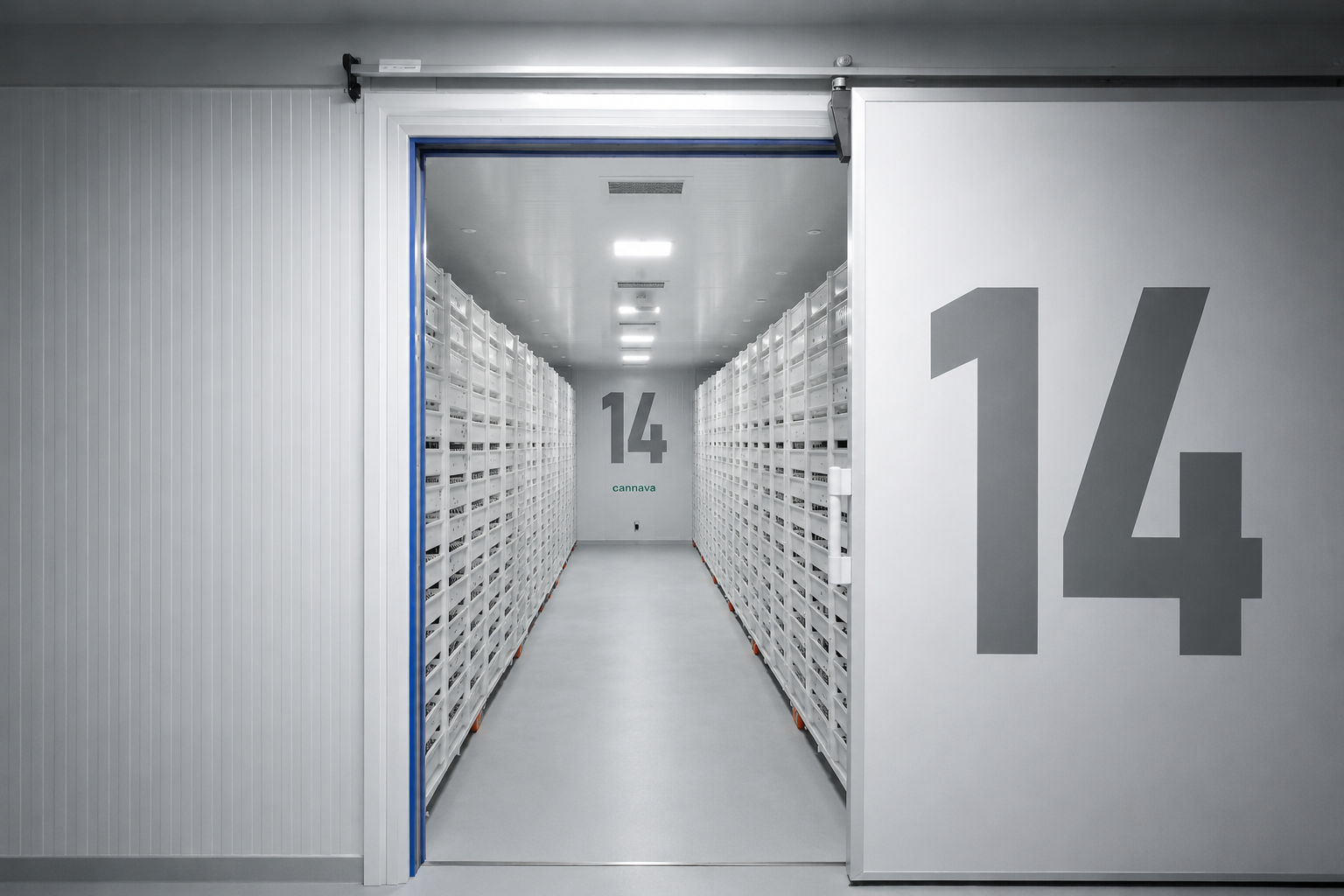
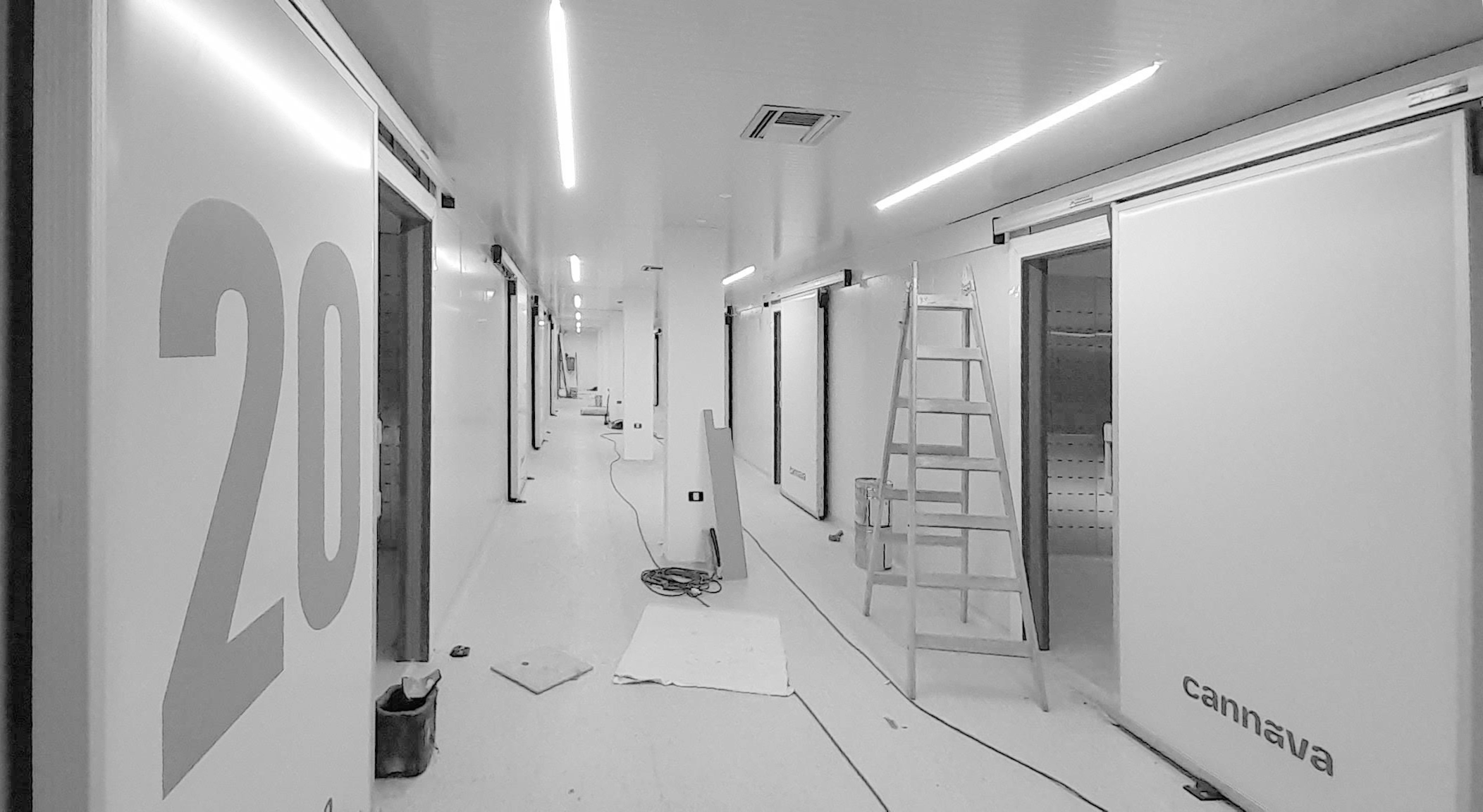
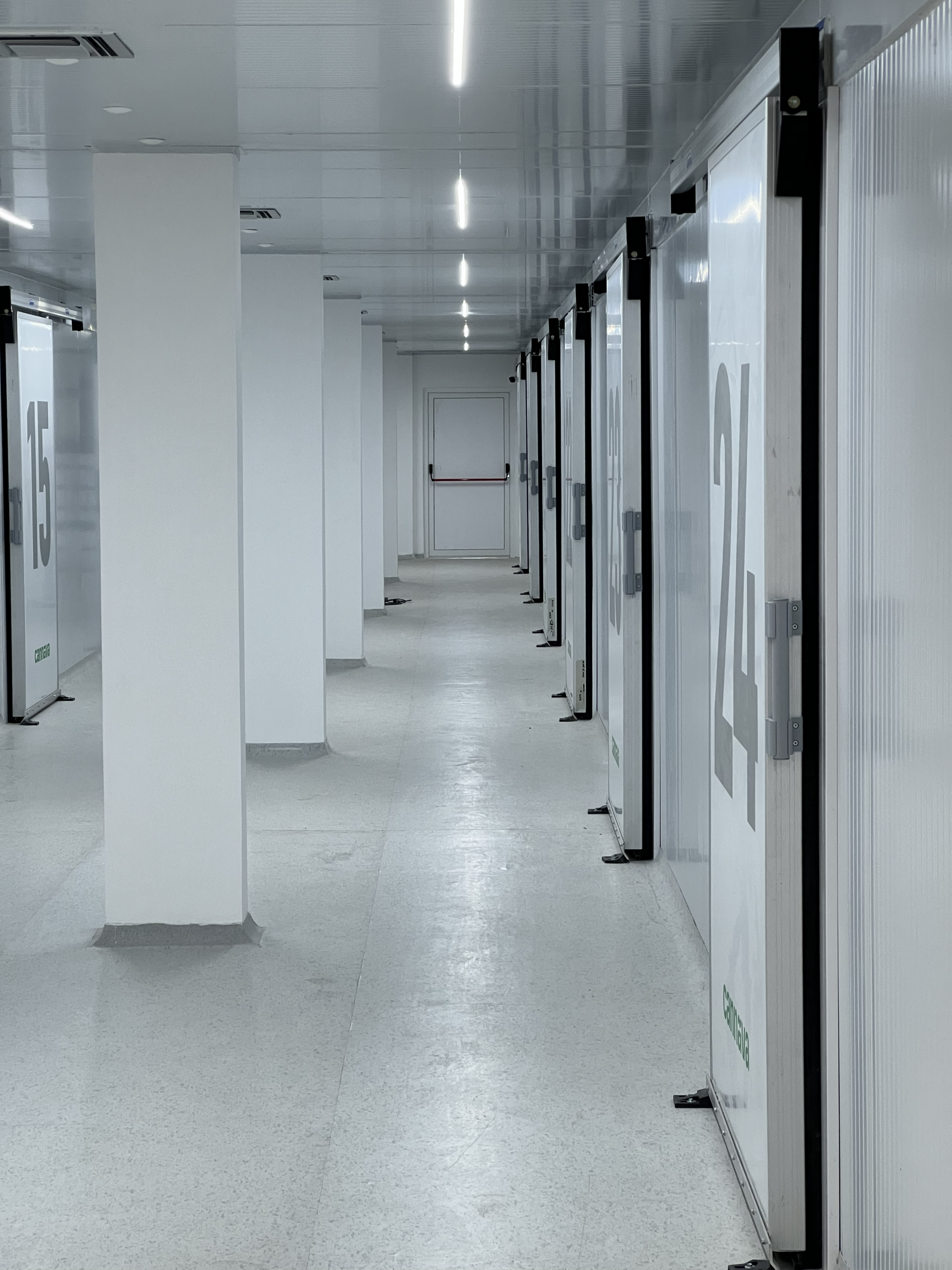
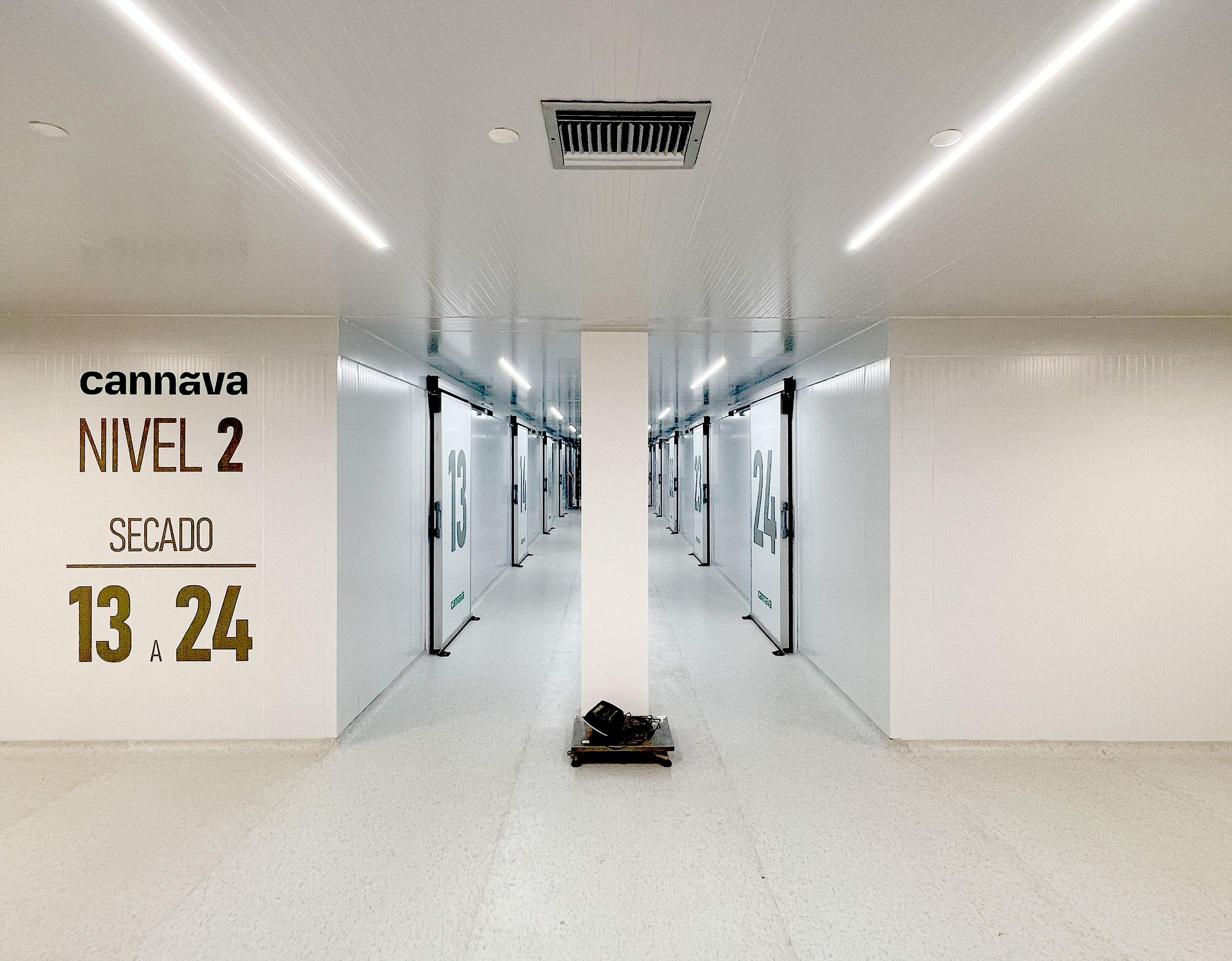
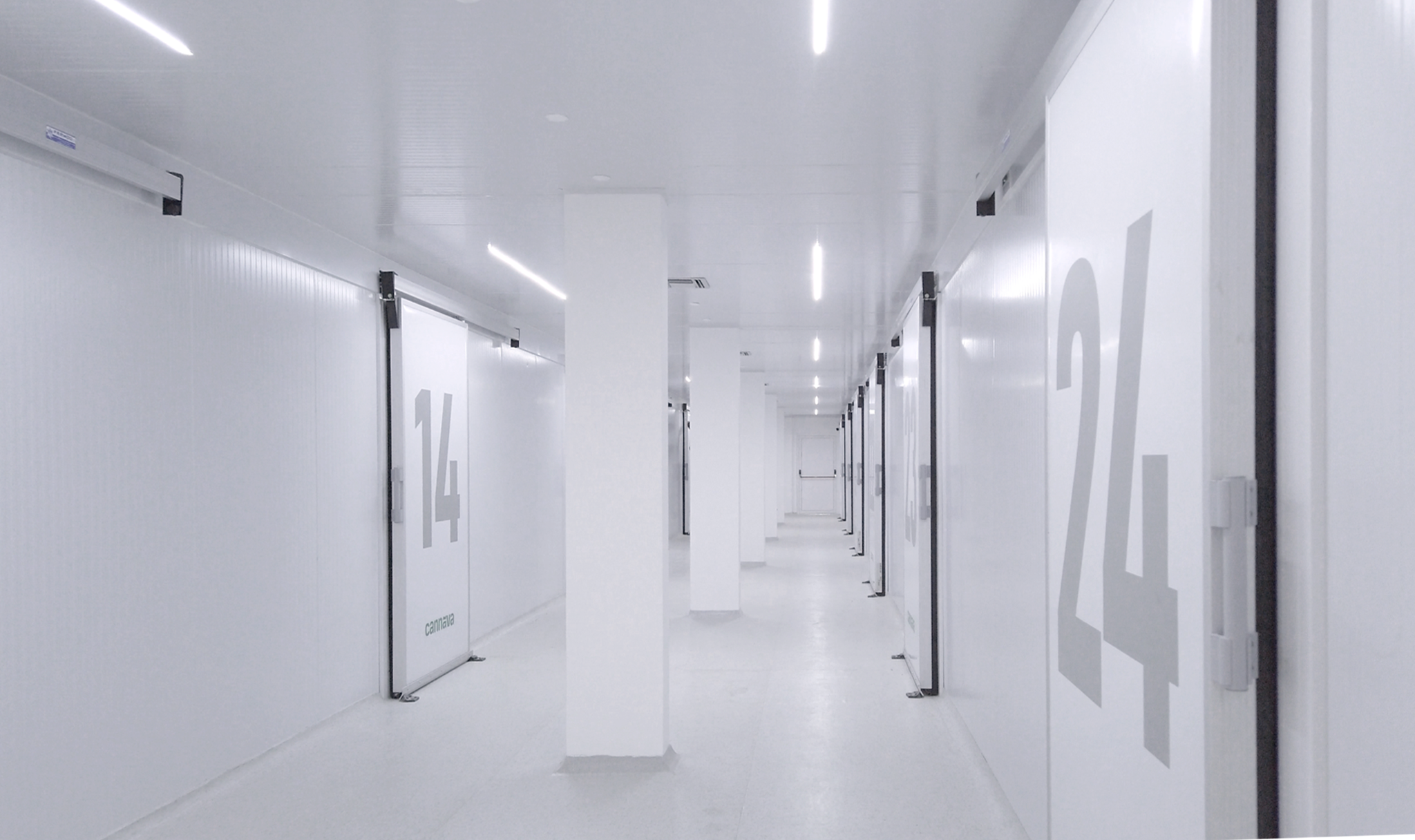
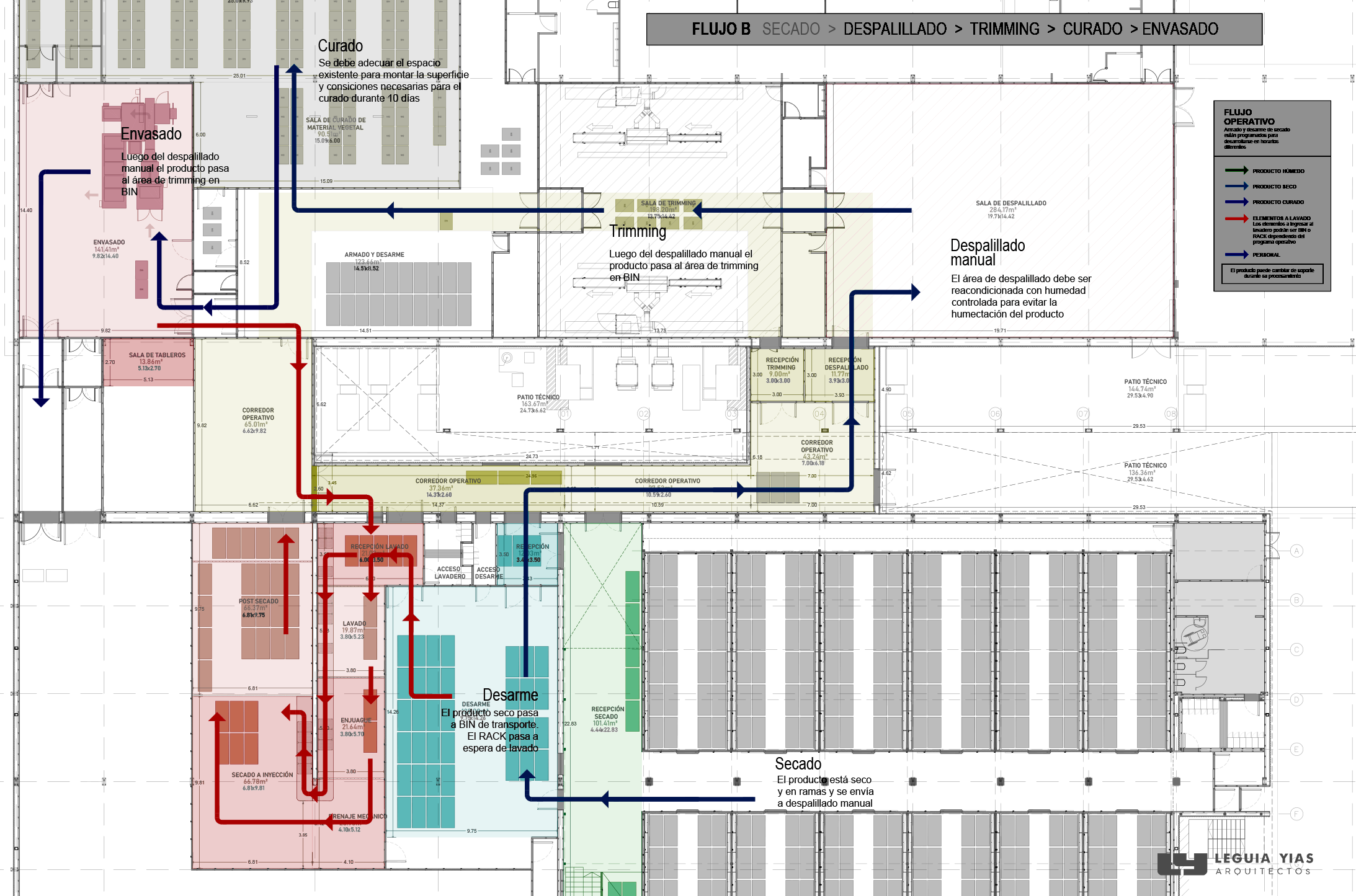
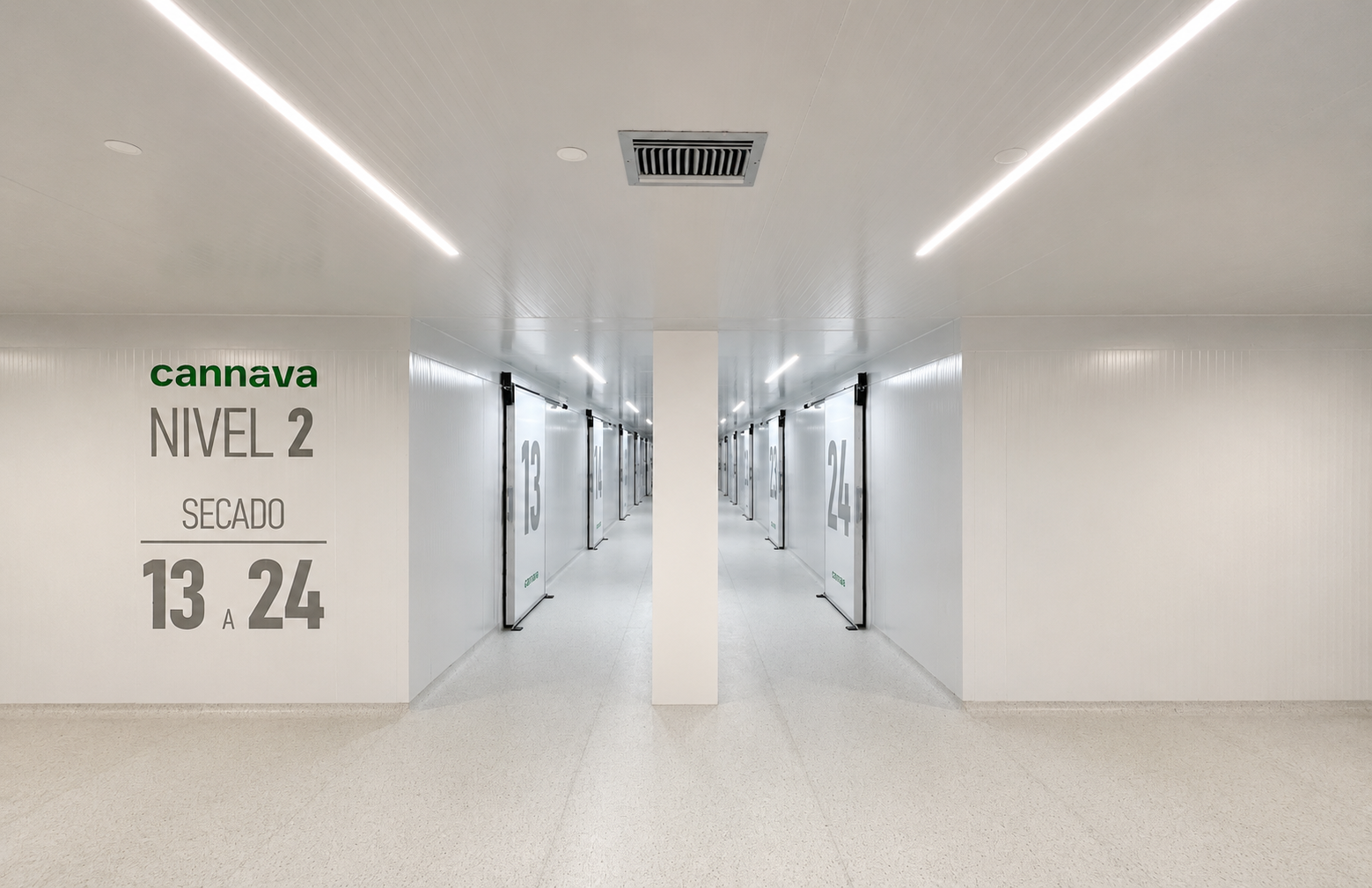
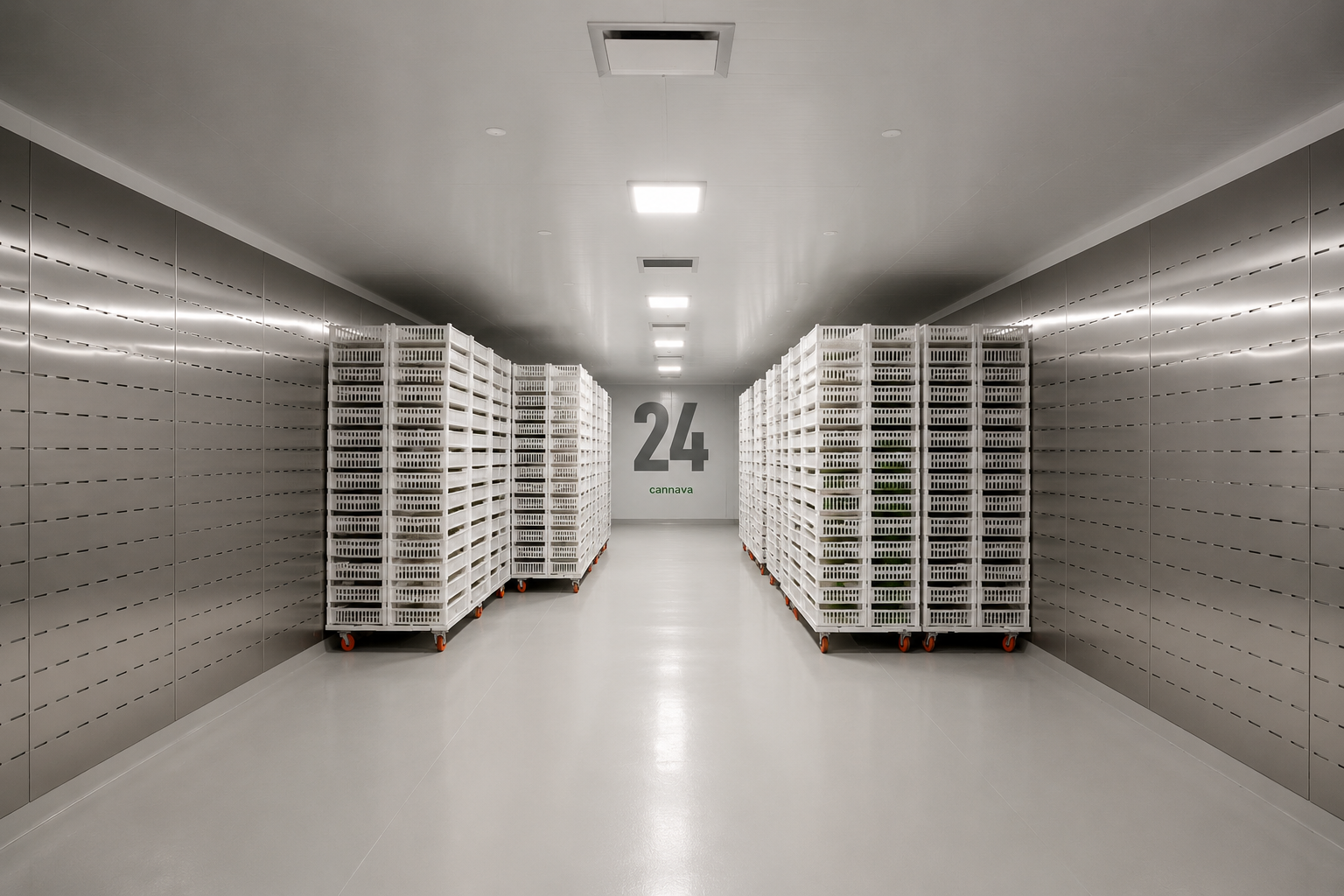
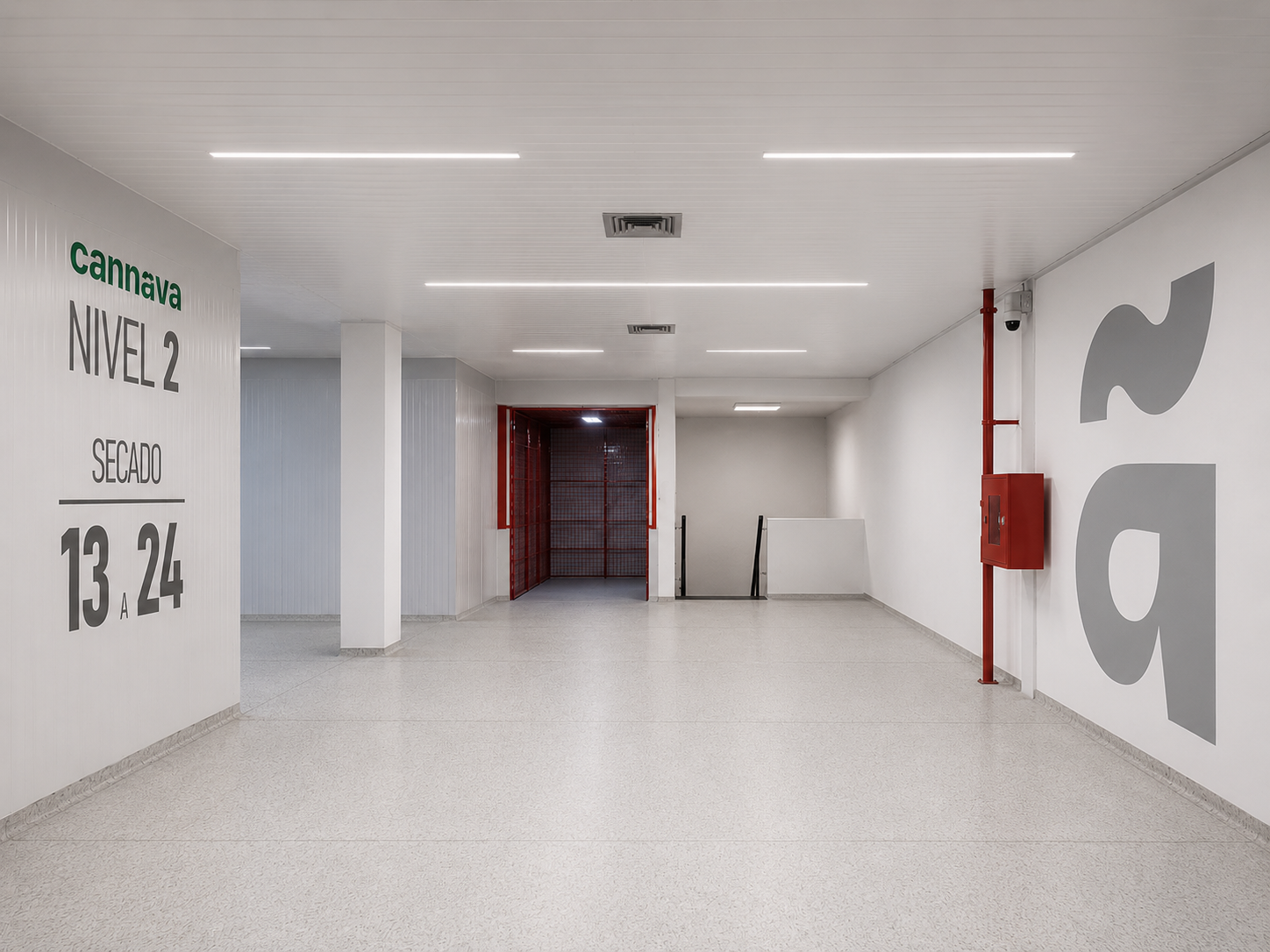
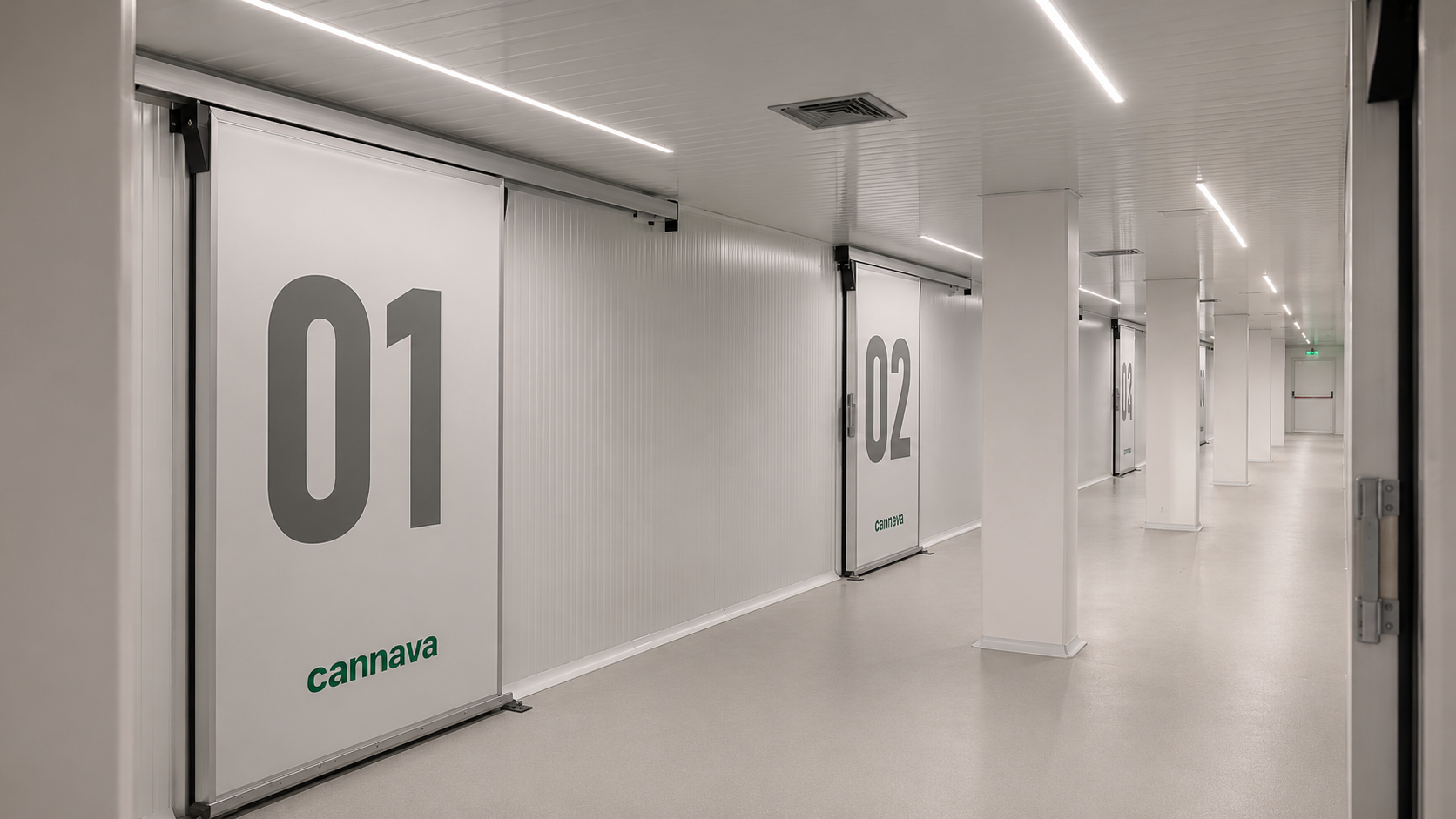
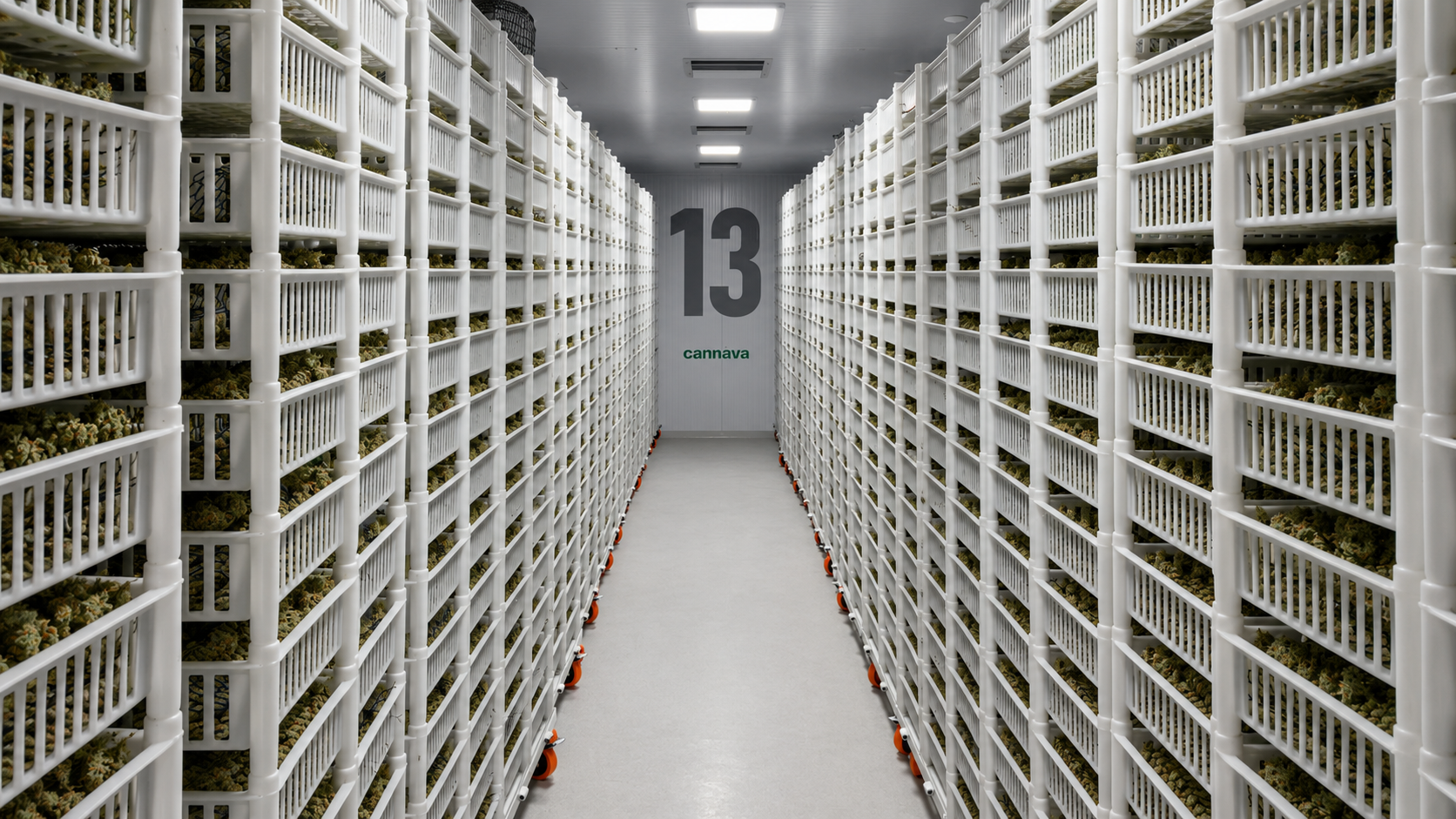
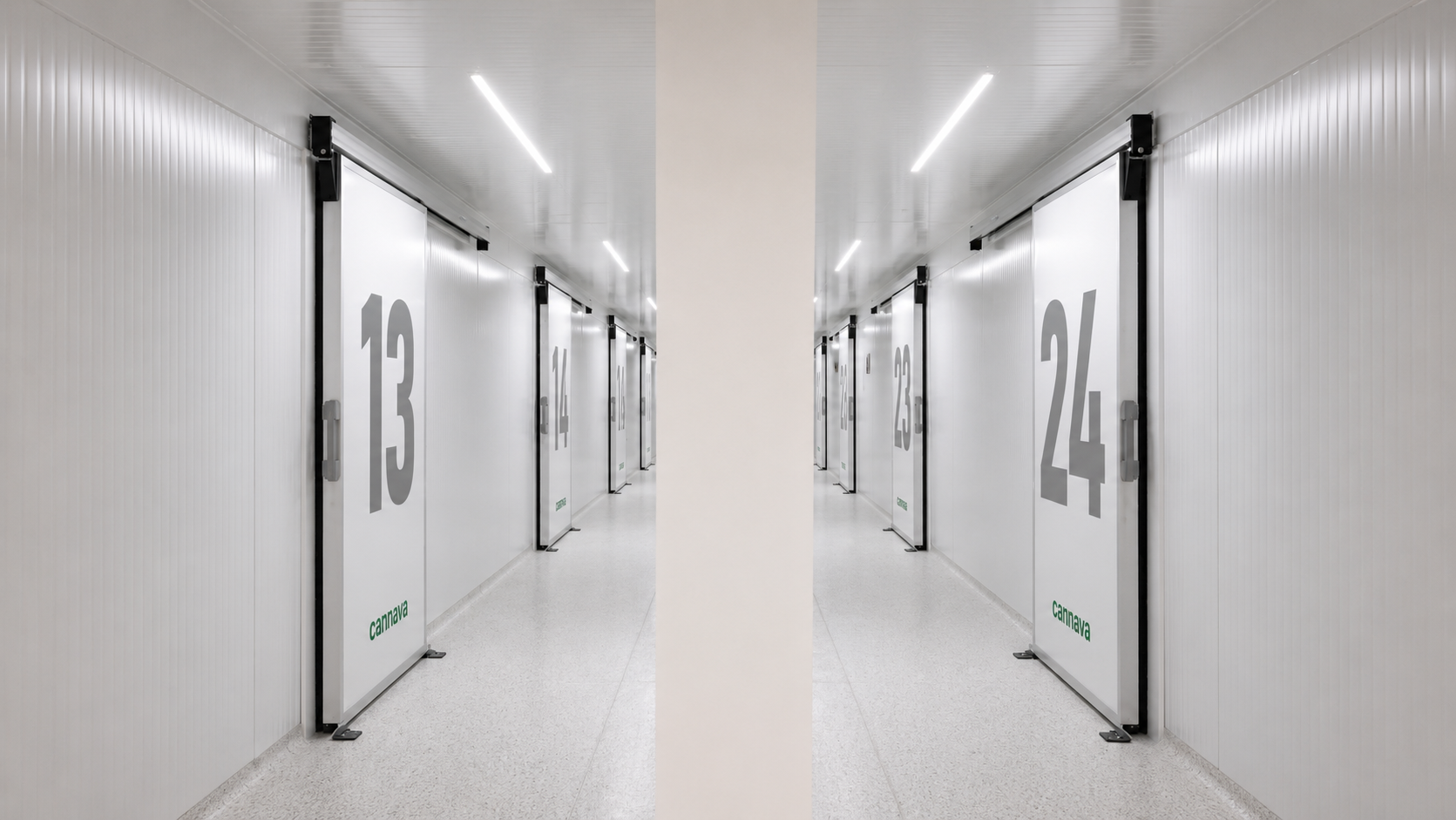
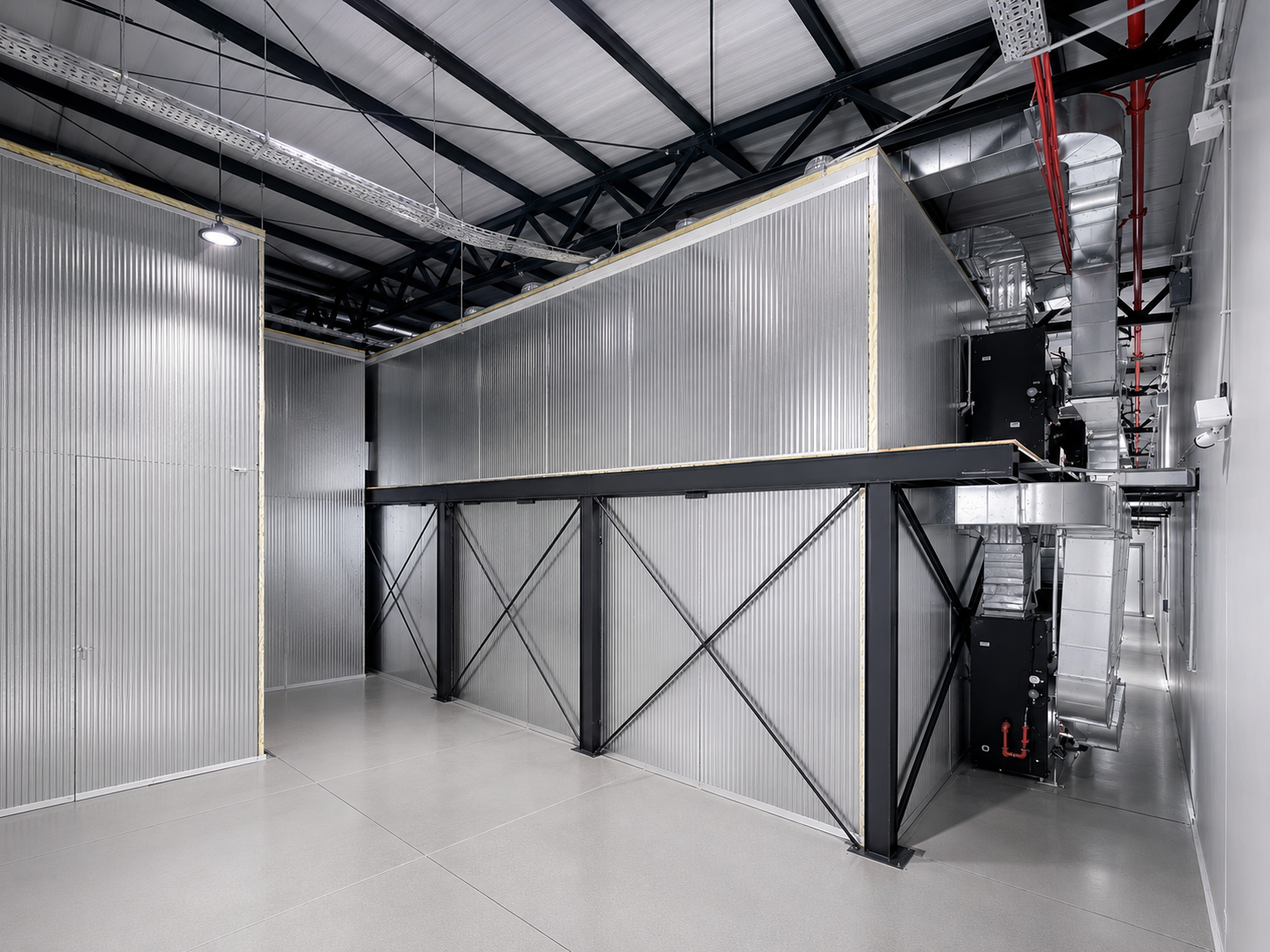
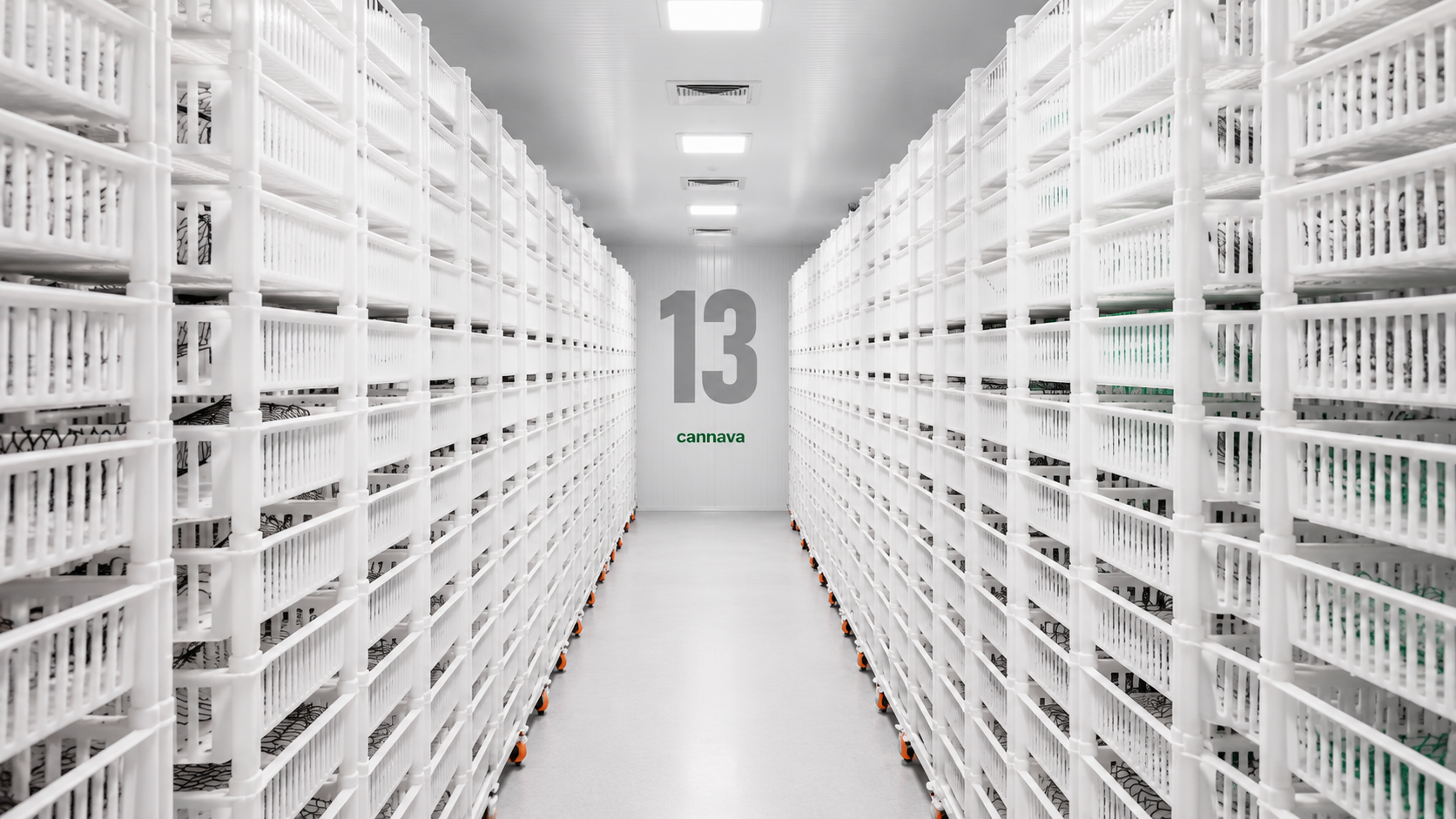
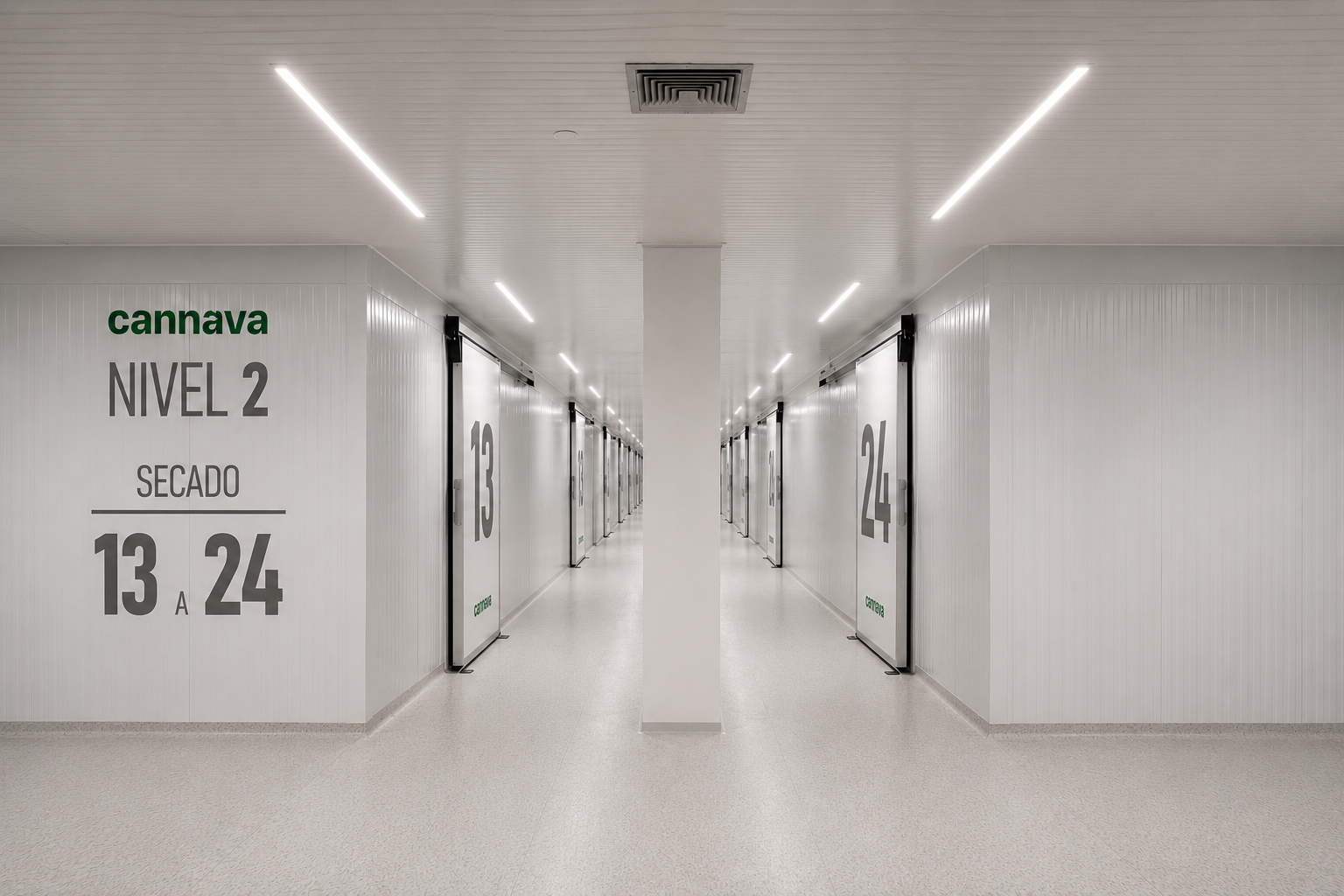
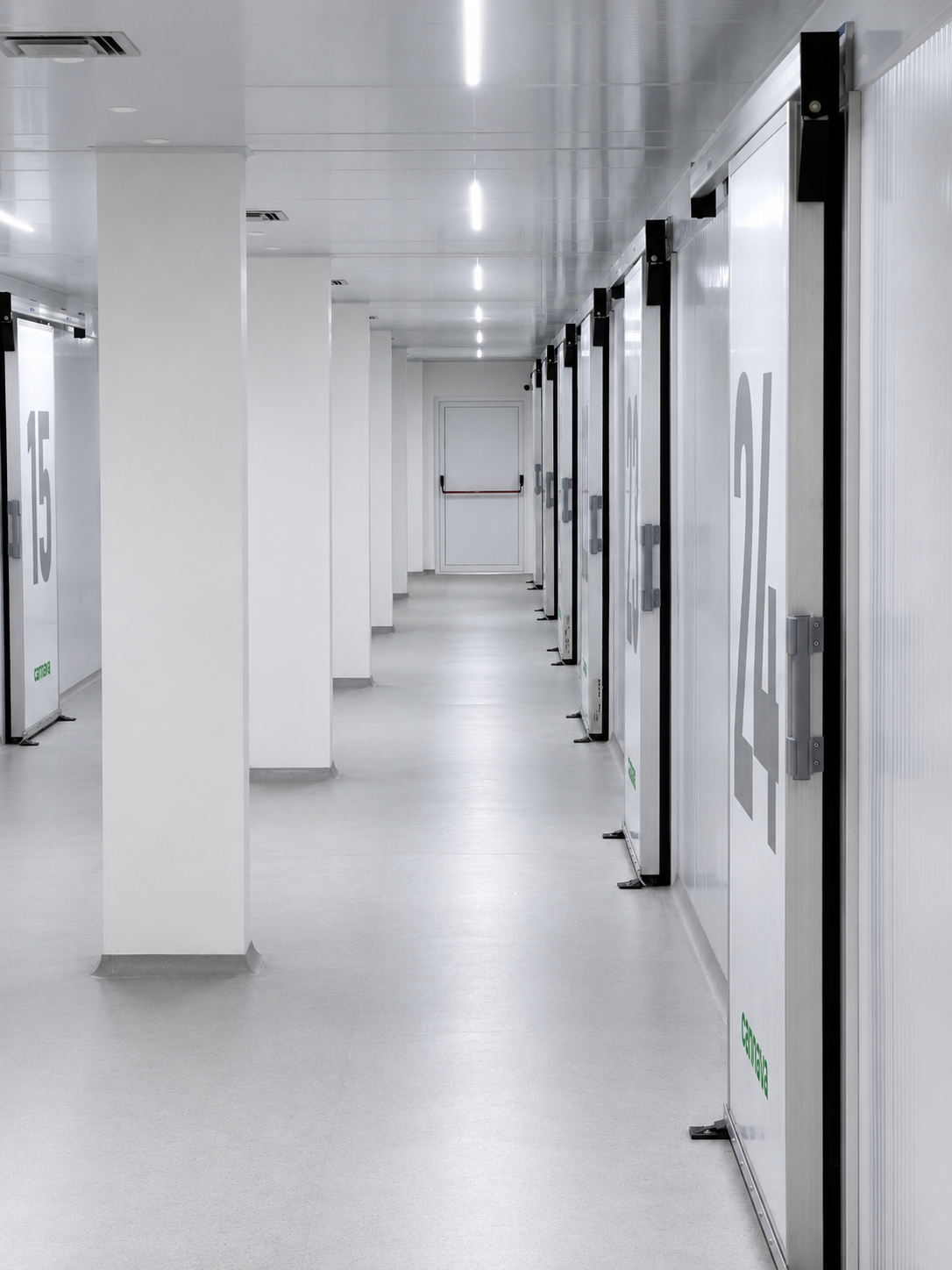
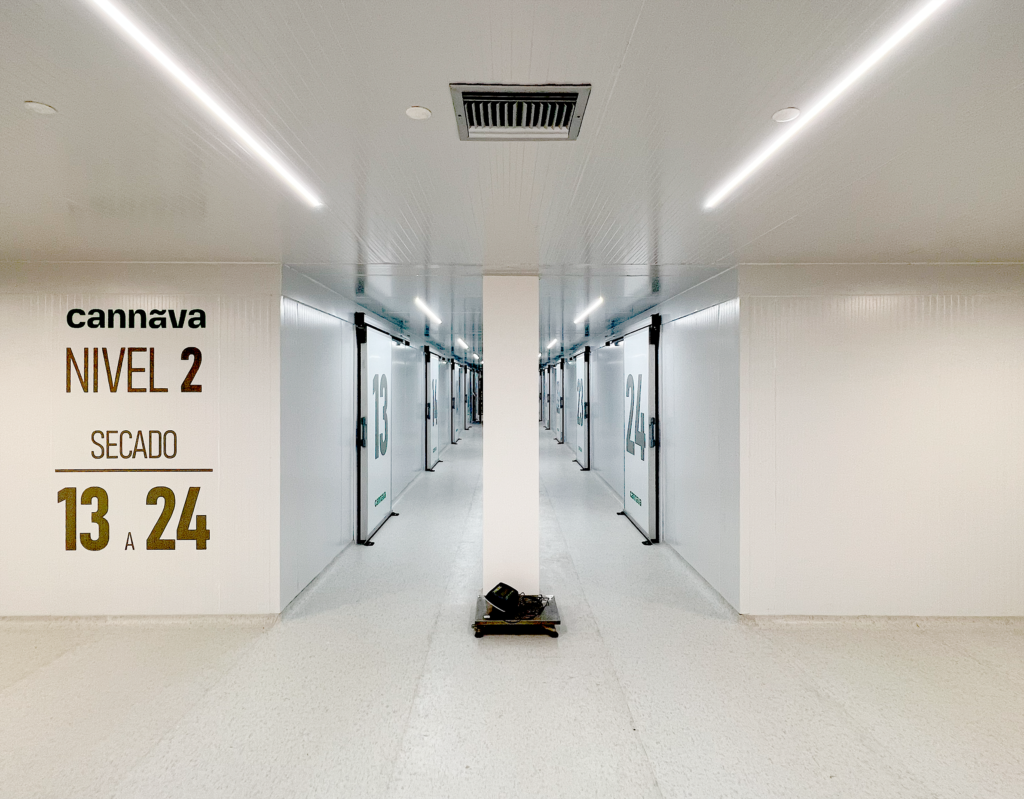
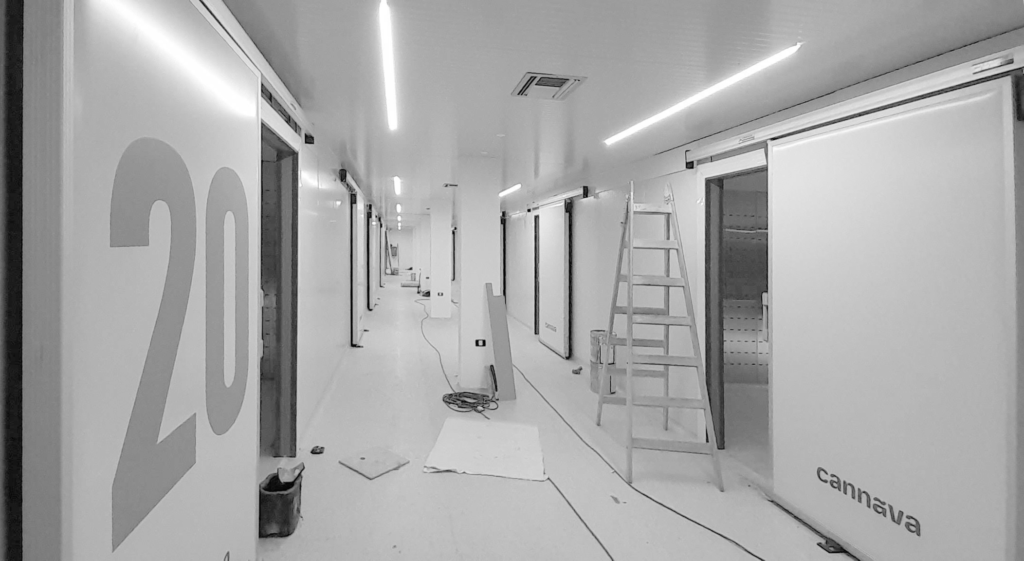
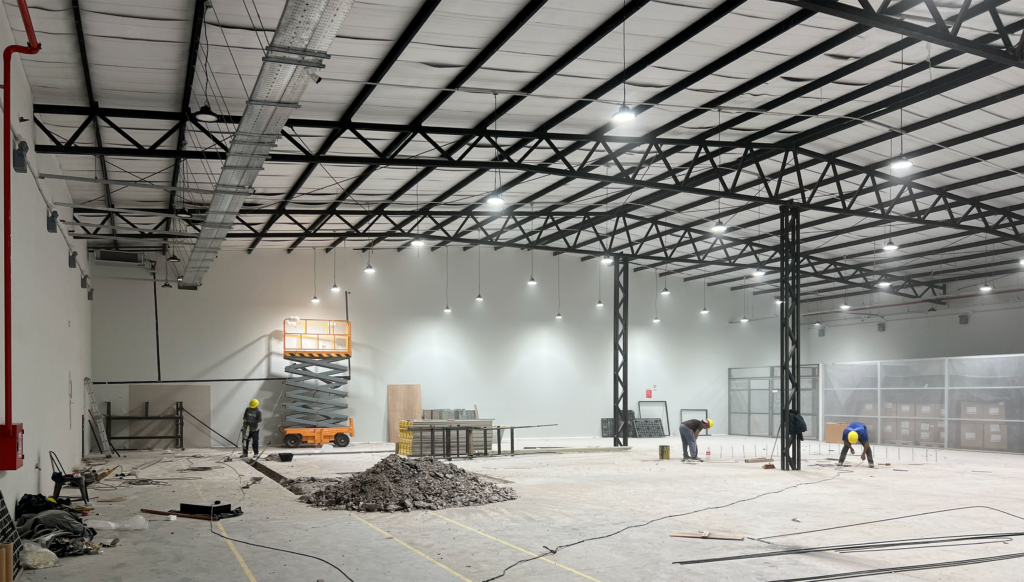
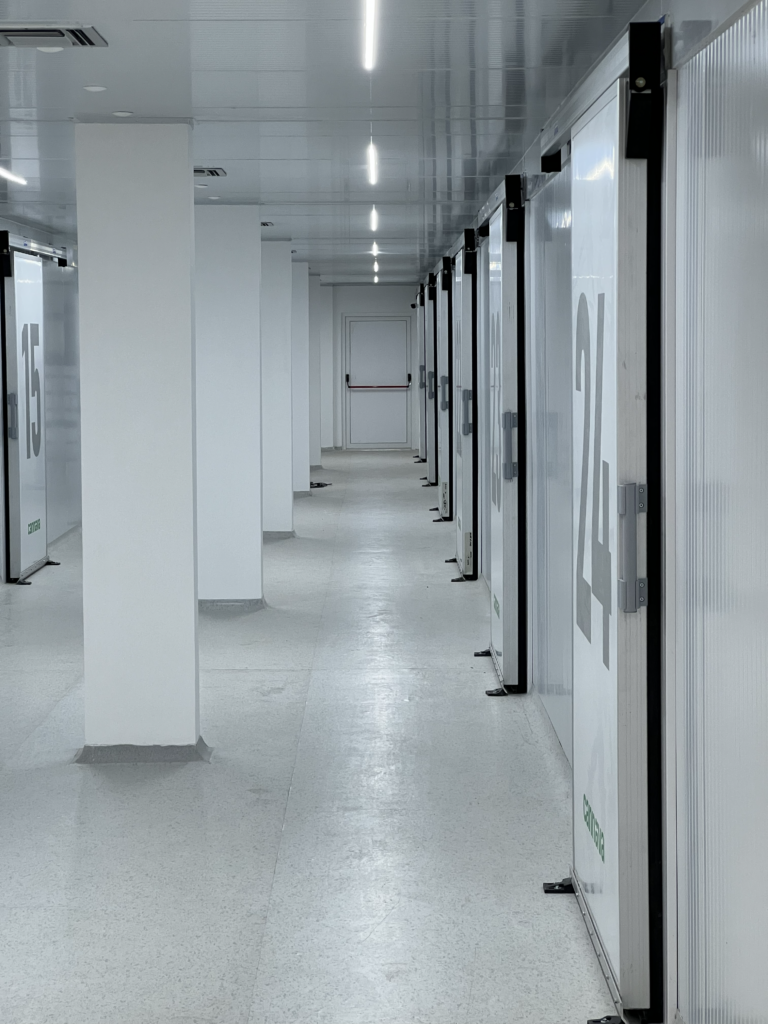
The project involved the development of 24 industrial controlled-drying chambers, post-harvest areas, technical circulation, washing, packaging, and operational support, integrated within a structure of continuous operation under strict pharmaceutical parameters.
Designing amid uncertainty
When the studio was called in, the scenario was critical.
The systems initially developed with international consultants had proven technically and economically unviable for the actual execution timelines. By the time we joined, the construction process had already begun and the harvest was inevitably advancing.
The project had to be designed, documented, coordinated, and built in less than half the time normally required for an infrastructure of this scale.
Far from working with standardized solutions, the process demanded the development of a completely new system adapted to the local context, the capabilities available in the country, and the specific regulatory requirements of pharmaceutical-grade medical cannabis.
Architecture thus ceased to be merely a spatial concern and became a tool for integration between operation, engineering, logistics, regulation, and production.
Architecture as an operating system
The project evolved constantly throughout its development.
As production, regulatory, and operational requirements changed, the building, layouts, flows, and technical systems had to be redefined in real time without stopping the construction process.
The complex was reorganized multiple times until consolidating a system capable of simultaneously responding to:
procesos de secado controlado,
flujos sanitarios diferenciados,
logística de grandes volúmenes,
control ambiental preciso,
mantenimiento técnico continuo,
y requerimientos regulatorios farmacéuticos.
The infrastructure ended up functioning as a large environmental machine.
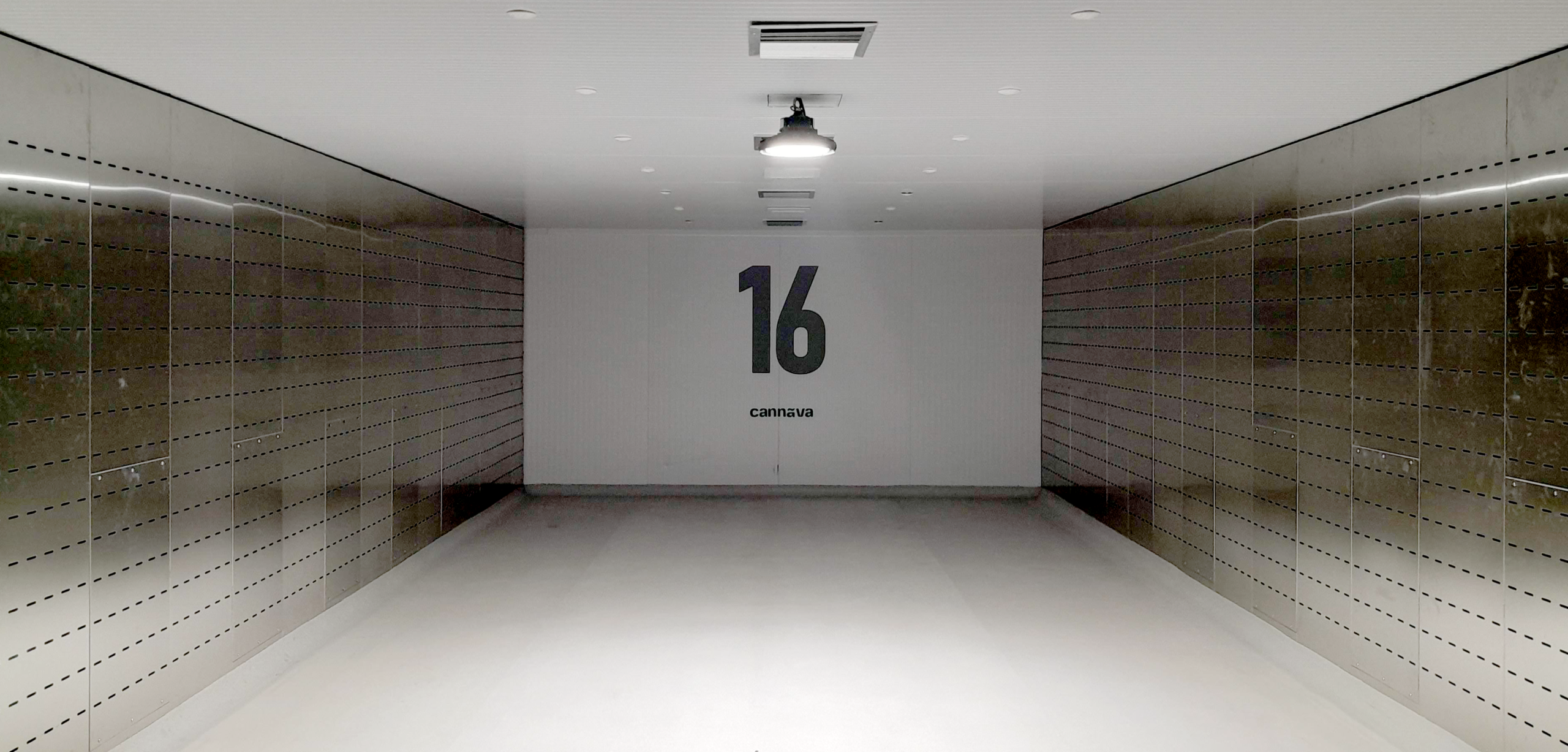
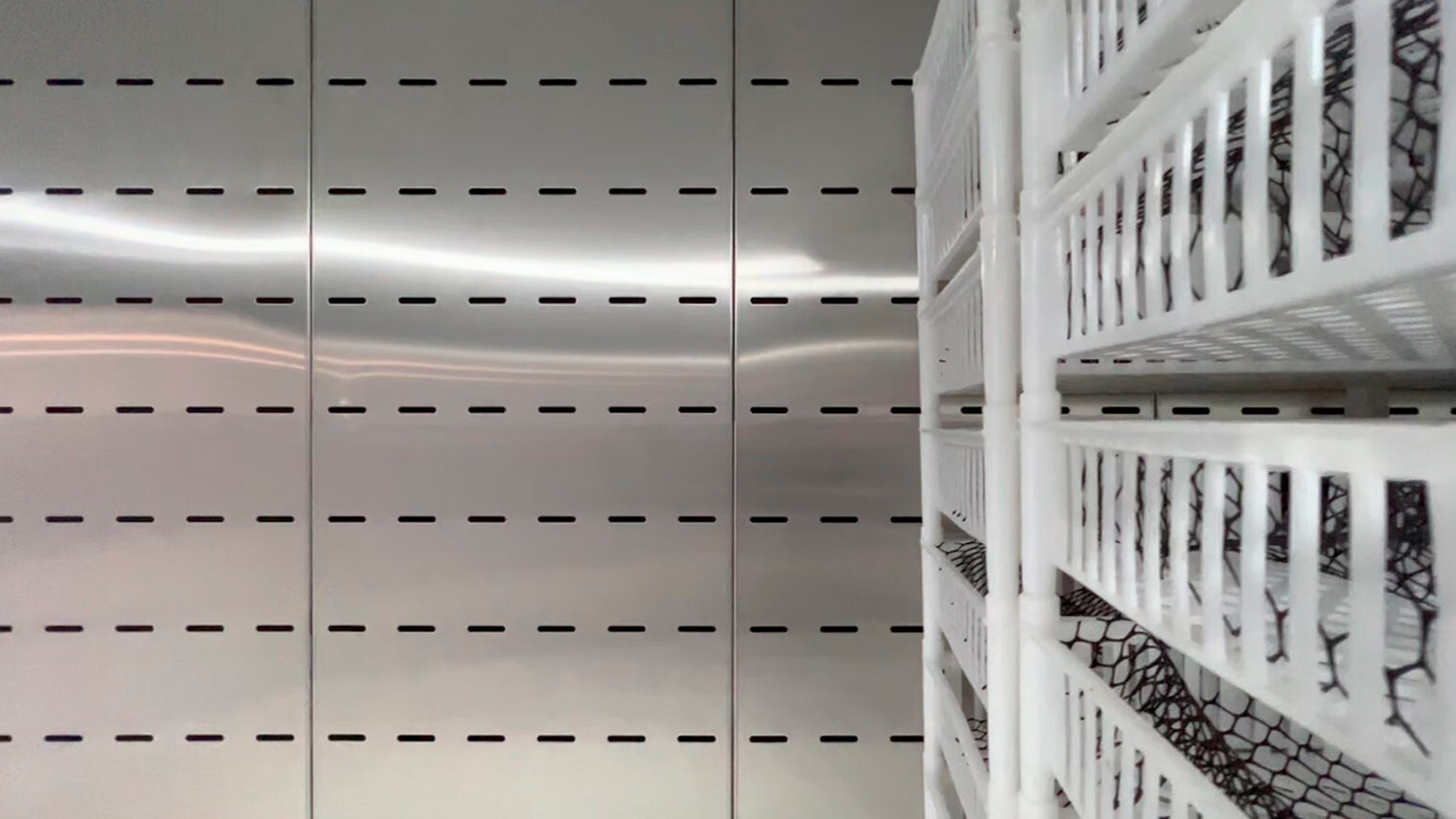
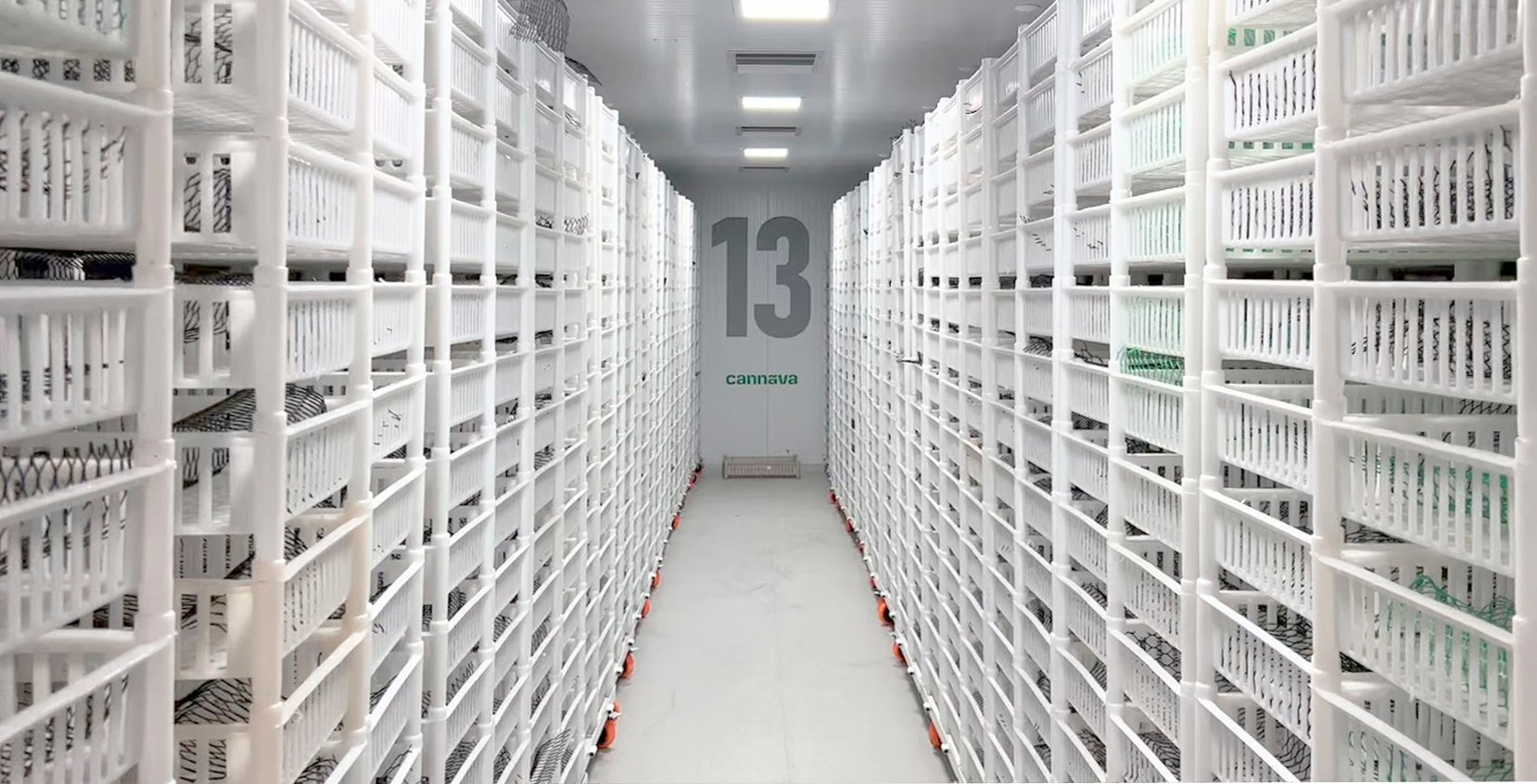
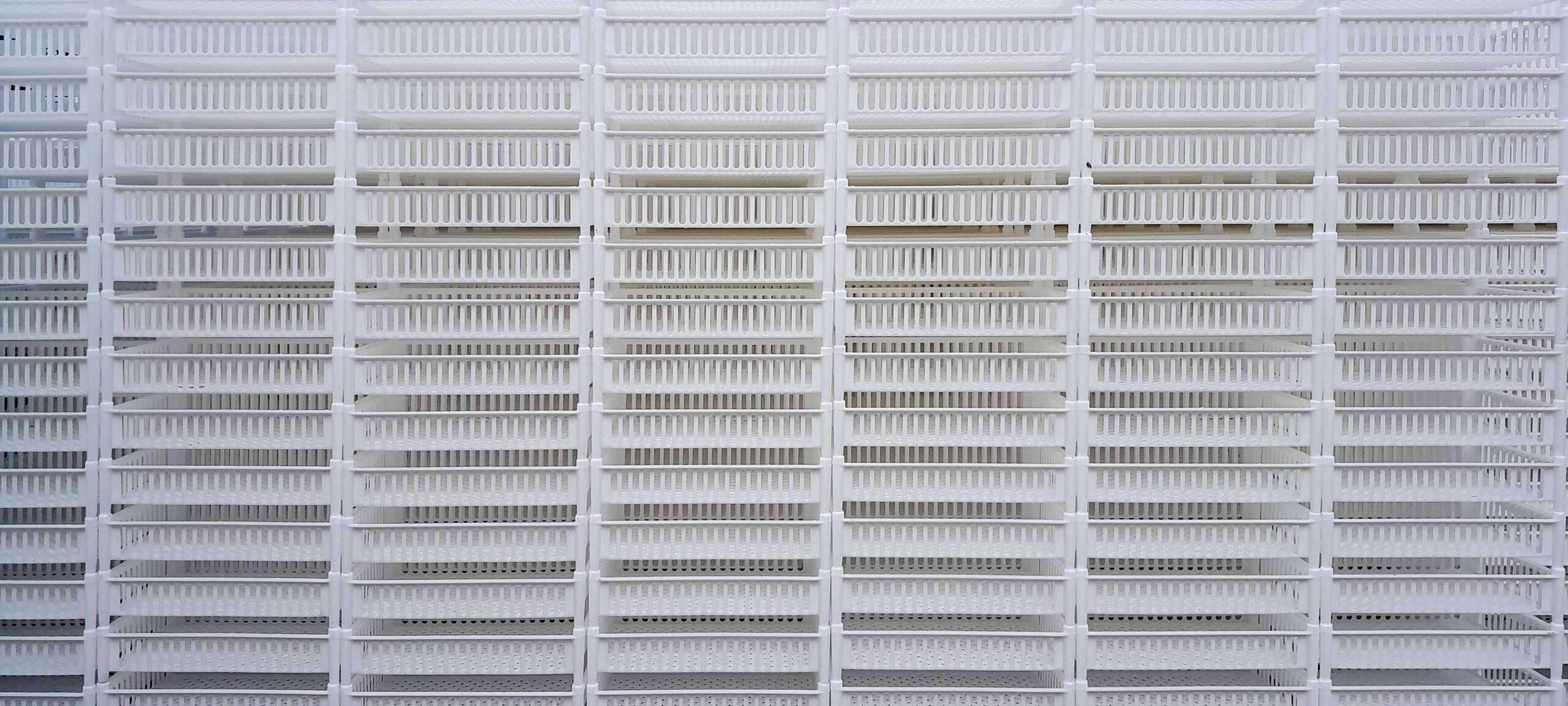
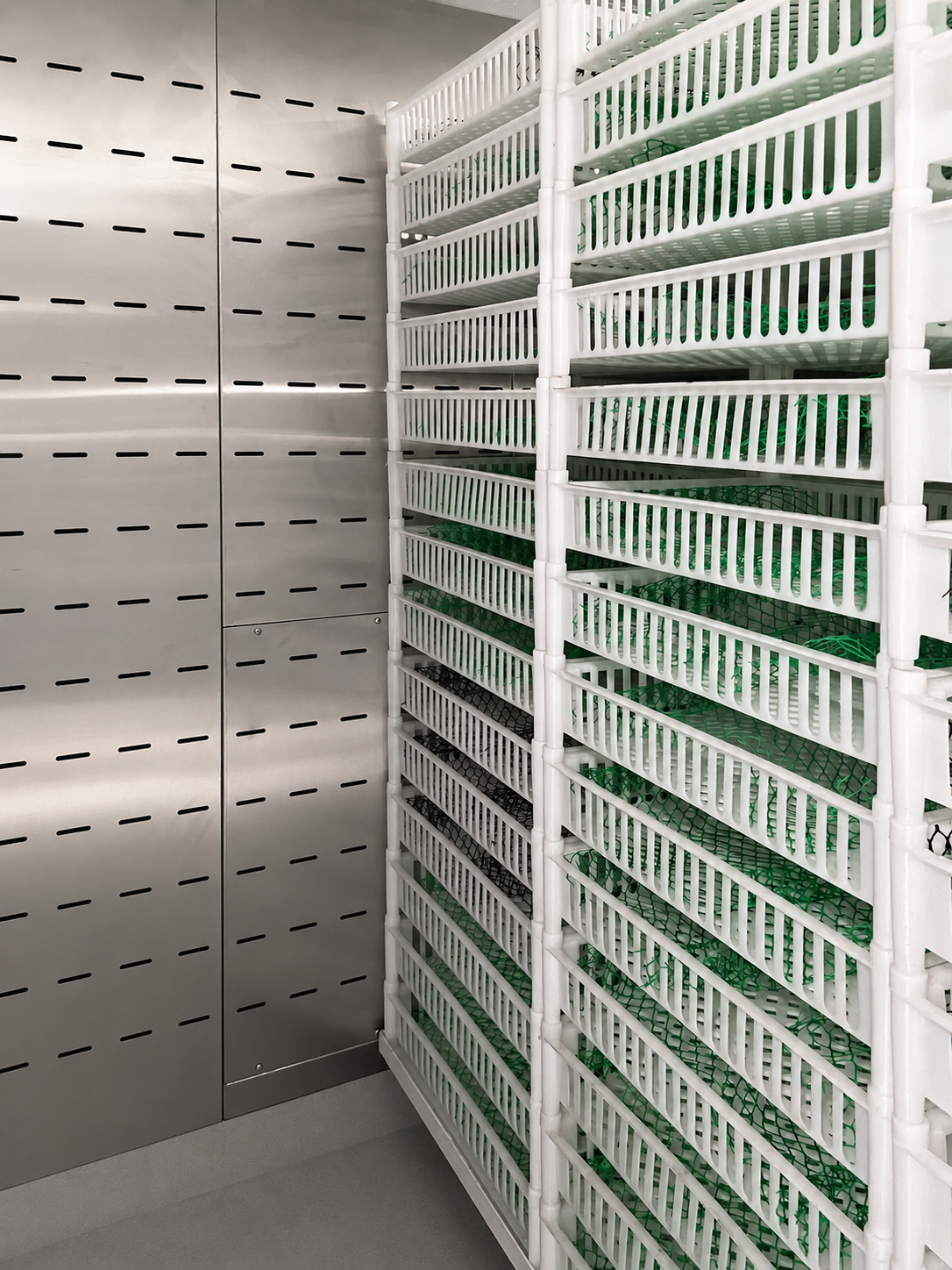
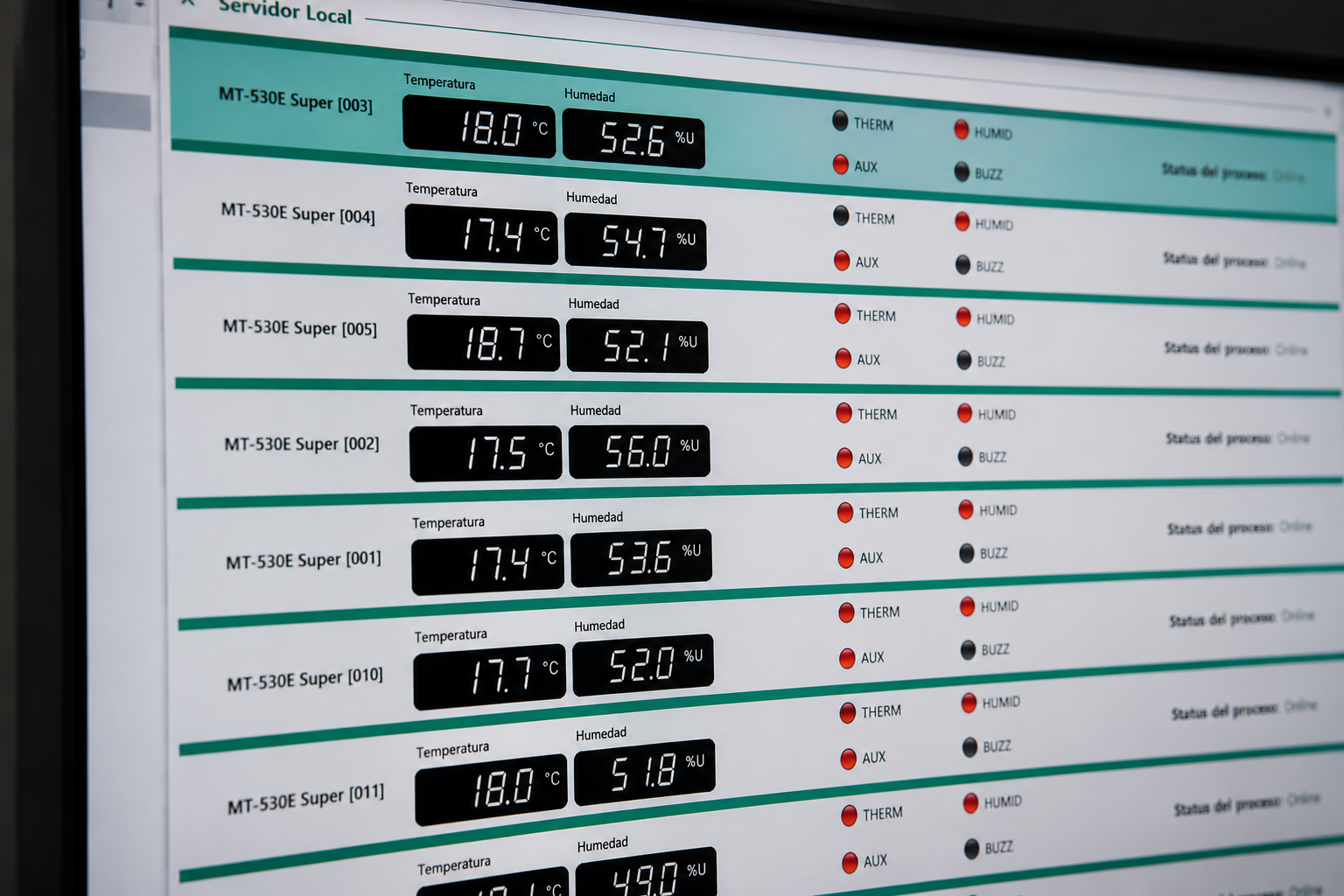
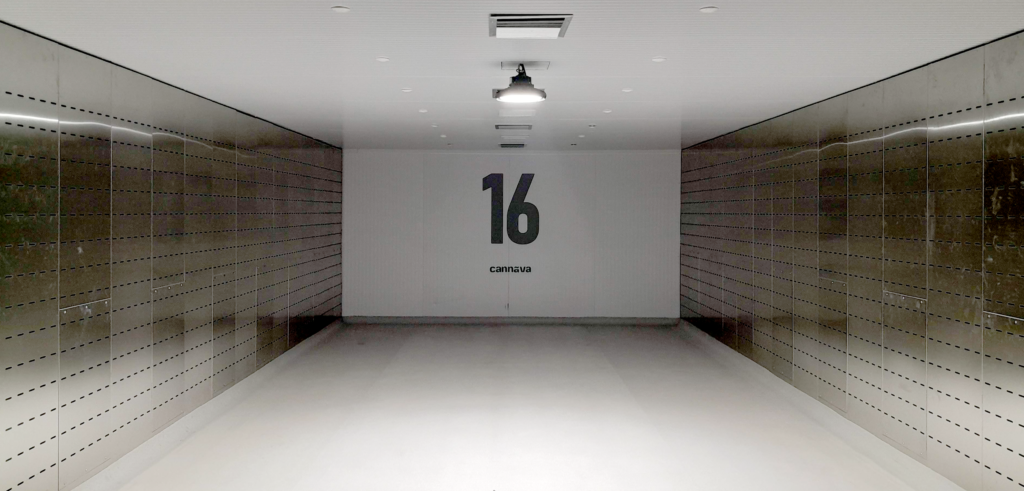
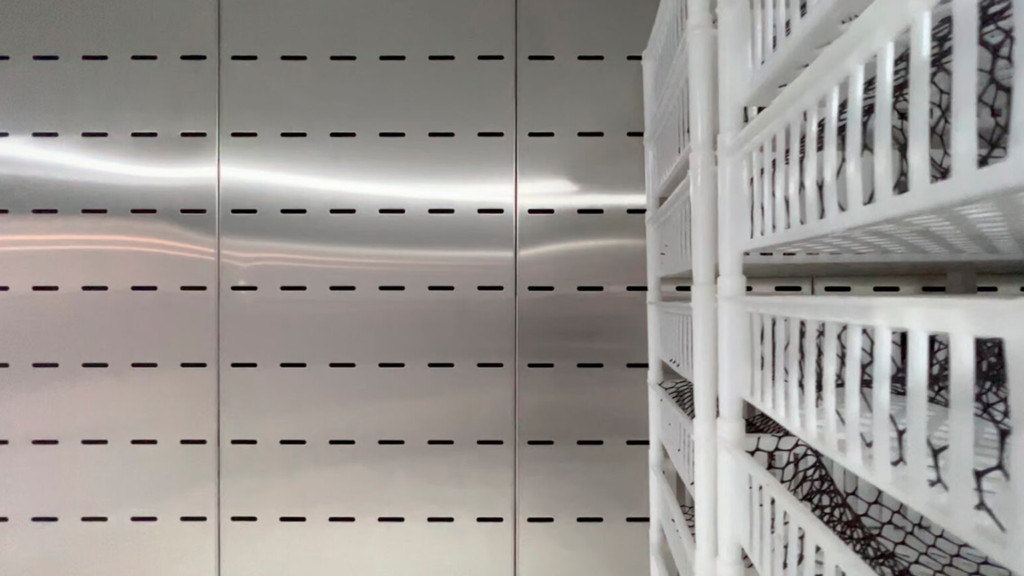
Each chamber was designed to maintain constant conditions of temperature, humidity, and air circulation through a low-velocity laminar flow system specially developed for this project.
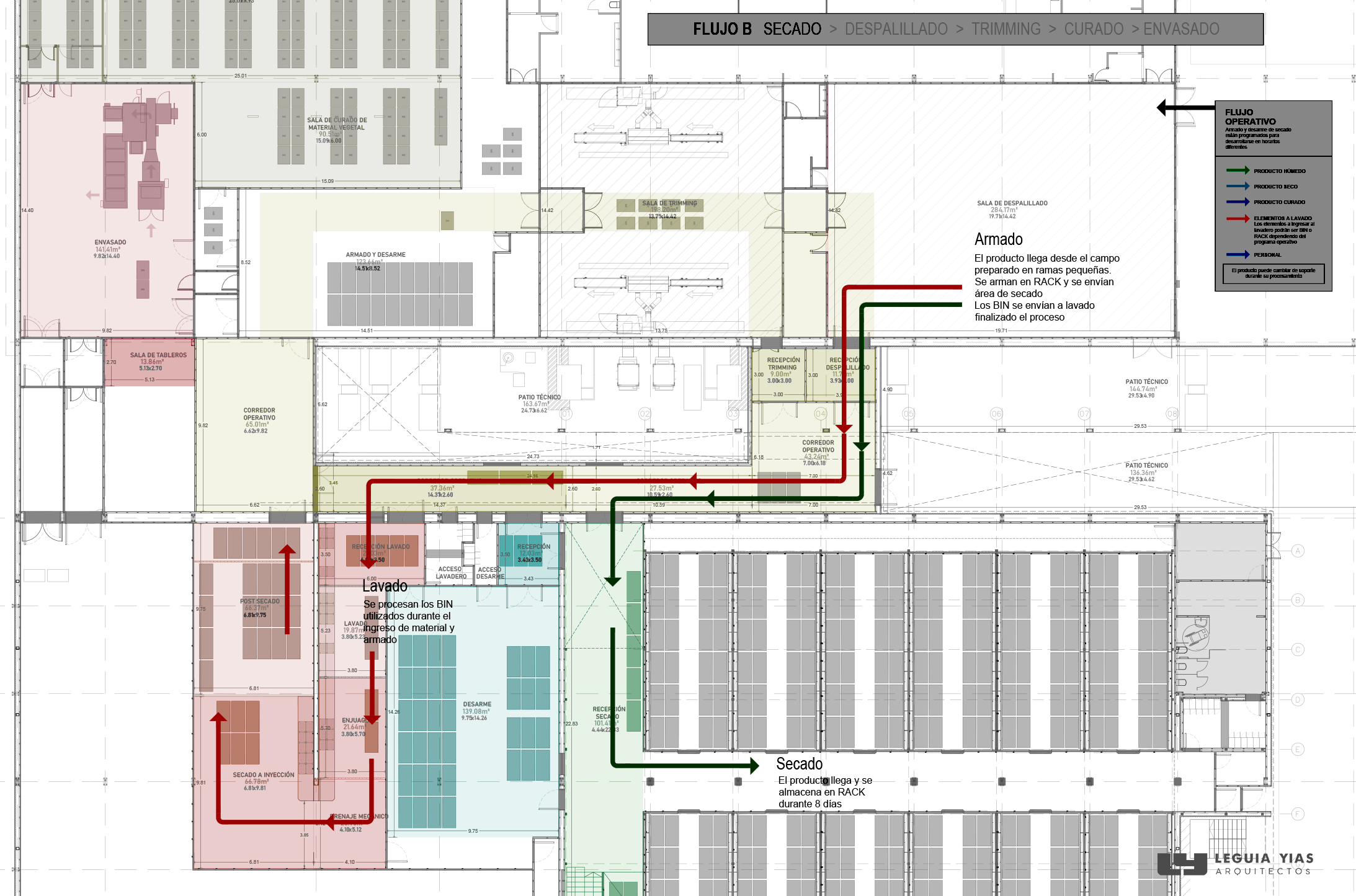
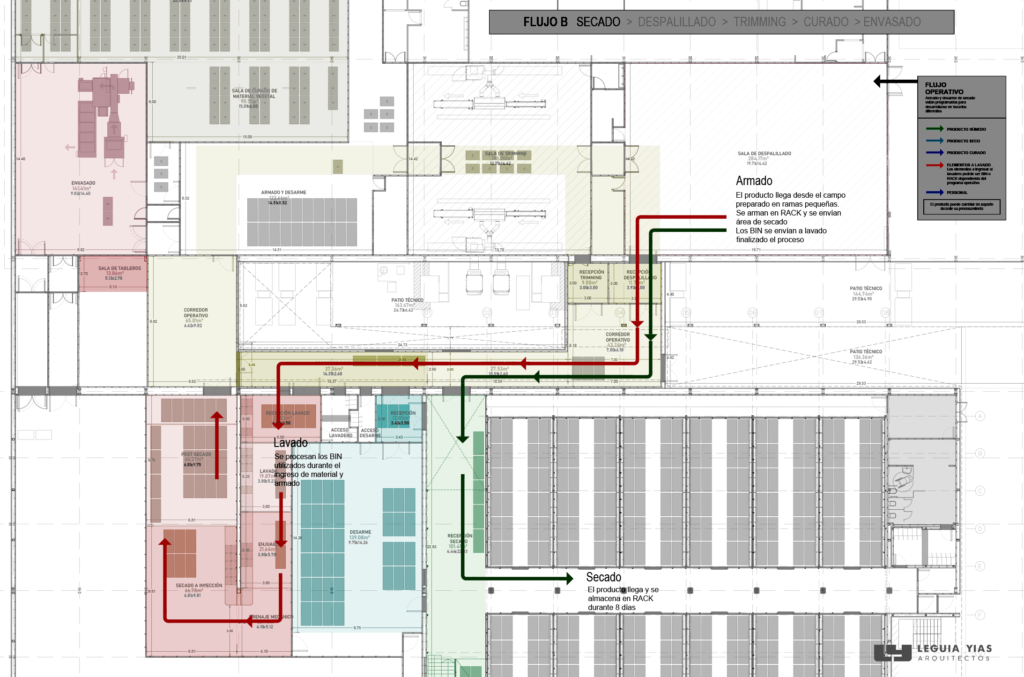
Drying operational flow
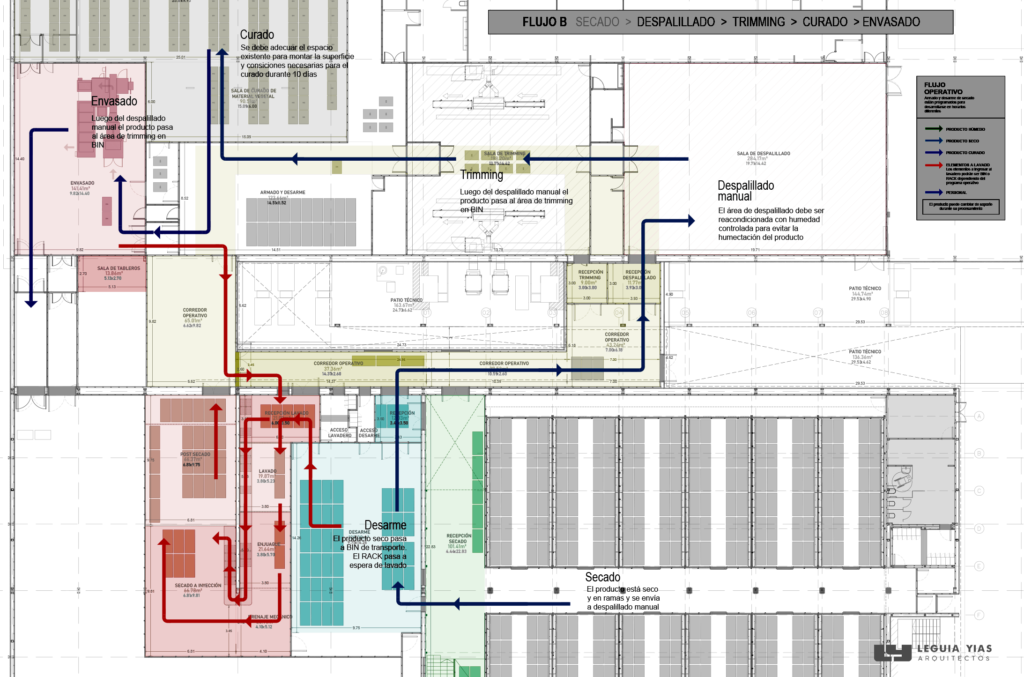
Trimming operational flow
Air as a design material
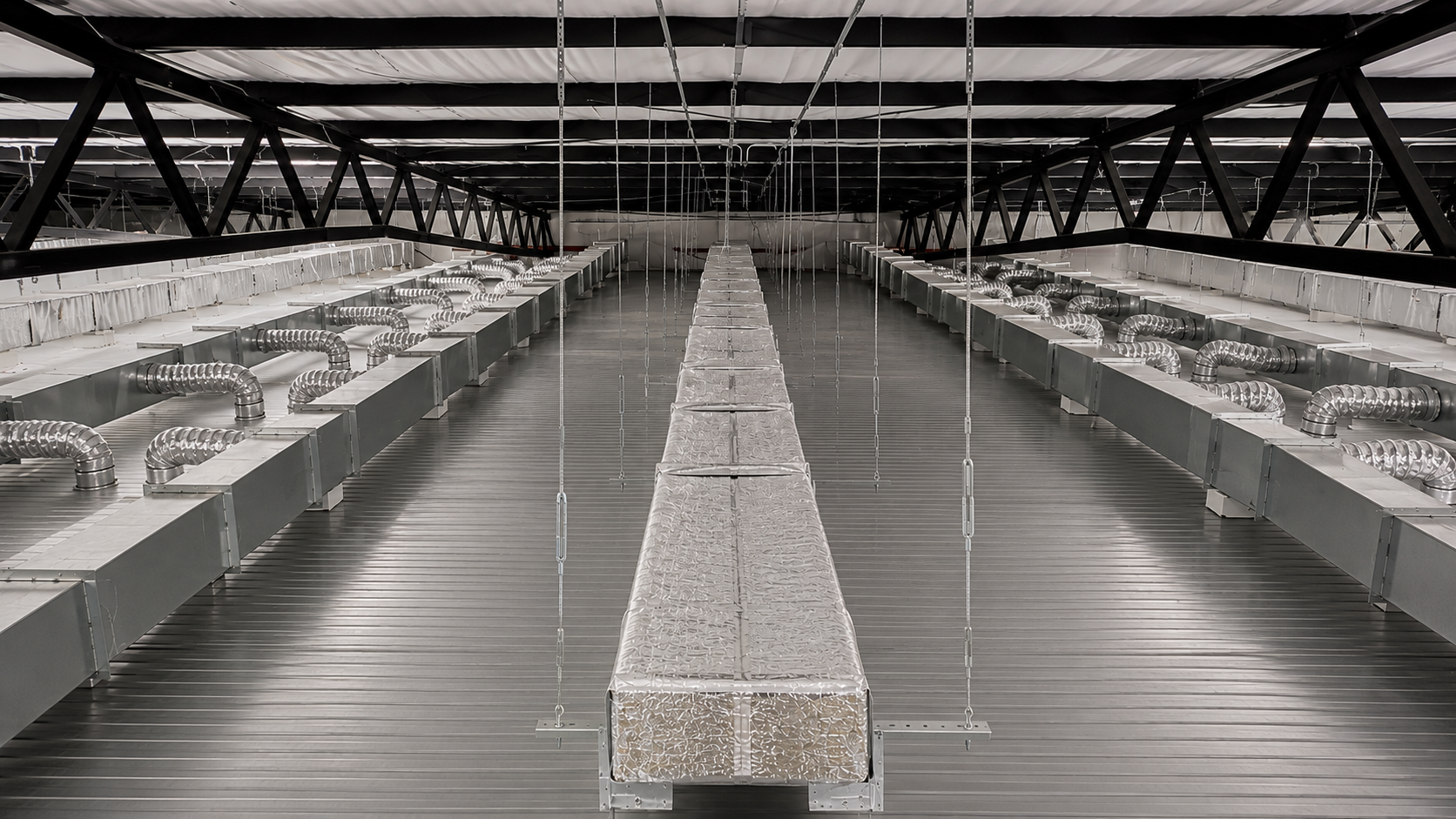
A large part of the technical development focused on the design of the air system.
Simulations, tests, and specific prototypes were carried out to control:
velocidad de flujo,
deshumidificación,
estabilidad térmica,
condensación,
y comportamiento del aire dentro de las cámaras.
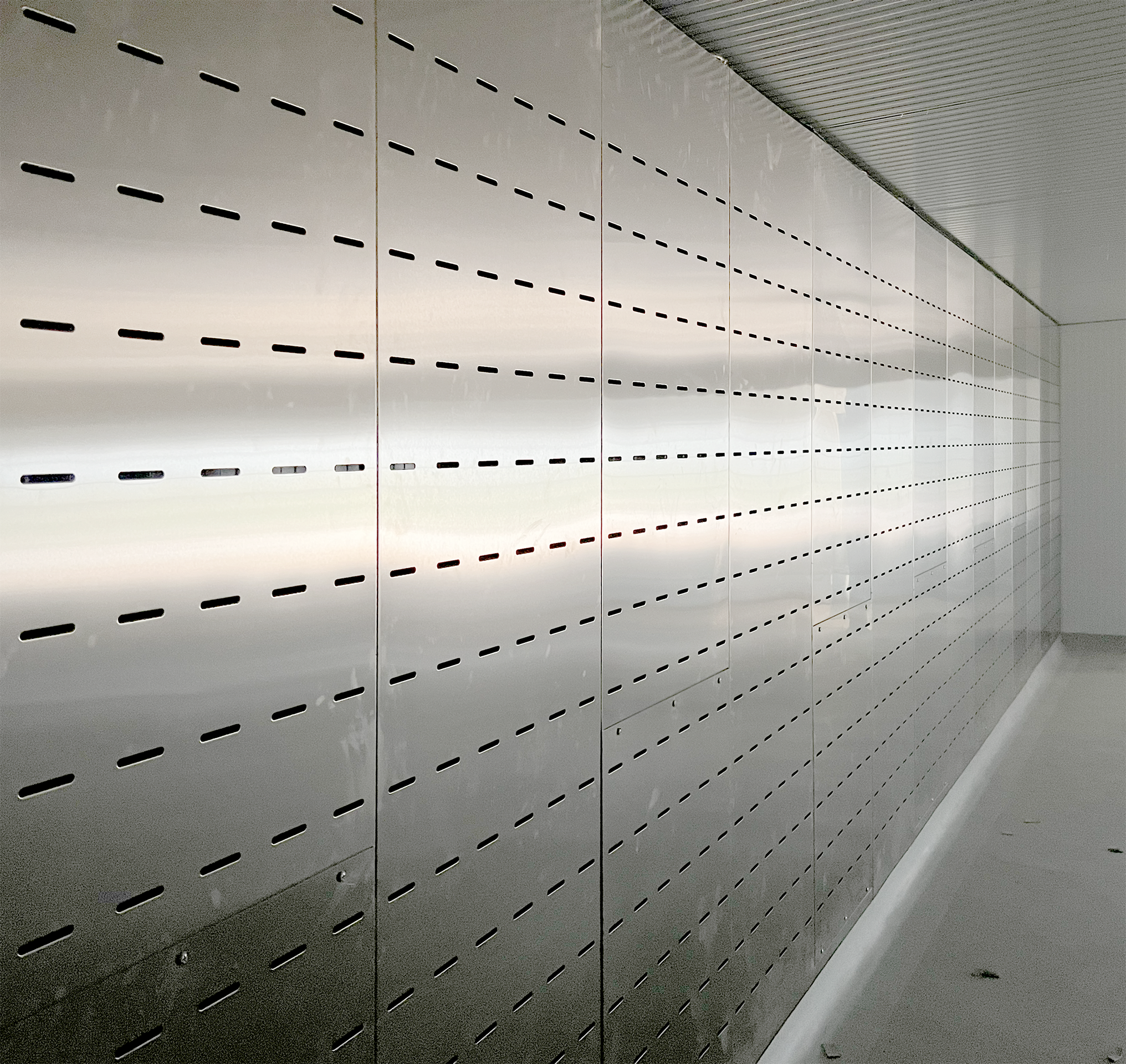
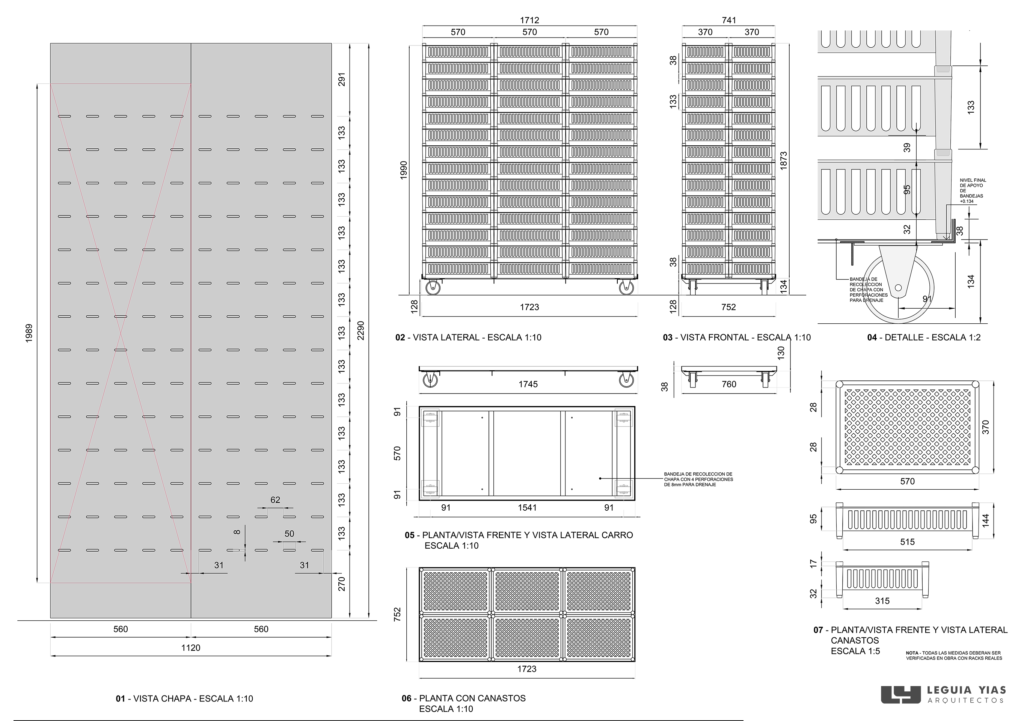
The system finally adopted combined laminar extraction via perforated stainless steel panels and controlled upper injection to ensure environmental stability and uniform drying across all chambers.
During the process, the following were developed:
prototipos físicos,
ensayos de velocidad,
modelos virtuales,
simulaciones de flujo,
y calibraciones técnicas de alta precisión.
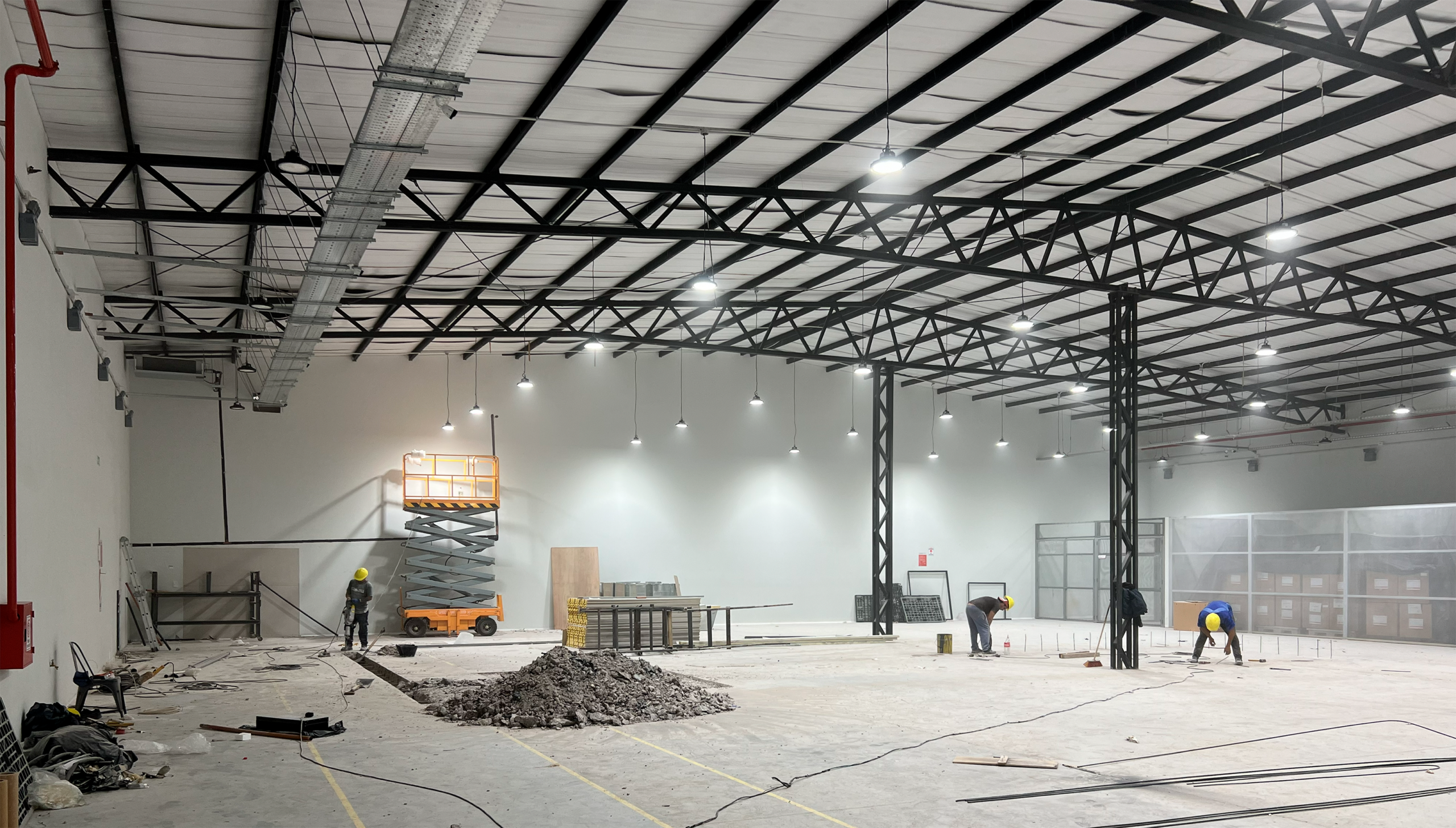
The construction proceeded while much of the system was still being designed and adjusted.
Building under extreme pressure
Execution involved simultaneously coordinating:
diseño,
ingeniería,
fabricación,
obra civil,
logística,
regulación,
y puesta en marcha.
All within an extremely short time window.
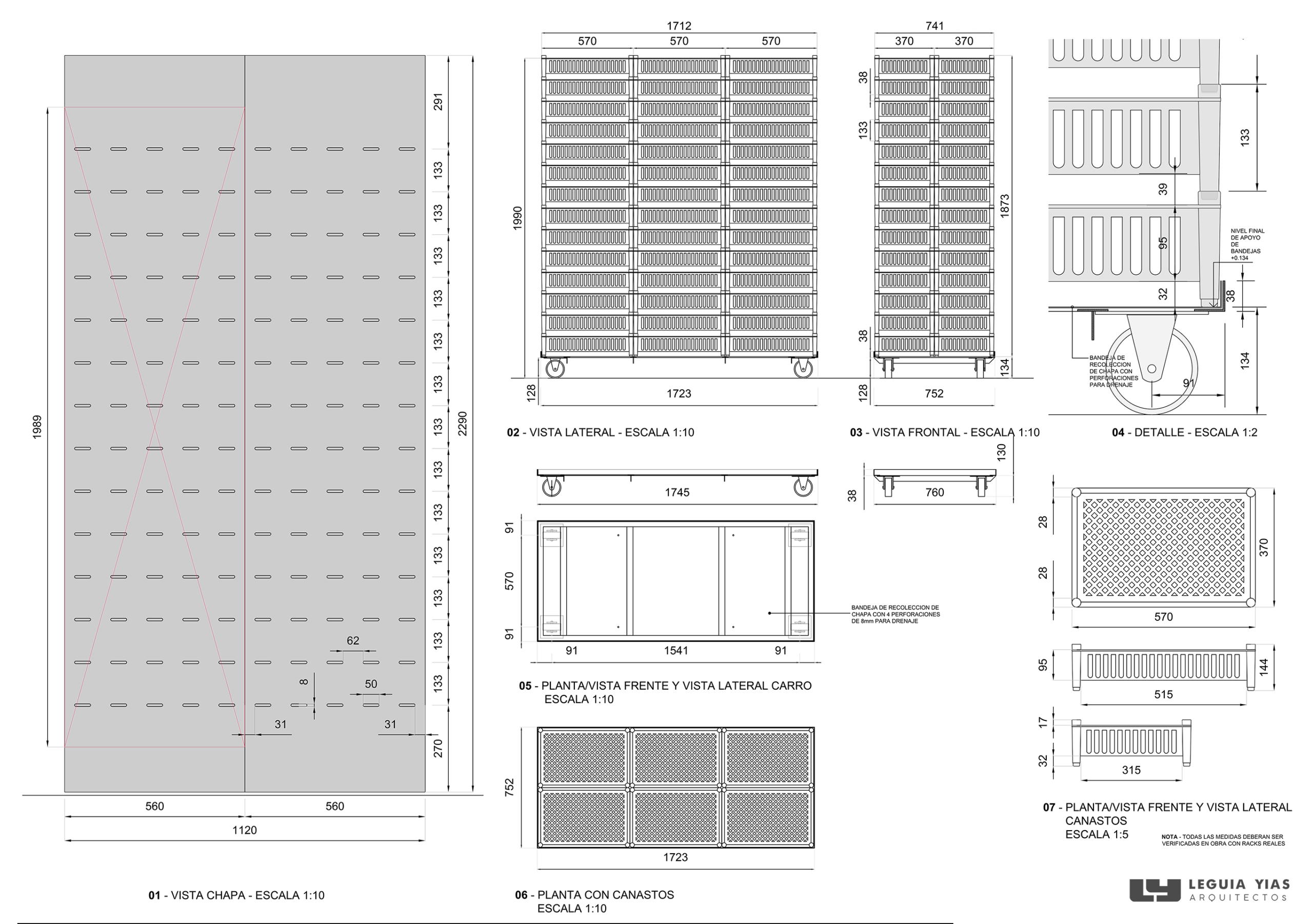
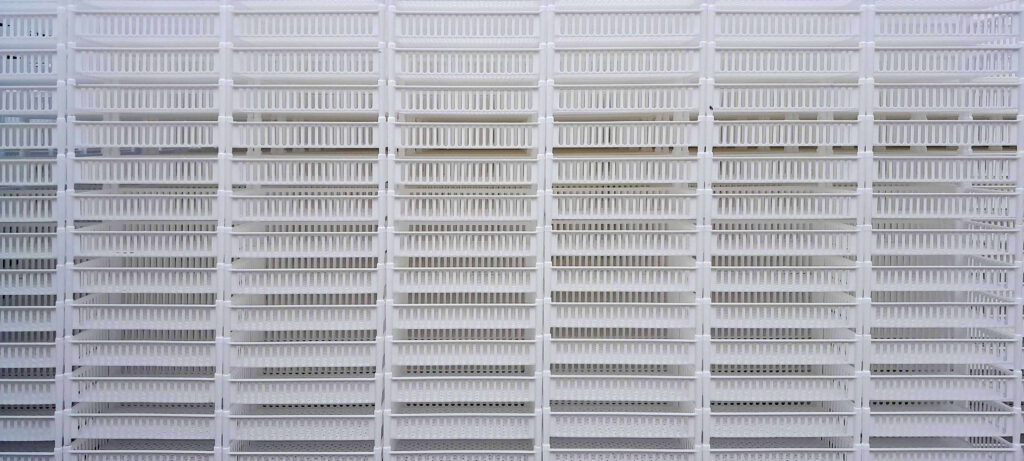
The metal structures, air systems, racks, trays, ducts, operational layouts, and technical areas had to advance in parallel to be operational before the start of the harvest.
The complexity increased because part of the intervention had to be carried out within already regulated and operational industrial areas, with virtually no margin for error.
The project also required permanent coordination between architects, thermomechanical specialists, engineers, manufacturers, cultivation teams, post-harvest operators, and production management, all working on the same system simultaneously.
A system developed to adapt
One of the most relevant aspects of the project was its capacity for adaptation.
As Cannava modified drying procedures, load types, or operational strategies, the complete system had to respond quickly without compromising the stability or quality of the process.
The design ended up incorporating:
sistemas de recirculación adicionales,
modificaciones en flujos internos,
nuevas estrategias de ventilación,
recalibraciones ambientales,
y monitoreo digital remoto mediante SITRAD.
The entire complex was conceived not as a fixed solution, but as an evolutionary infrastructure capable of adjusting to future productive needs.
Result
The final evaluations carried out during commissioning confirmed that the system reached the intended operational parameters, achieving homogeneous, stable, and reproducible drying conditions across all chambers.
The project also achieved exceptional economic optimization compared to equivalent international industrial solutions.
Beyond its technical scale, the project represents a particular way of understanding architecture: not as an isolated object, but as a discipline capable of precisely integrating operational, regulatory, scientific, and productive requirements within a coherent, built solution.
“Designing an industrial plant is complex. Designing it while it’s changing, being built, and the harvest is approaching is something else entirely.”
146 DÍAS
tiempo total entre el inicio del proyecto y la próxima cosecha.
24 CÁMARAS
cámaras industriales de secado desarrolladas para producción farmacéutica.
+25 TONELADAS
capacidad proyectada de procesamiento de materia vegetal.
+50 HECTÁREAS
superficie de cultivo prevista para abastecer el nuevo complejo industrial.
+3.000 M²
infraestructura técnica desarrollada para secado, postcosecha y operación.
600 RACKS
unidades industriales diseñadas para transporte y secado controlado.
+48.000 BANDEJAS
bandejas operativas desarrolladas para un sistema de secado homogéneo de alta escala.
16:1
relación de costo alcanzada frente a soluciones industriales internacionales equivalentes.
Equipo de proyectoArq Elena LeguíaArq. Guillermo YiasArq. Esteban PaladinoDiseño de sistema de secado: Disterm air solutionsEjecución y logísitca: Venetto S.A.
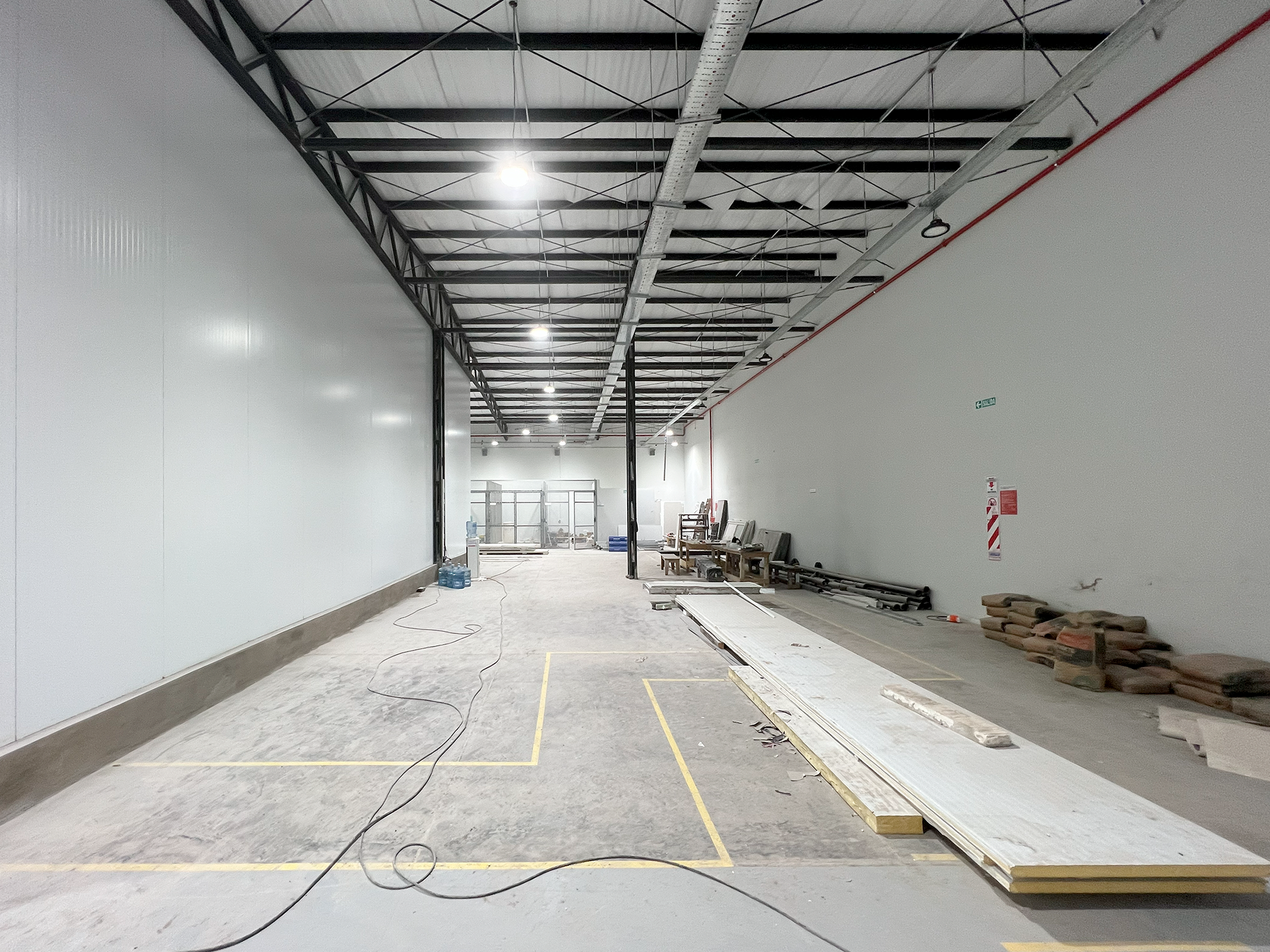
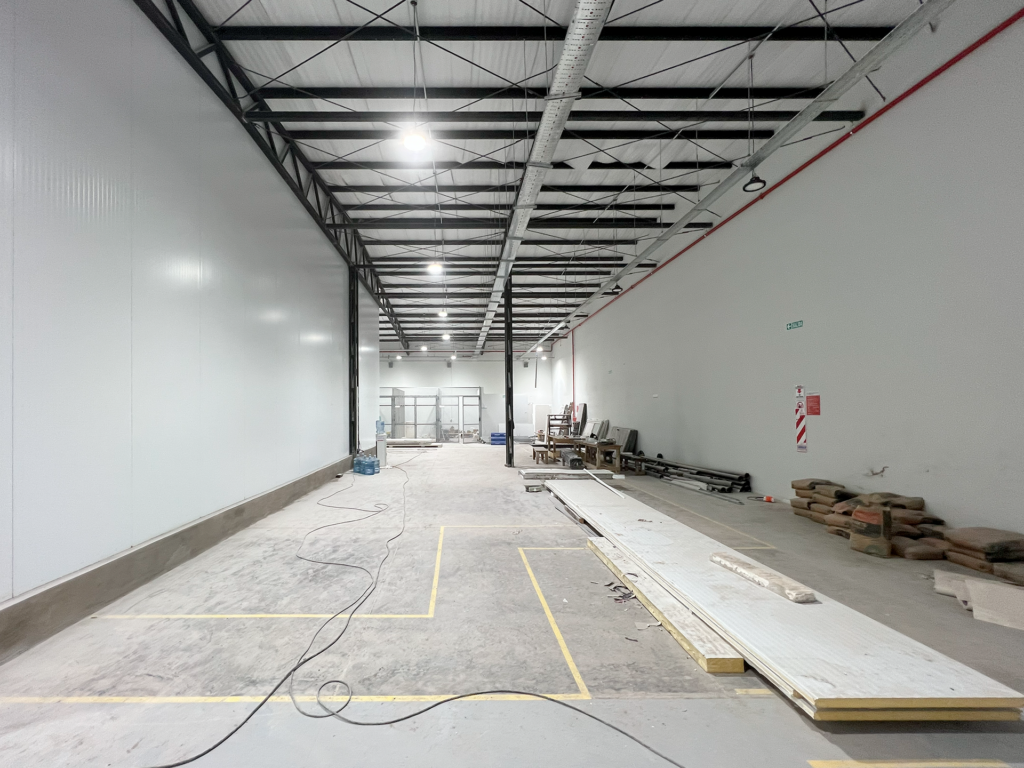
Acceso a una cámara de secado de Cannabis Medicinal en Jujuy ArgentinaEl corredor principal de las cámaras de secado de cannabis medicinal en etapa de construcción.El interior de una cámara de secado de Cannabis medicinal proyectada por Leguía Yias Arquitectos.Tabique de flujo laminar en cámaras de secado de cannabis medicinal. Cannava. En etapa de construcciónConstrucción del complejo de secado de cannabis medicinal en Finca El Pongo JujuyEl corredor principal de las cámaras de secado de Cannabis medicinal de Cannava en Finca El Pongo. Proyecto Leguía Yias Arquitectos.Construcción del complejo de procesamiento de Cannabis medicinal en Finca El Pongo Jujuy.Nivel superior de cámaras de secado en Cannava Jujuy. Proyecto Leguía Yias ArquitectosCámaras de secado de cannabis medicinal en Cannava Jujuy. Proyecto Leguía Yias ArquitectosEl diseño del flujo laminar se ejecutó con una precisión milimetrica, para que las bandejas y el flujo de aire tuvieran exactamente la medida de cálculo. En la foto puede observarse el corredor de aire laminar que queda entre los racks de bandejas dentro de las cámaras de secado de Cannabis. Proyecto Leguía Yias ArquitectosUna cámara de secado de Cannabis medicinal llena de racks. Proyecto Leguía Yias ArquitectosDiagrama de flujos operativos para la planta de biotecnología de El Pongo en Jujuy.Diagrama de flujos operativos para la planta de biotecnología de El Pongo en Jujuy.Diseño de Racks y tabiques de secado por flujo laminar para las cámaras de secado de Cannabis.Bandejas de secado de cannabis medicinal de polipropileno grado farmaceutico.Corredor superior de las cámaras de secado de Cannava en JujuyInterior de una cámara de secado por flujo laminar en Cannava JujuyHall de acceso superior con montacargas al complejo de cámaras de secado de Cannava en Jujuy, ArgentinaPuertas termicas en camaras de secado de cannabis medicinal.Cámara de secado de cannabis por flujo laminar, llena con racks de secado de polietileno de grado farmaceuticoCorredor principal de las camaras de secado de Cannabis medicinal en Cannava, Jujuy, ArgentinaSistema de ventilación de aire superior de las camaras de secado.Pasillo técnico en donde se ubican todos los equipos y sistemas de control manual de emergencia.PLantación de Cannabis medicinal en Jujuy ArgentinaCámara de secado de cannabisCorredor operativo de las camaras de secado de cannabis.


 01 / 29