Cannava Pavilion 2022
La Rural, Avenida Sarmiento, Ciudad Autónoma de Buenos Aires, Argentina — 2022


Architecture
La Rural, Avenida Sarmiento, Ciudad Autónoma de Buenos Aires, Argentina — 2021
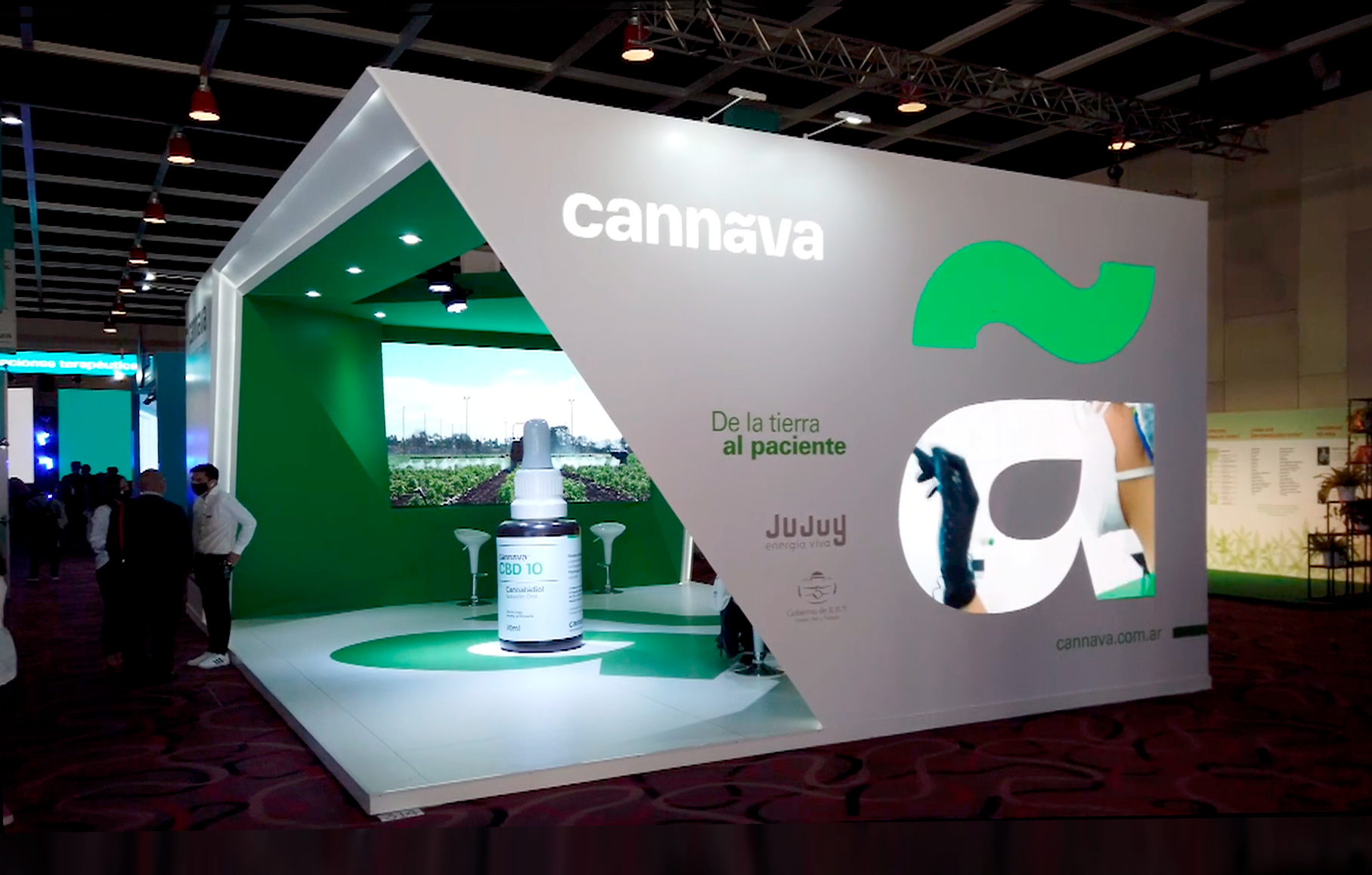
In 2021, while Cannava was consolidating a new productive matrix linked to pharmaceutical-grade medical cannabis in Jujuy, the brand needed more than a stand for Expocannabis Buenos Aires: it needed to build presence, identity and trust. The space designed by Leguía Yias Arquitectos turned that need into an immersive experience where architecture, marketing and audiovisual communication integrated as a single system. A pavilion conceived as a walkable, open and dynamic portal, where the product became the absolute protagonist and the brand began to tell its own story.
Presented at Expocannabis 2021, held at the La Rural de Palermo fairgrounds, the project for Cannava was developed at a strategic moment for the Jujuy state company: the first public presentation of the pharmaceutical product CBD10 to a specialized audience.
From the outset, the project avoided the traditional logic of the stand as a static or simply expository object. The circulation analysis within the fairgrounds showed that the stand would be located on one of the highest-traffic corridors of the event.
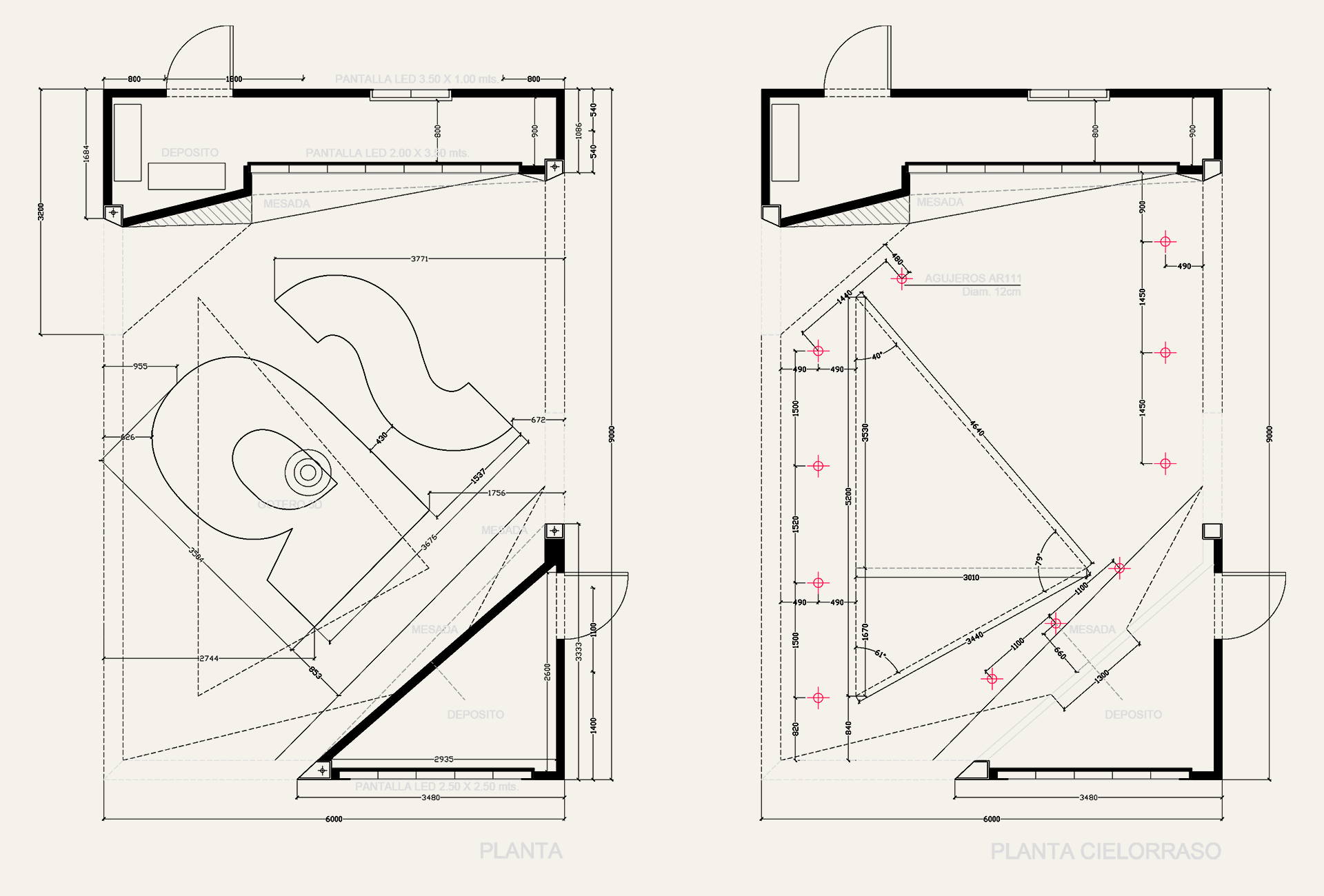
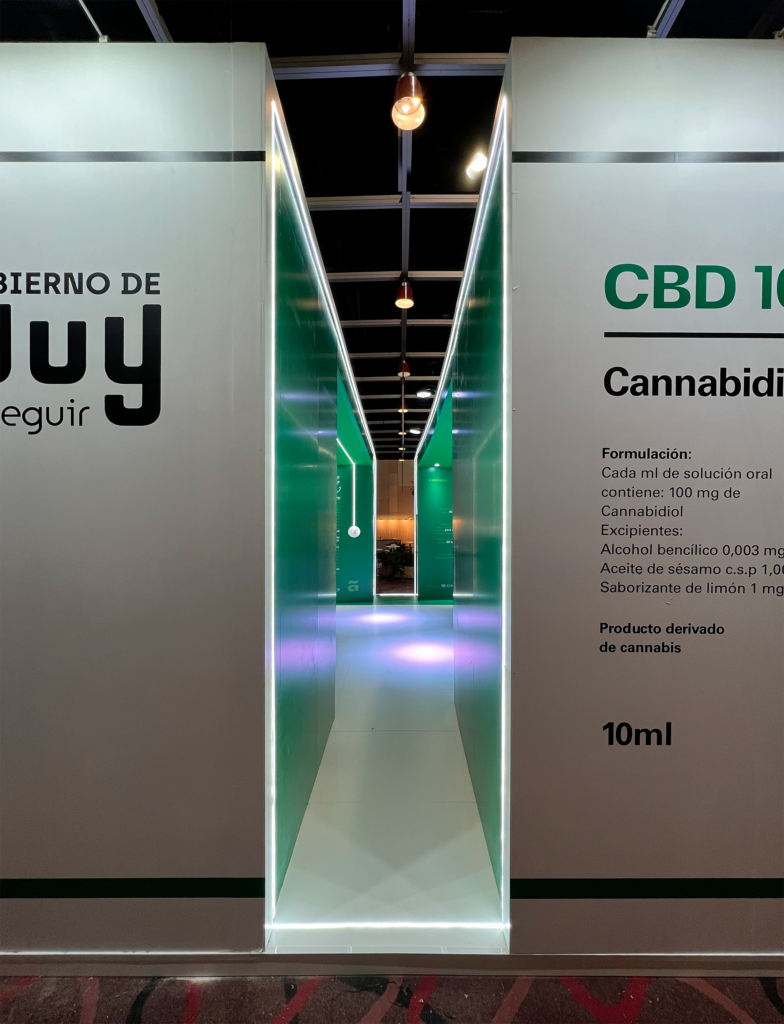
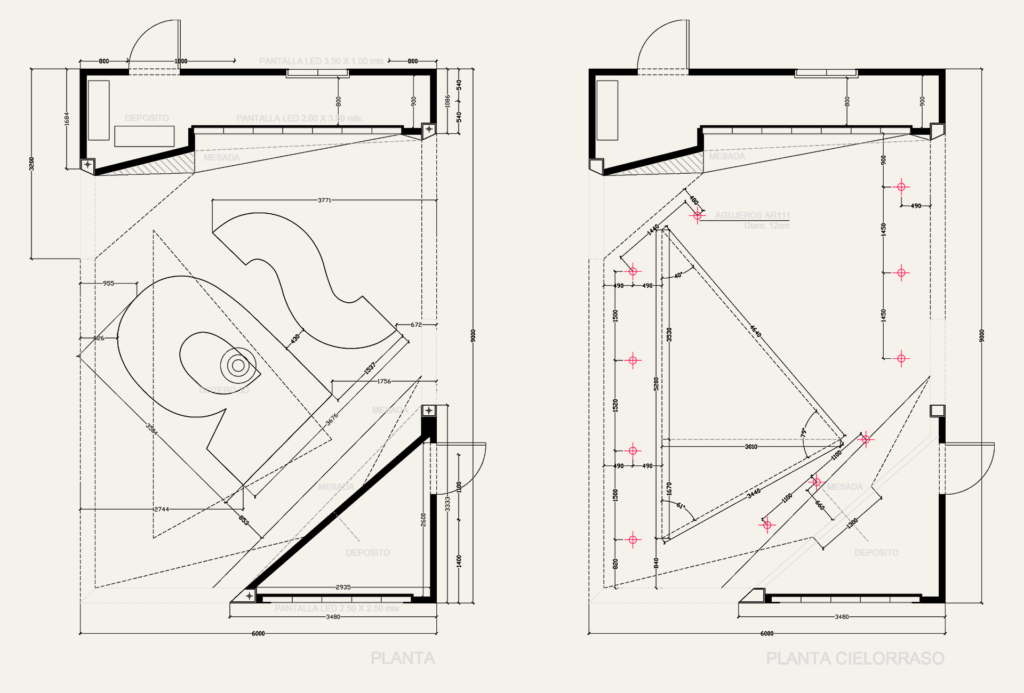
Based on that internal urban condition, the space was conceived as a walkable tunnel: an open architecture that absorbed the constant flow of visitors and transformed passage into an experience.
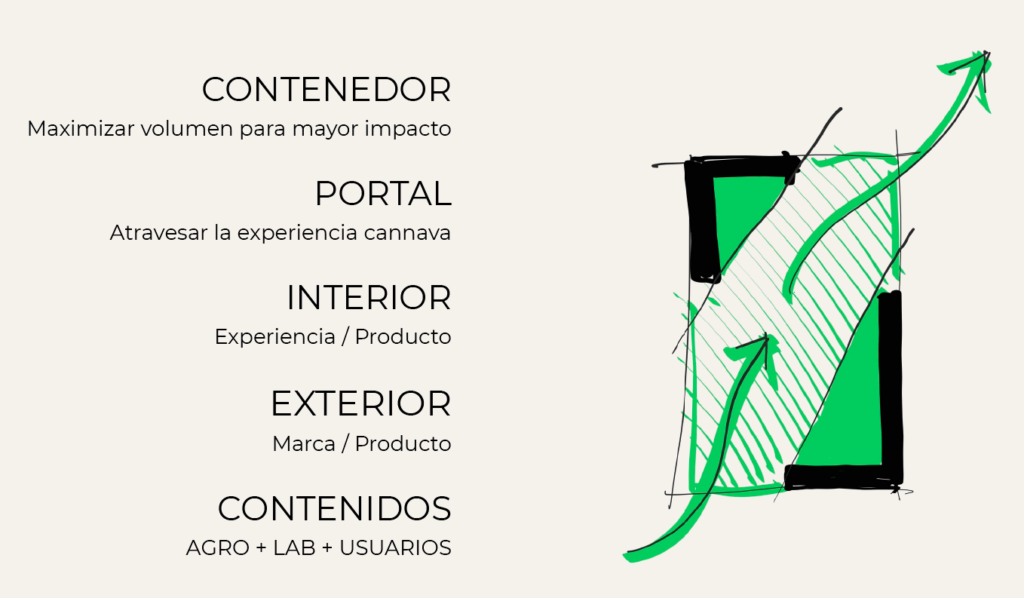
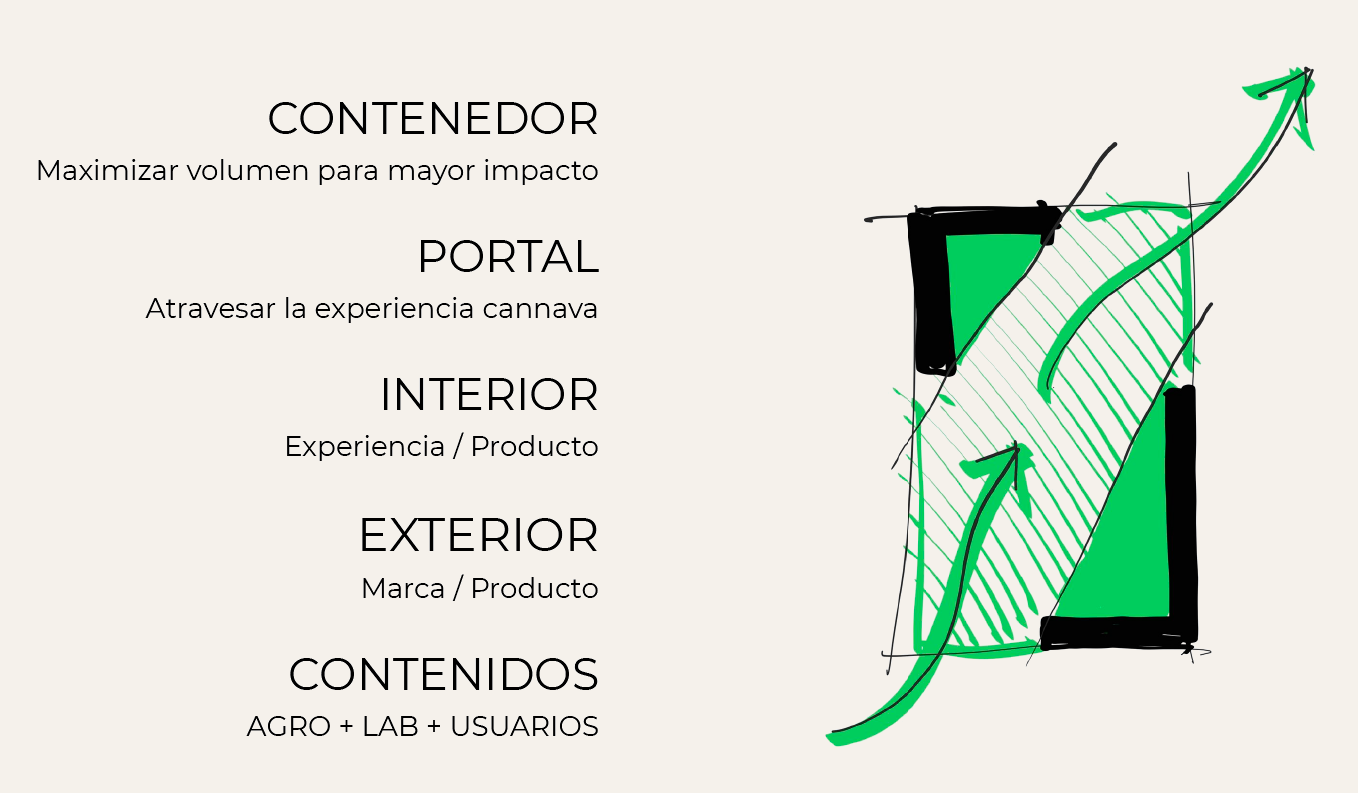
The spatial concept was structured around five main ideas: container, portal, interior experience, exterior presence, and integrated audiovisual content.
The general geometry of the pavilion emerged from a large diagonal morphological opening that deformed the original volume to generate a permeable and dynamic space. A structure of aluminum and metal tensioners supported the exterior and interior cladding, allowing the project to be built in very short timelines.
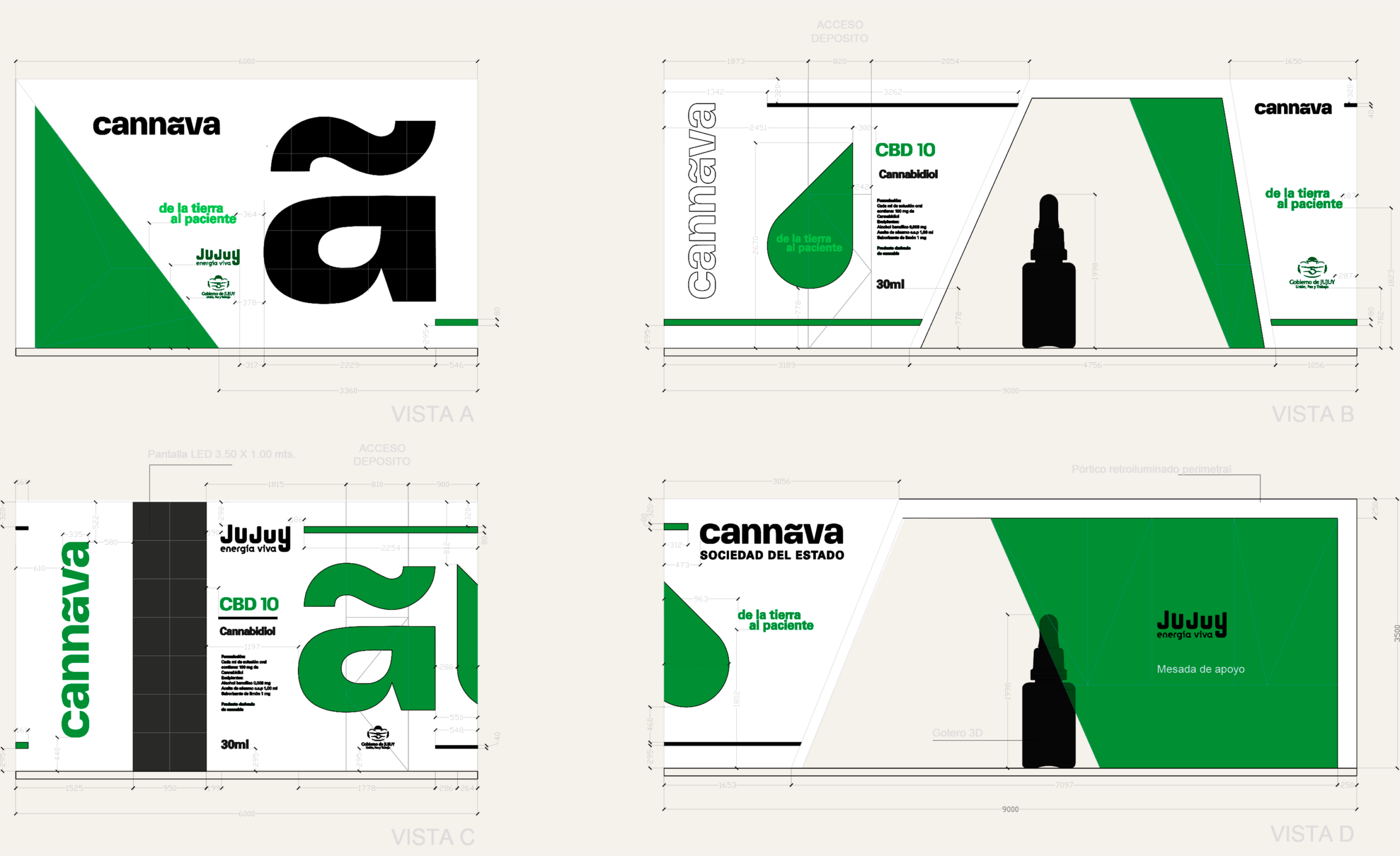
Externally, the volume functioned as a large three-dimensional graphic piece. The pavilion picked up the visual aesthetic of the CBD10 packaging and transformed it into architecture.
It was not about literally reproducing a product box, but about converting its graphic codes into inhabitable space.
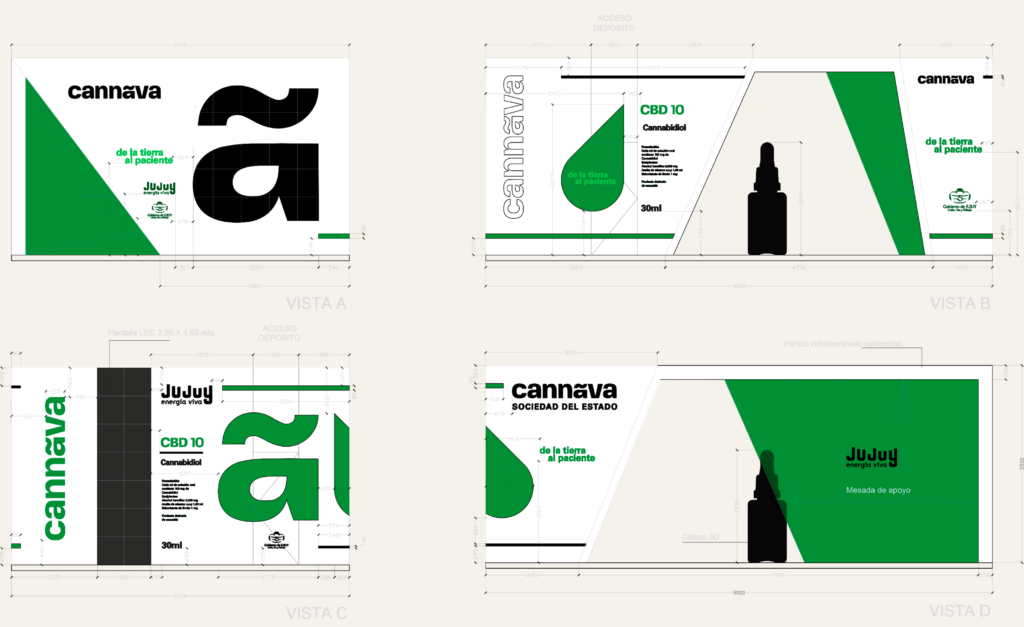
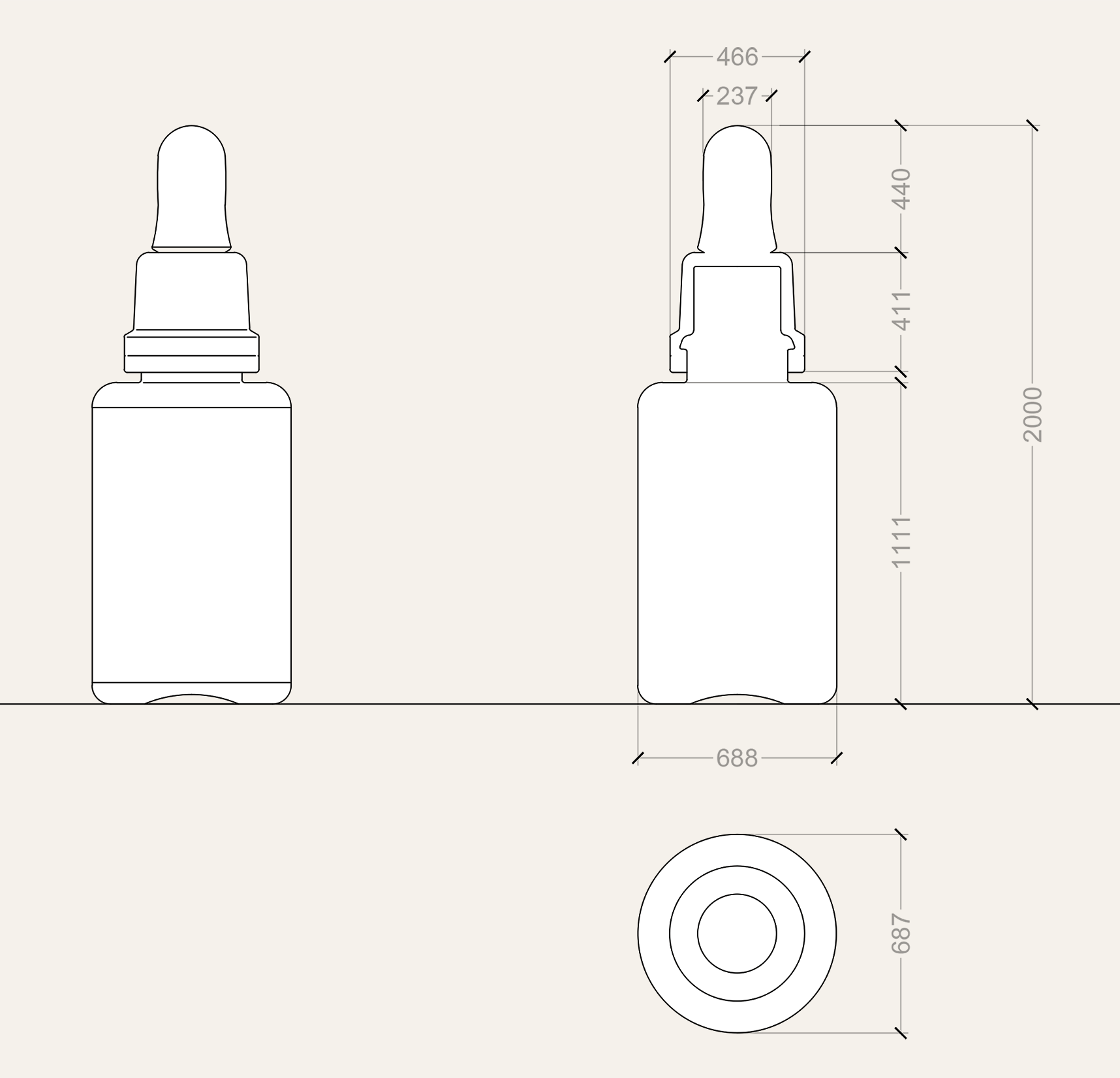
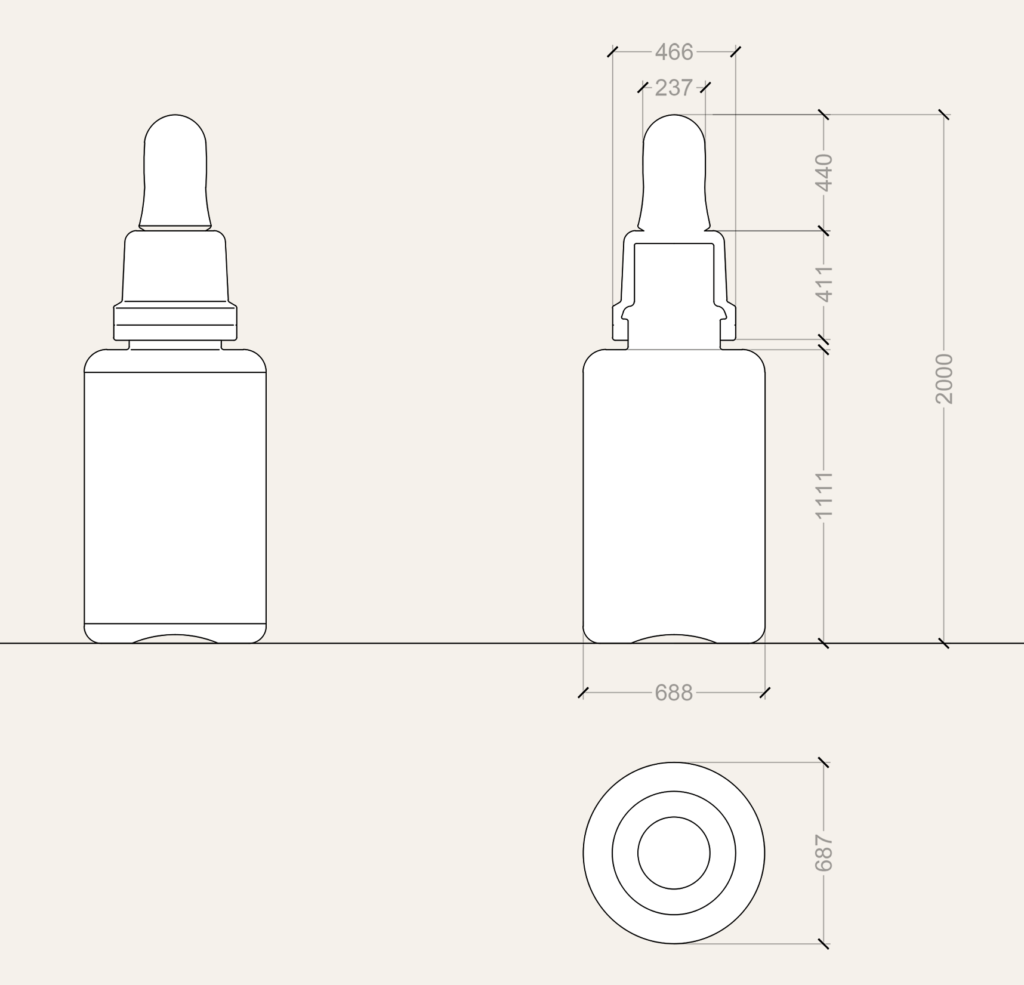
At the heart of the pavilion, a gigantic reproduction of the CBD10 bottle was installed, conceived almost as a sculptural piece within a contemporary exhibition hall.
The operation sought something very precise: to give the product a symbolic scale commensurate with the strategic importance it held for Cannava at that time. CBD10 appeared not as a consumer object, but as an institutional milestone.
The architecture, the lighting, and the circulation were all organized around that central object.

One of the most distinctive elements of the project was the incorporation of a monumental logotype built entirely through LED screens integrated into the architecture.
The intention was to generate a double reading: the logotype functioned simultaneously as a visual identity and as an audiovisual narrative support. The brand was not only shown; it narrated.
The large LED screens complemented the visitor journey by displaying agricultural processes, industrial facilities, pharmaceutical production, and institutional content linked to the development of medical cannabis in Jujuy.
In a context where the company did not yet have consolidated photographic production or developed commercial pieces, the studio produced the entire visual universe of the pavilion.
The same technology habitually used for architectural visualization was applied to the development of branding and product communication, integrating architecture and marketing into a single system.
The project synthesizes a cross-cutting condition present in much of the studio’s work: architecture understood not only as physical construction, but also as a system of communication, experience, and strategic positioning.
Expocannabis 2021 represented for Cannava much more than an institutional participation in a fair. It was one of the first moments in which the company began publicly building its identity as a national-scale pharmaceutical brand.
The designed space accompanied that process by transforming an ephemeral pavilion into a strategic positioning tool.
 01 / 06