Expocannabis 2021
La Rural, Avenida Sarmiento, Ciudad Autónoma de Buenos Aires, Argentina — 2021


Architecture
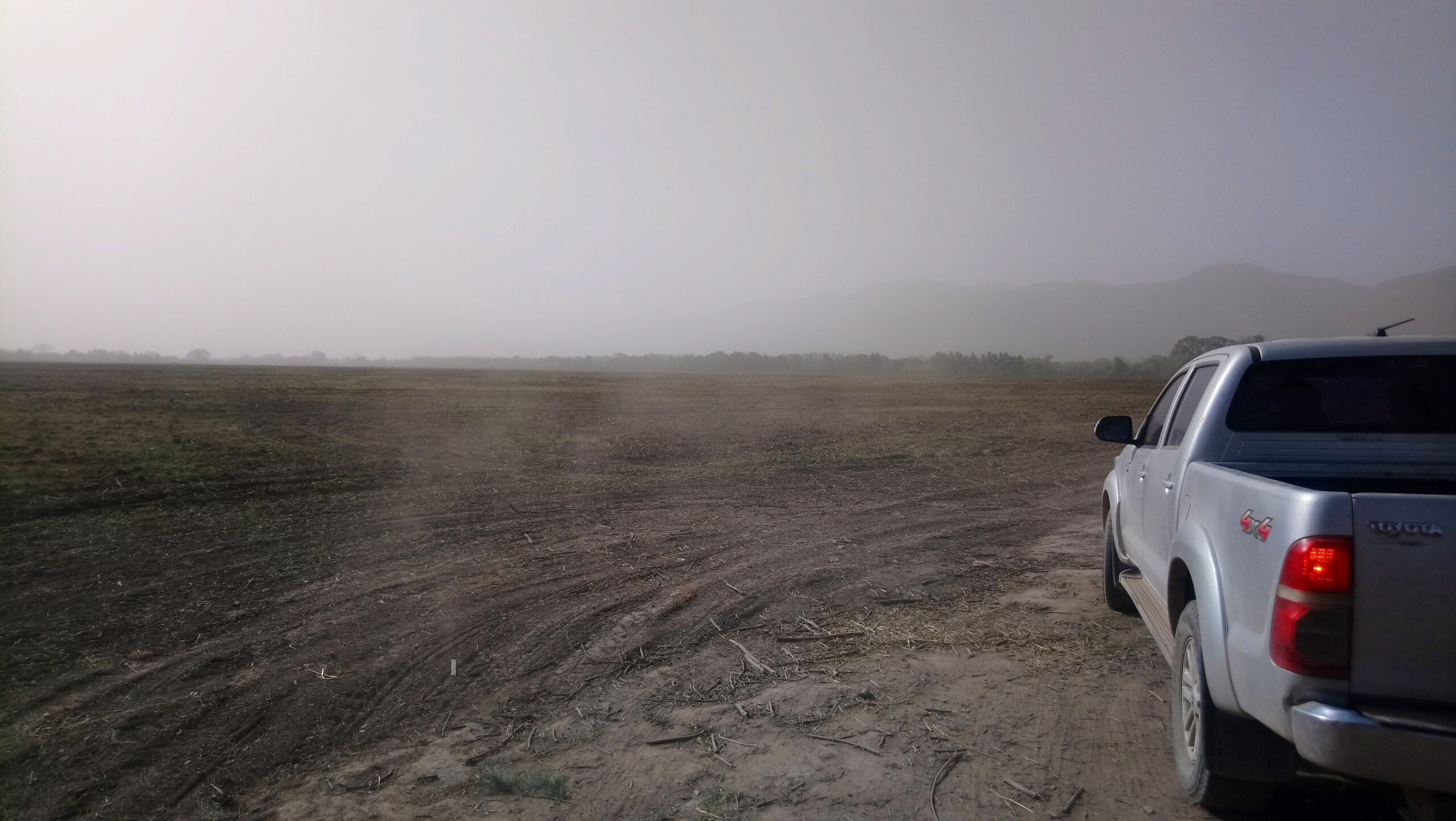
Finca El Pongo, Jujuy, Argentina — 2022
In the heart of Finca El Pongo, Jujuy, a system of production units was conceived to expand the agricultural capacity of the most ambitious medical cannabis complex in Latin America. More than a set of greenhouses, the project organizes territory, infrastructure, natural resources and logistics to make possible a new form of integrated production between private investment, agricultural technology and the pharmaceutical industry.
Great industries are not built only with buildings. They are built by creating the physical conditions capable of sustaining a long-term vision.
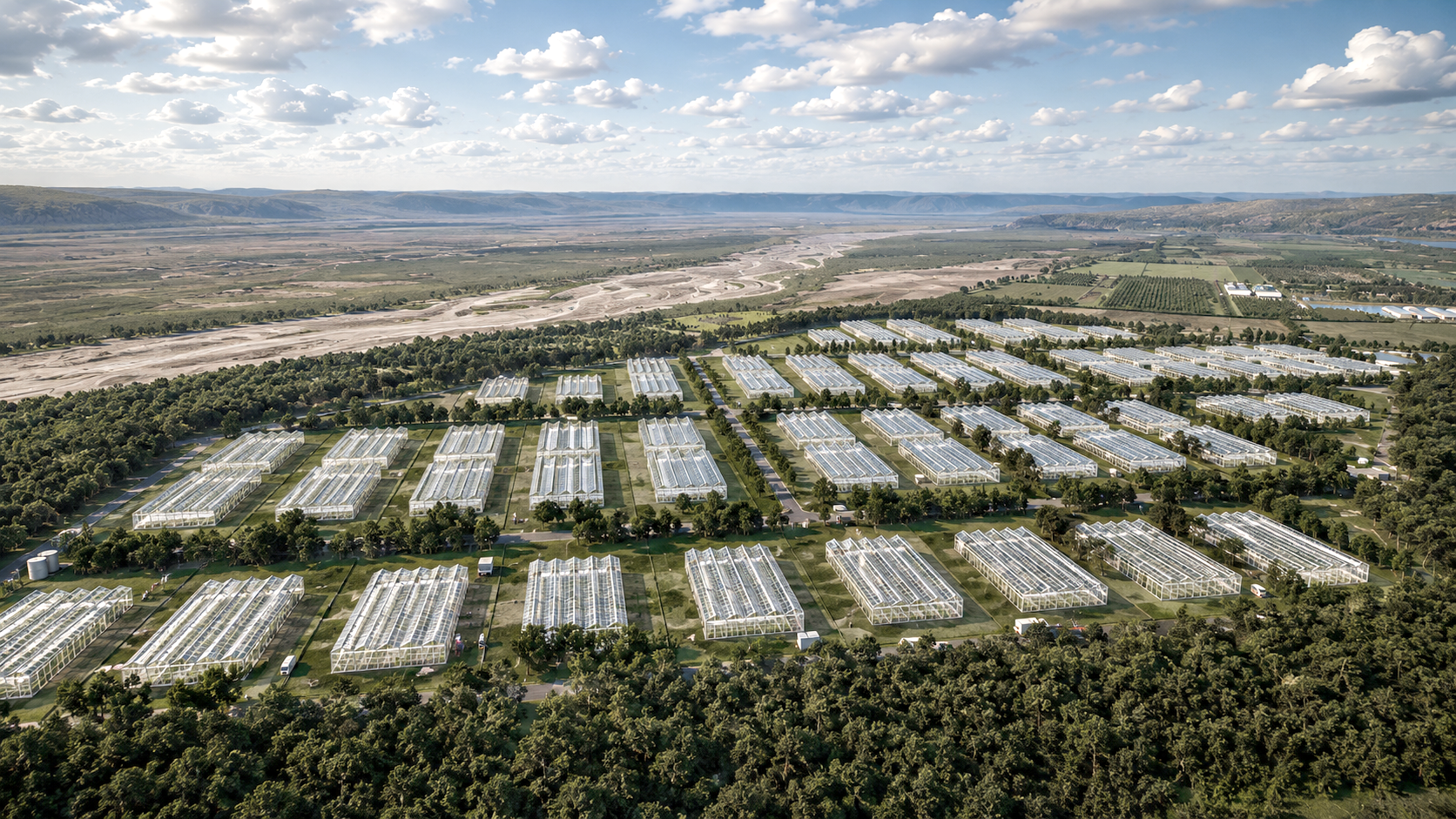
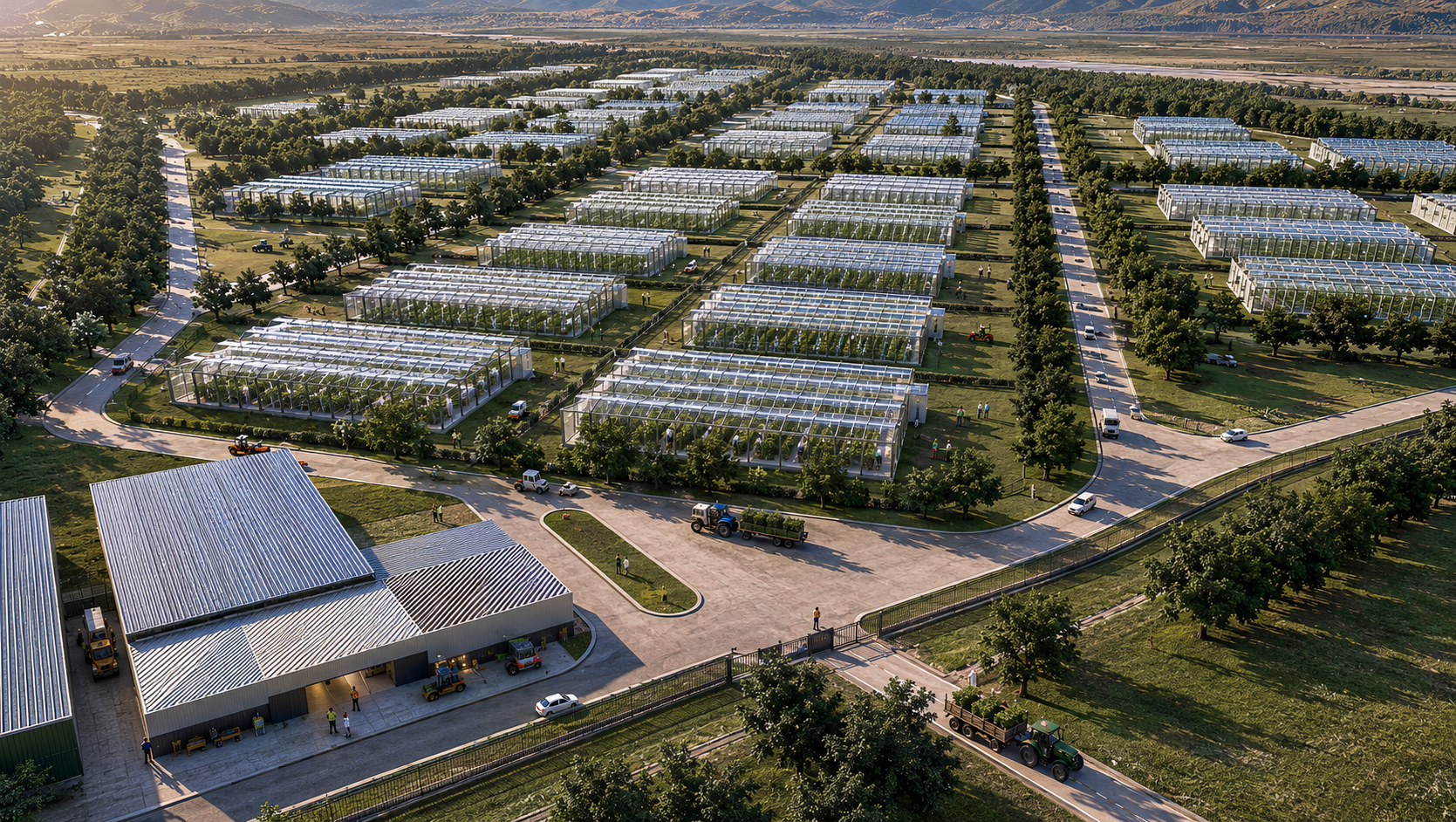
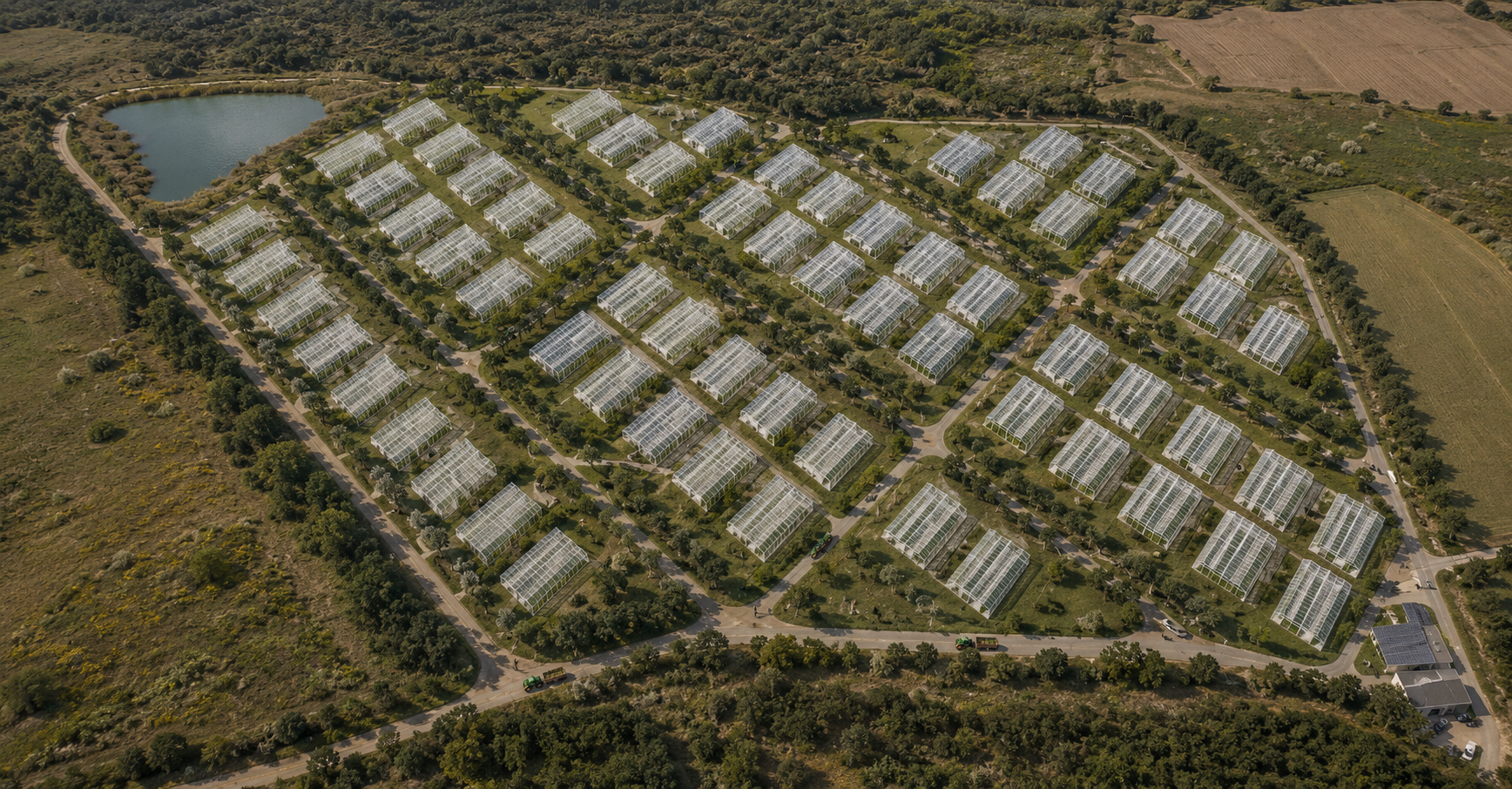
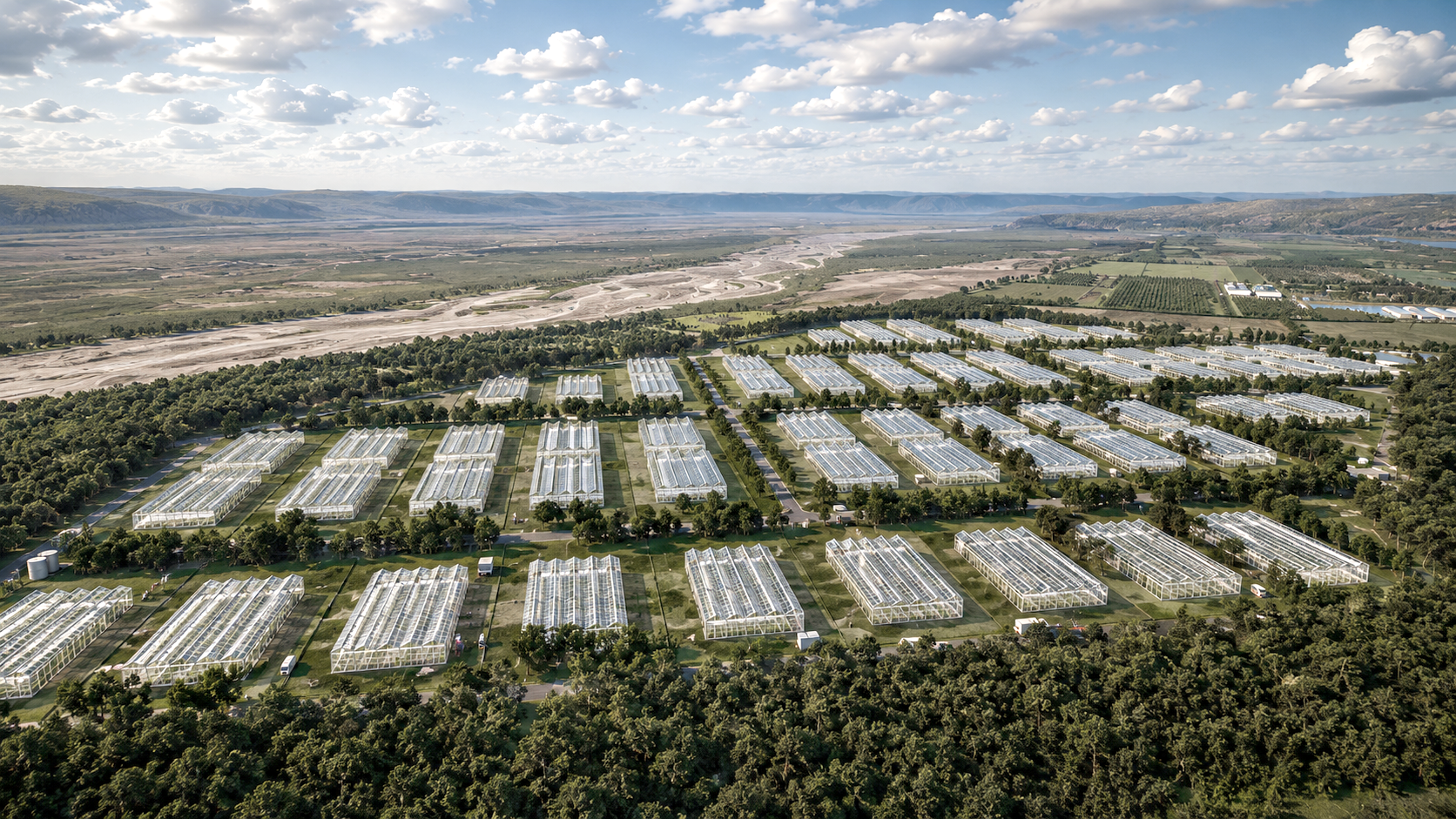
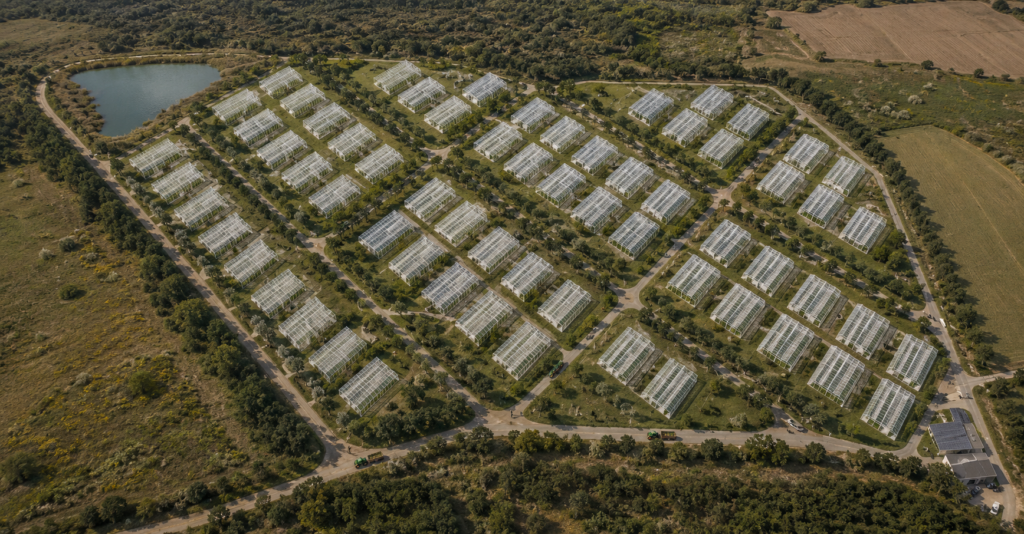
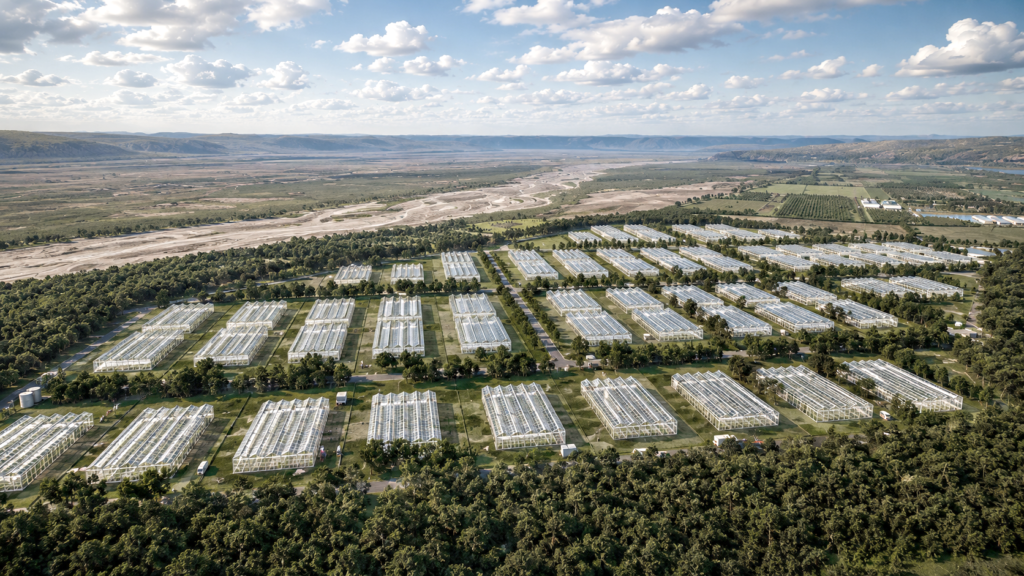
Between 2022 and 2023, as part of the expansion of the Cannava agro-industrial complex at Finca El Pongo, we developed the master plan for the Production Units (UPP): a system of more than eighty hectares intended for the cultivation of medical cannabis under controlled conditions.
The initiative responded to an innovative strategy promoted by the province of Jujuy: to allow private investors to produce raw material within a regulated and certified environment, contributing capital and diversifying the productive base of the complex.
The architecture had to respond to an unprecedented question: how to design a territory capable of housing a new industry?
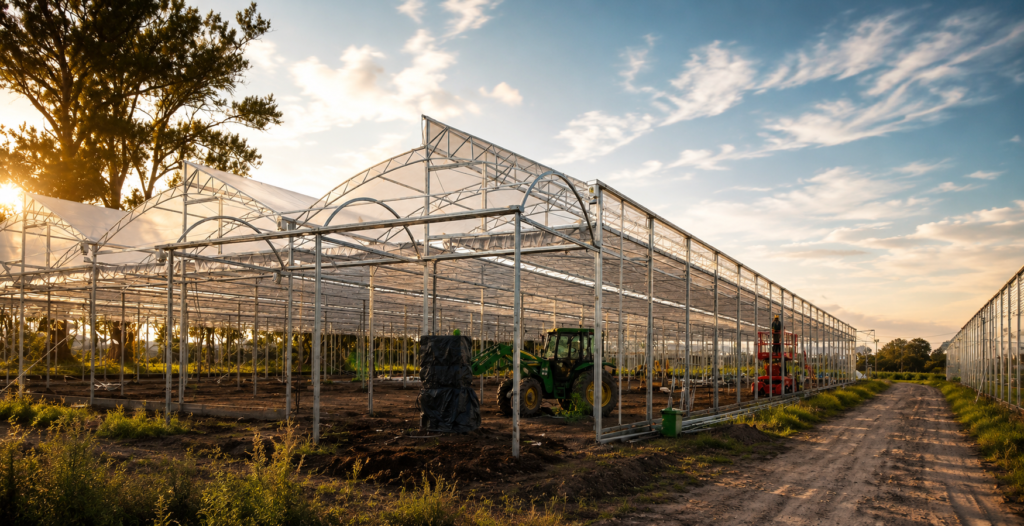
The project develops over more than 80 hectares intended for the intensive production of medical cannabis under controlled conditions.
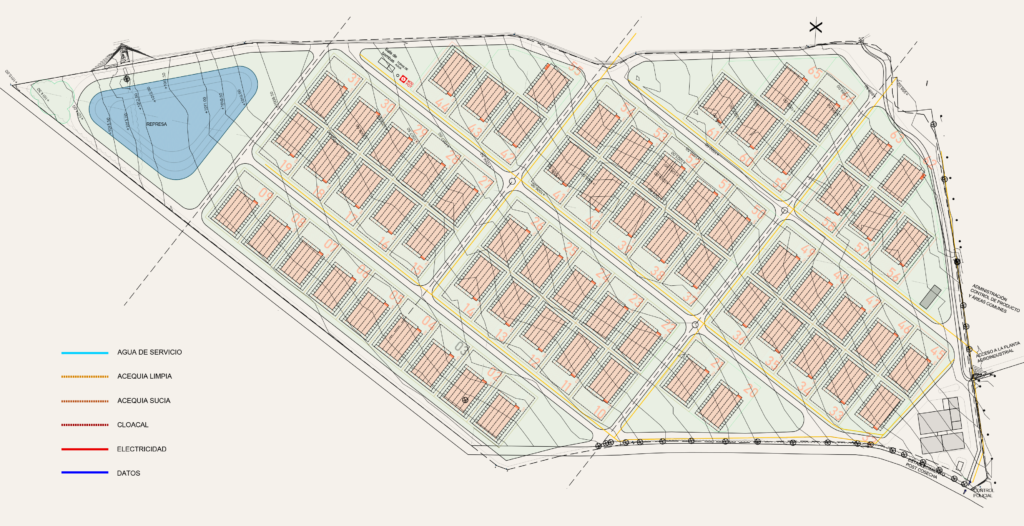
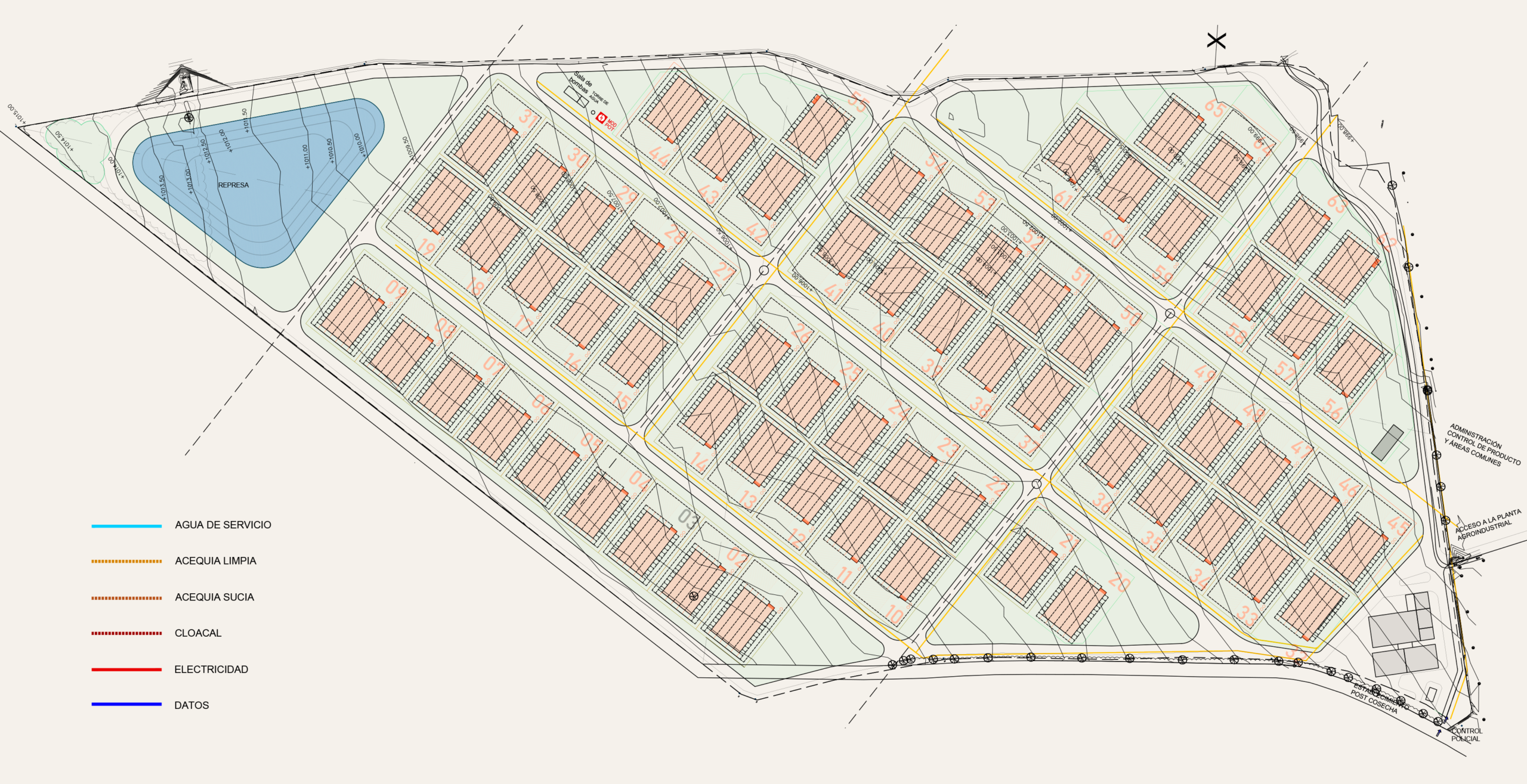
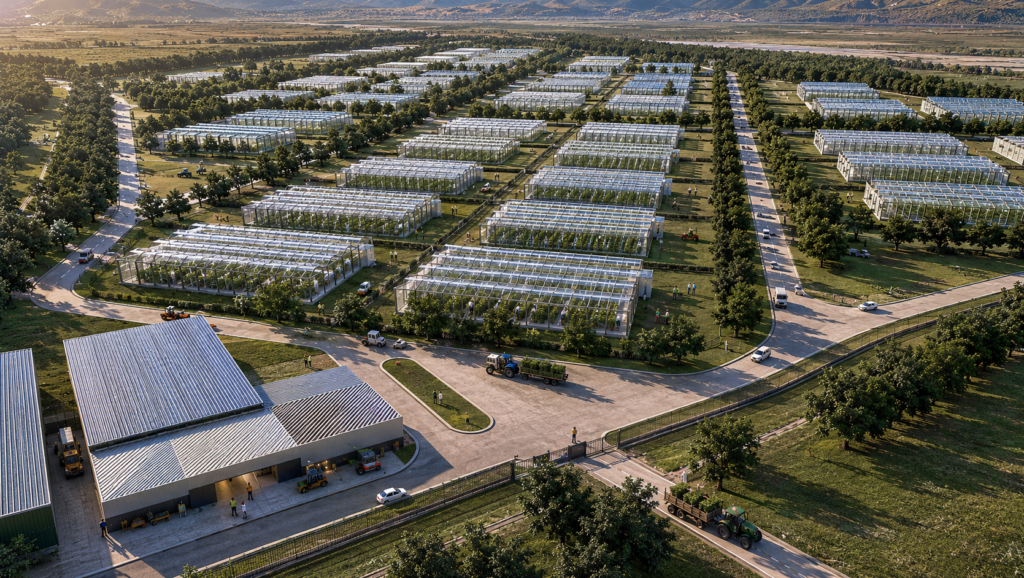
Unlike a conventional land subdivision or a traditional industrial park, the UPPs were conceived as a comprehensive productive platform where each plot is part of a larger system of production, infrastructure, and regulation.
Each unit was conceived to function autonomously, but integrated within a common structure that guarantees traceability, security, and operational efficiency.
The spatial organization of the complex emerged from extensive interdisciplinary work involving architects, agronomist engineers, civil engineers, water resource specialists, and Cannava production teams.
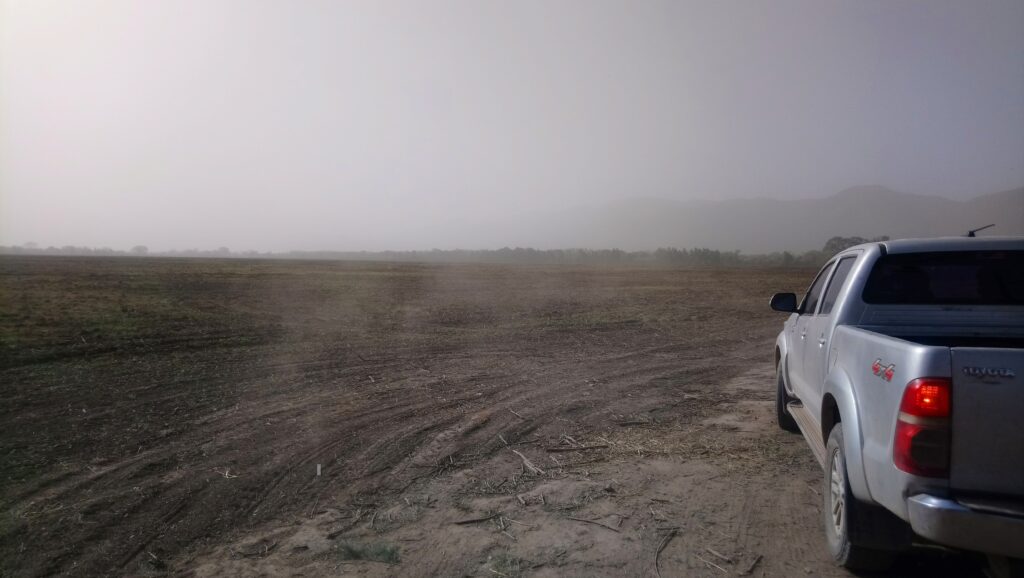
Topographic, hydrological, wind, and sunlight studies were carried out that allowed the optimal orientation of streets, plots, and greenhouses to be determined. The final layout responds to technical production criteria, not to conventional geometric logic.
The position of each structure was carefully evaluated to optimize solar capture, minimize shadow interference, and improve the overall thermal performance of the production units.
The projected processing capacity for Cannava required an agricultural production scale without precedent in the region.
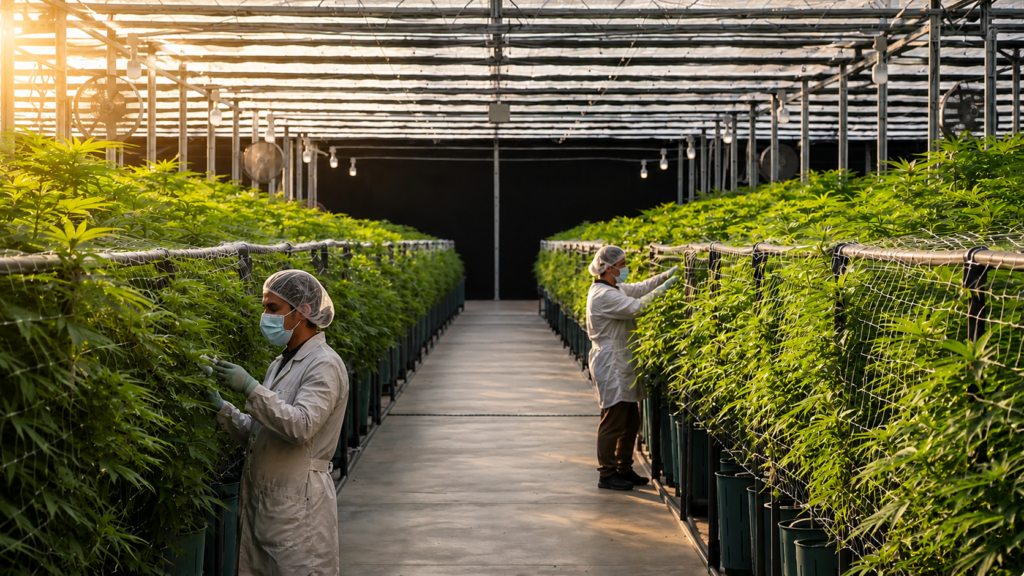
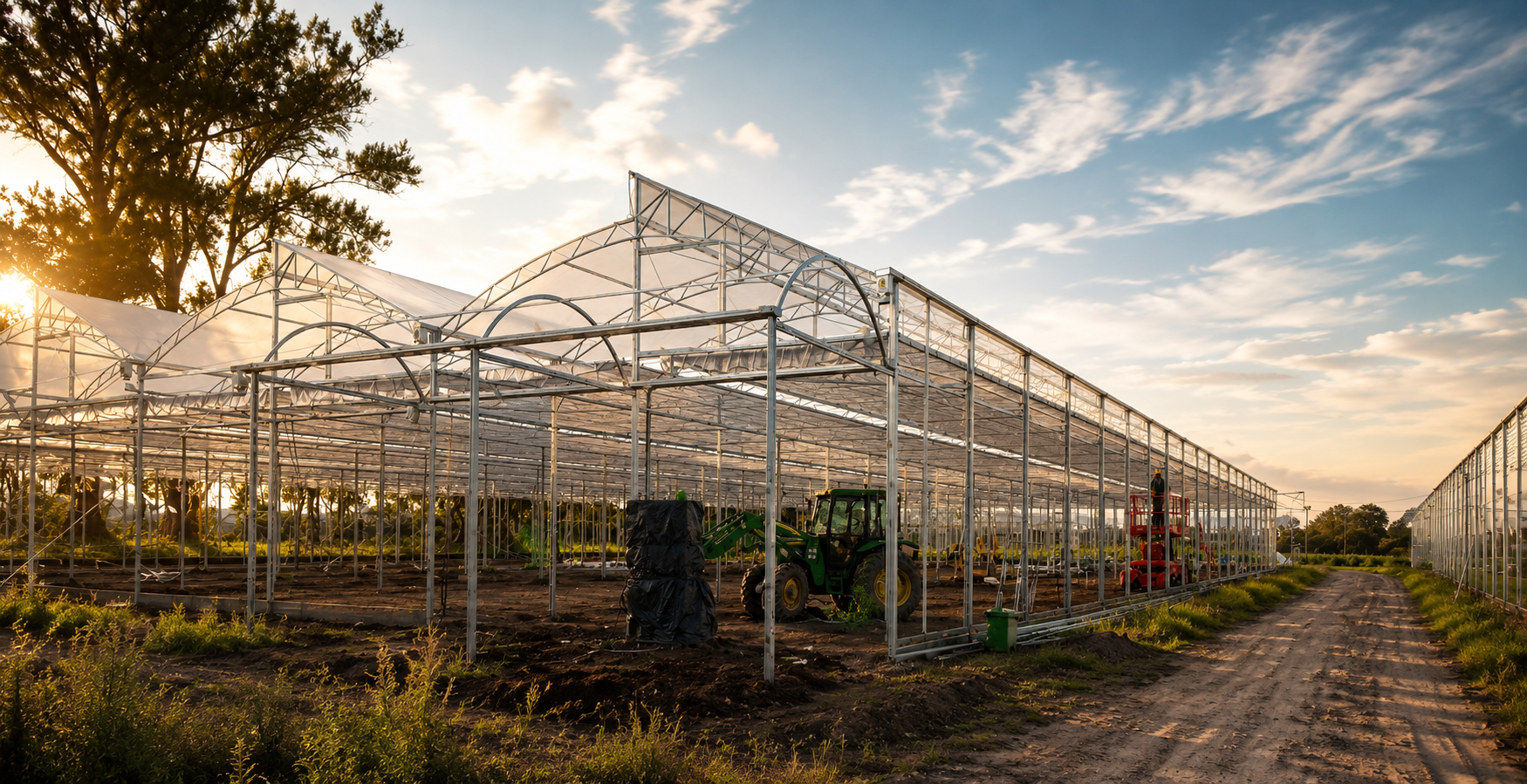
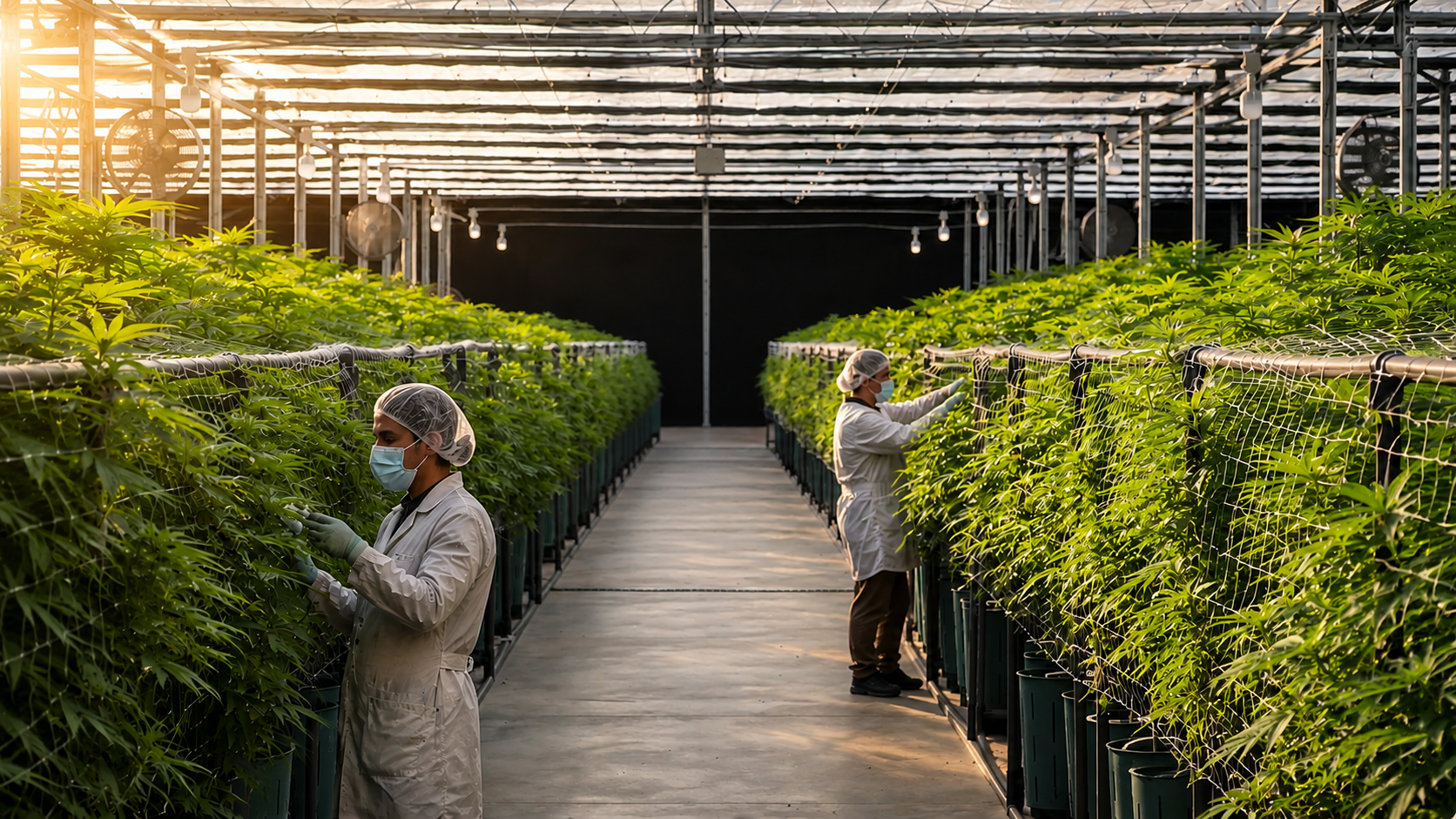
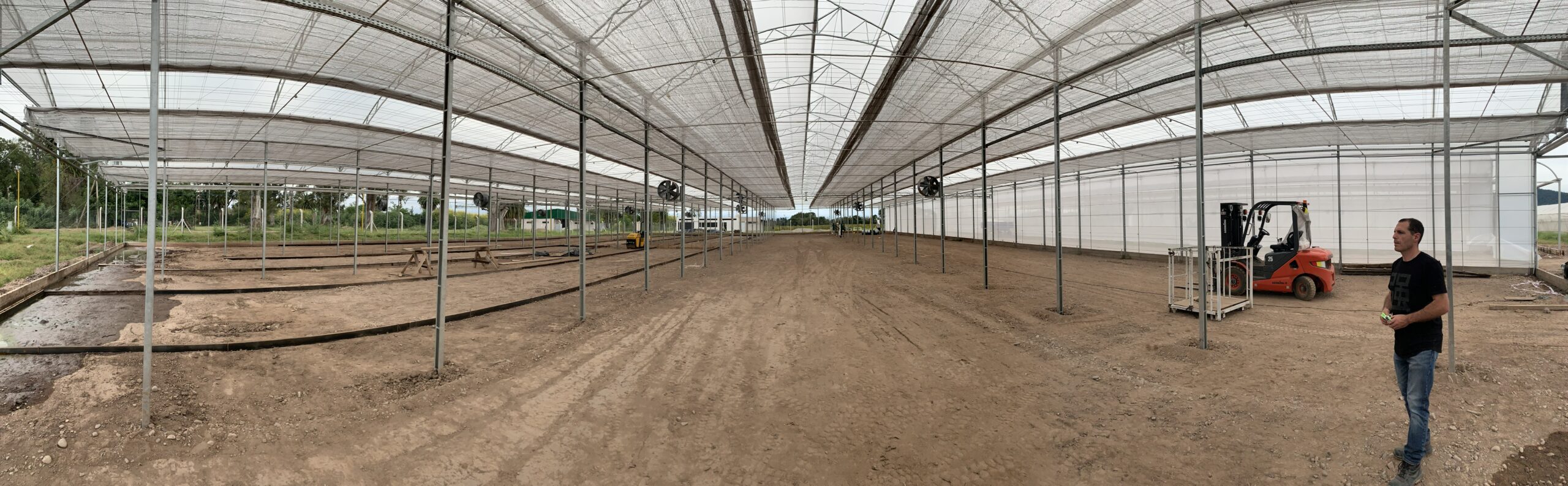
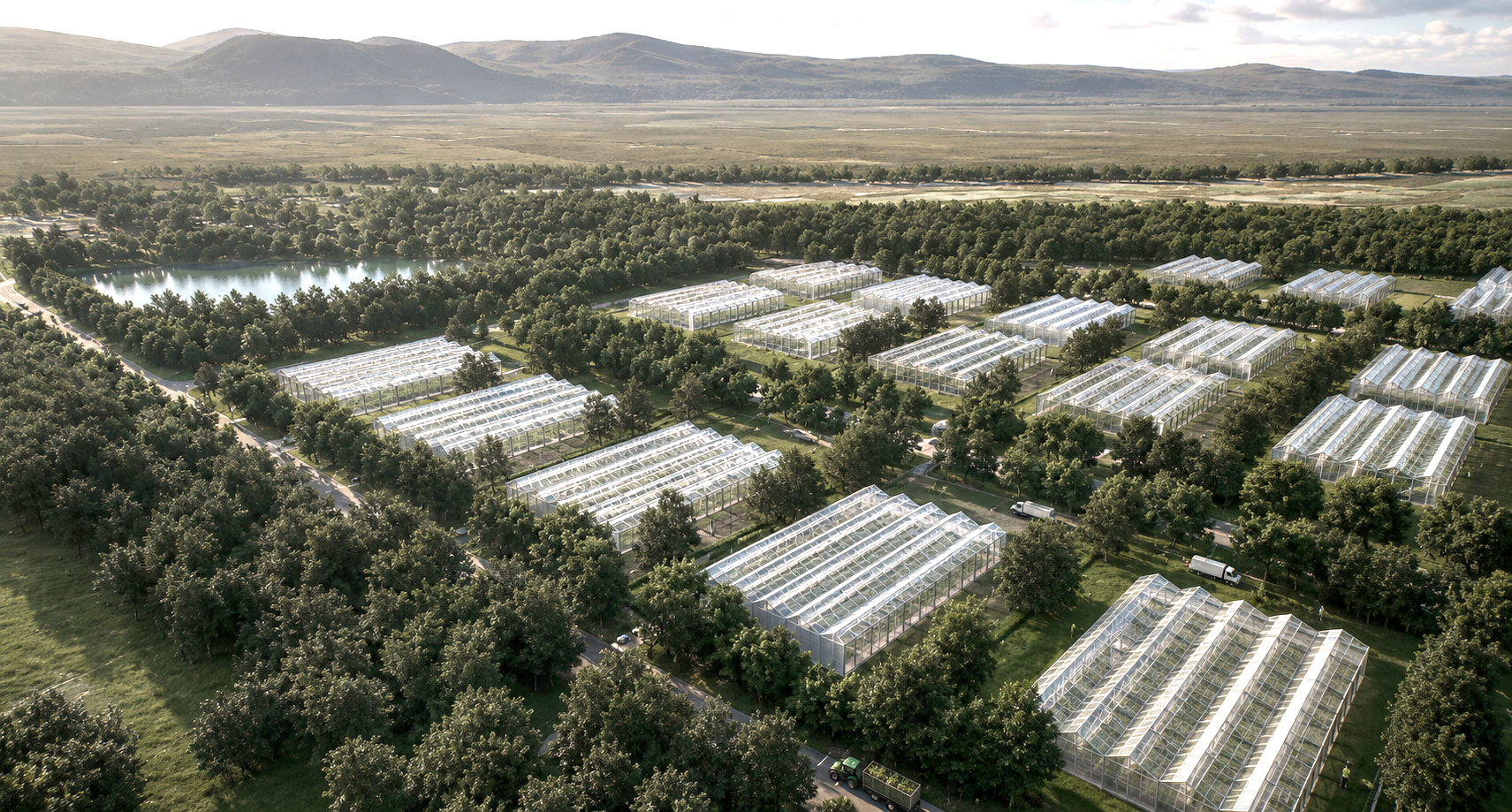
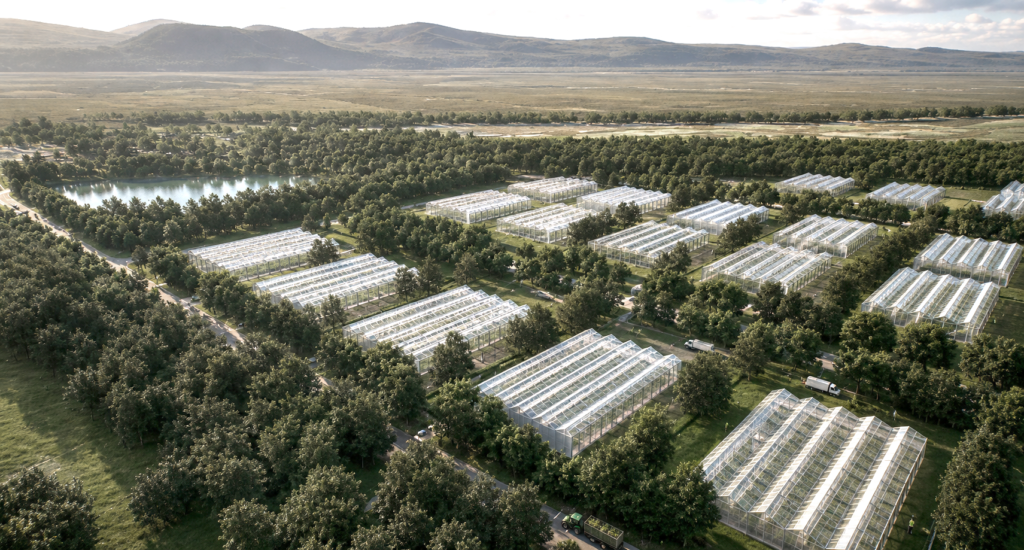
The greenhouses, imported and assembled in Jujuy, were conceived to operate alongside supplementary lighting systems capable of artificially controlling the plant’s growth cycles.
The objective was to guarantee a constant flow of plant biomass intended for the extraction of CBD and THC, continuously feeding the industrial facilities of the complex.
Agriculture thus integrated into an industrial logic of permanent production.
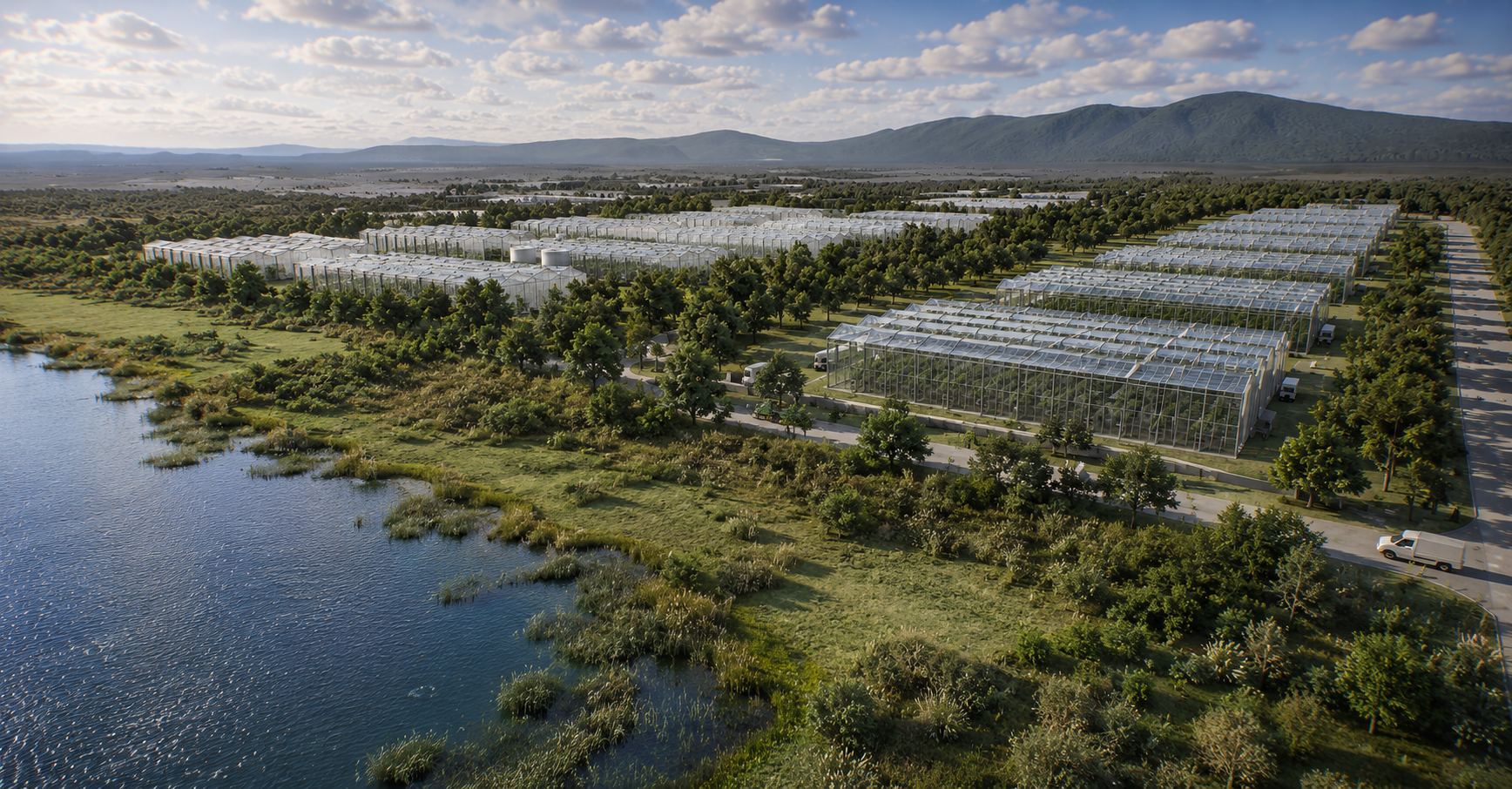
The productive system was complemented by a water infrastructure designed to ensure the permanent supply of the complex.
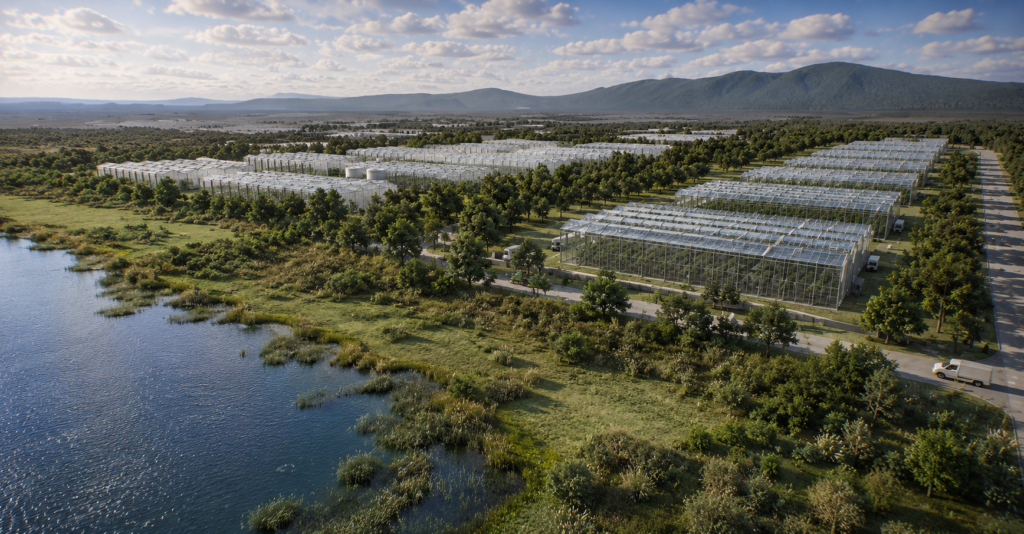
La creación de reservorios y sistemas de distribución permitió gestionar eficientemente uno de los recursos más críticos para el funcionamiento de la operación agrícola. Estos cuerpos de agua no solo cumplen funciones técnicas, sino que pasan a formar parte del paisaje productivo del proyecto, estableciendo nuevas relaciones entre infraestructura, ambiente y territorio.
The presence of green areas, vegetated corridors, and environmental buffer spaces contributes to integrating the industrial scale of the operation within the estate’s ecosystem.
The Production Units constitute a fundamental piece in the transformation of El Pongo into one of the most advanced agro-industrial complexes in Latin America.
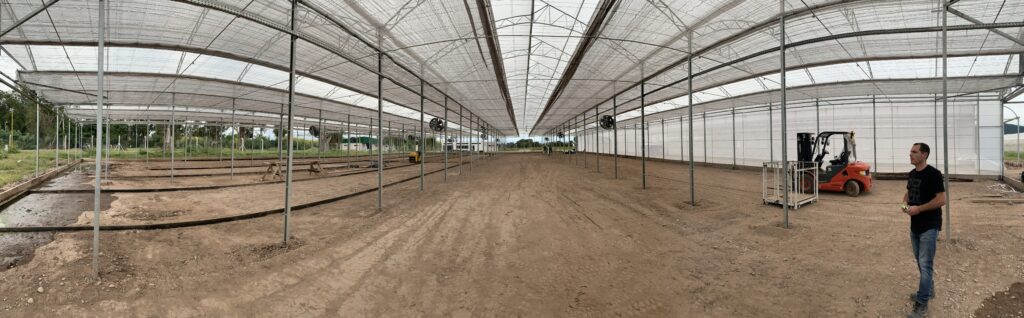
More than designing a set of greenhouses, the project allowed the materialization of an infrastructure capable of linking research, cultivation, industrial processing, and regional economic development in a single territorial system.
Architecture ceases to act as a physical support and becomes a strategic tool in service of a new industry.
The UPPs represent the construction of a territorial platform designed to sustain the growth of an emerging economy and demonstrate how design can actively participate in the productive transformation of a region.
 01 / 11