There are places where architecture must assert itself.
And there are others, exceptional ones, where it must learn to disappear.
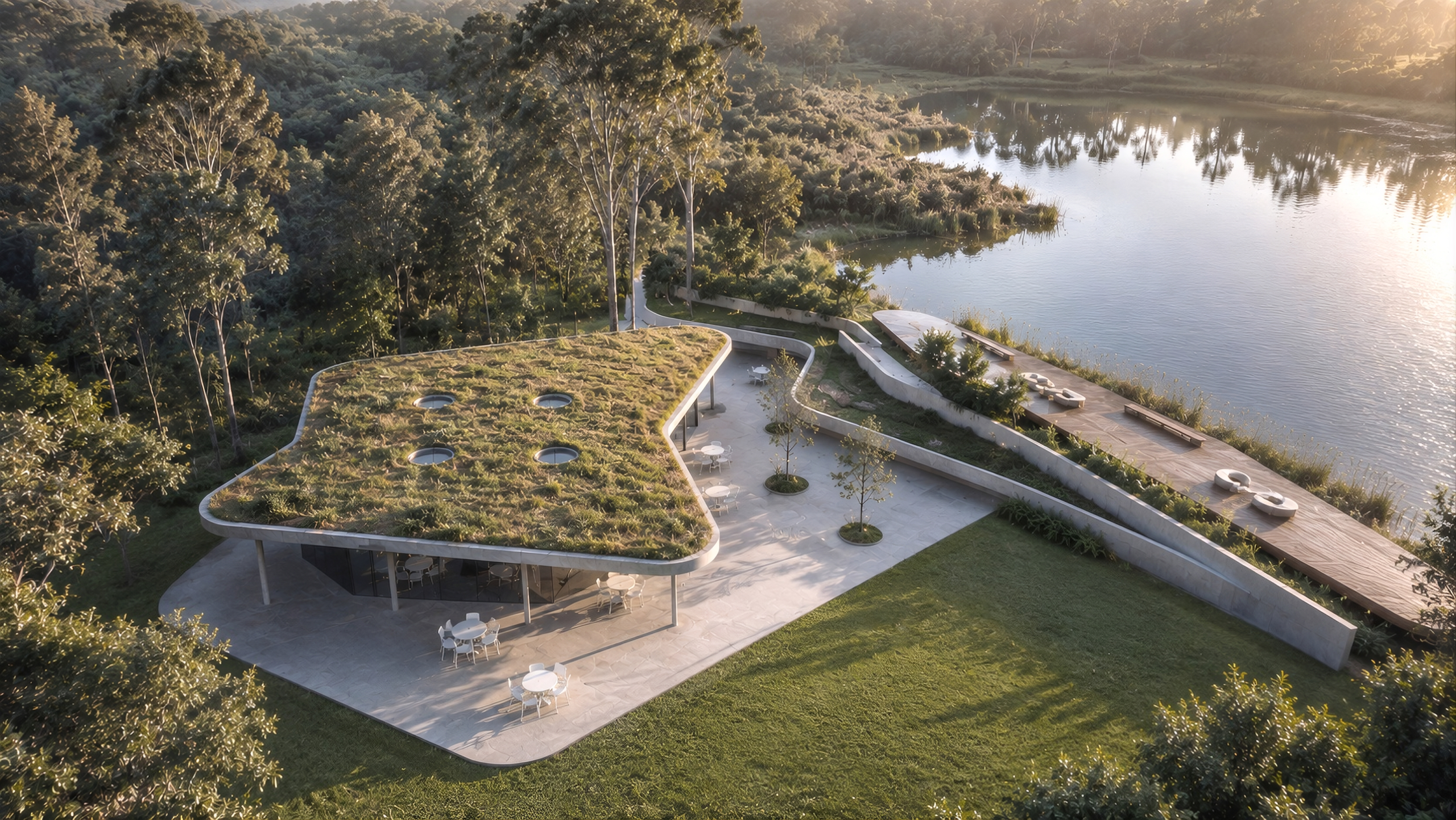
Facing the lagoon of the historic Finca El Pongo, the Lagoon Hall is born as a silent extension of the landscape. A building conceived to converse with the water, the vegetation and the mountains of Jujuy without altering the essence of the ecosystem that surrounds it. Here, architecture does not seek to become the protagonist; it seeks to build a sensitive way of inhabiting the territory.
TypologyPúblico
LocationFinca El Pongo, Jujuy, Argentina
ClientCannava S.E.
Year2022
Area630 m²
Architecture immersed in the landscape of Jujuy
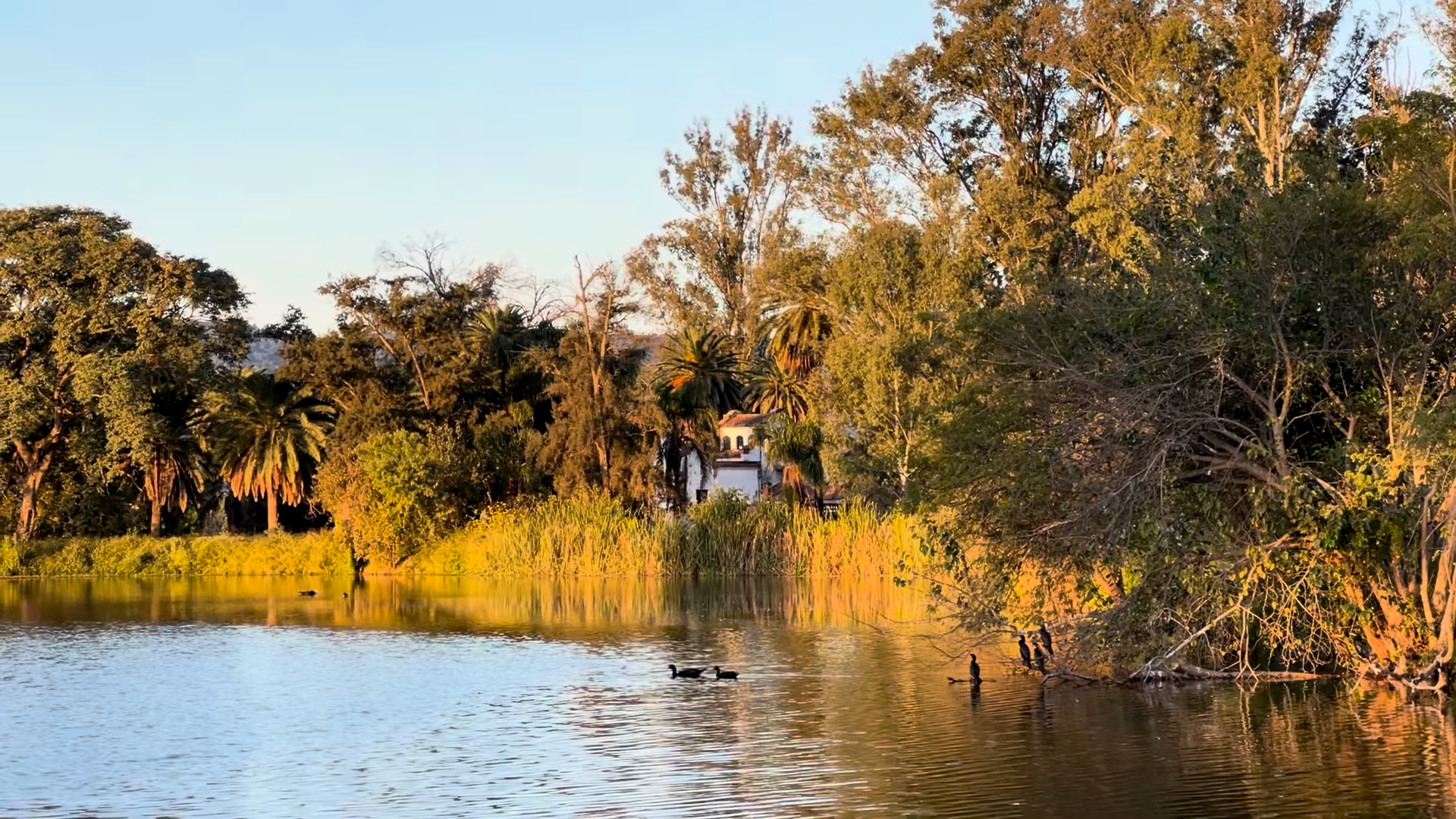
In the heart of Finca El Pongo, in Jujuy, there exists a landscape difficult to explain through the conventional logic of architecture. A silent lagoon surrounded by dense vegetation, morning mist, and a light that changes slowly with the passing day.
The Lagoon Hall is born precisely from that extraordinary condition. Not as an autonomous object implanted on the territory, but as a piece capable of dialoguing with it without interrupting it.
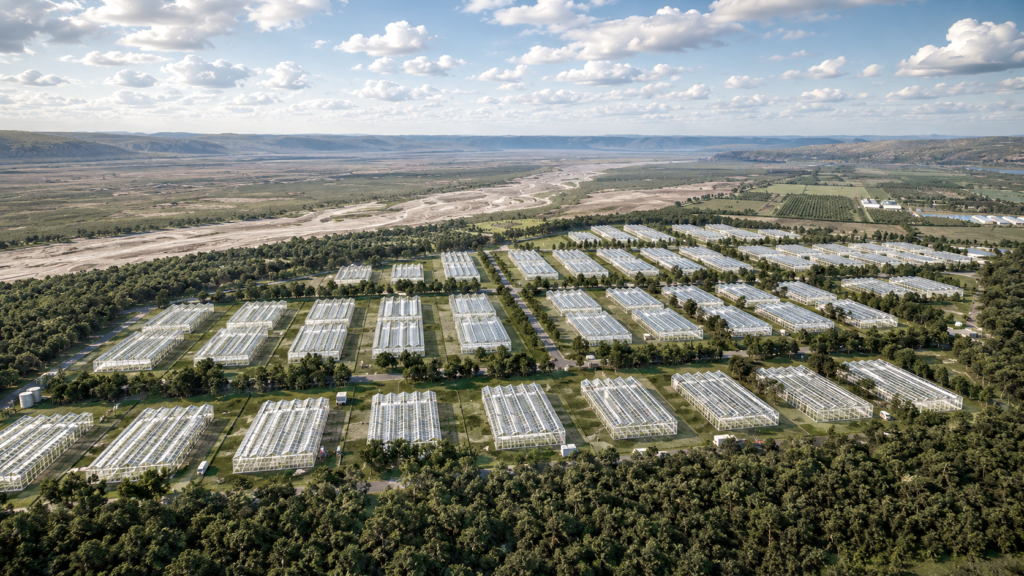
The project is located within the Cannava biotechnological complex and was conceived as a space for gathering, contemplation, and multiple uses deeply connected to the nature of the place.
Inhabiting the water’s edge
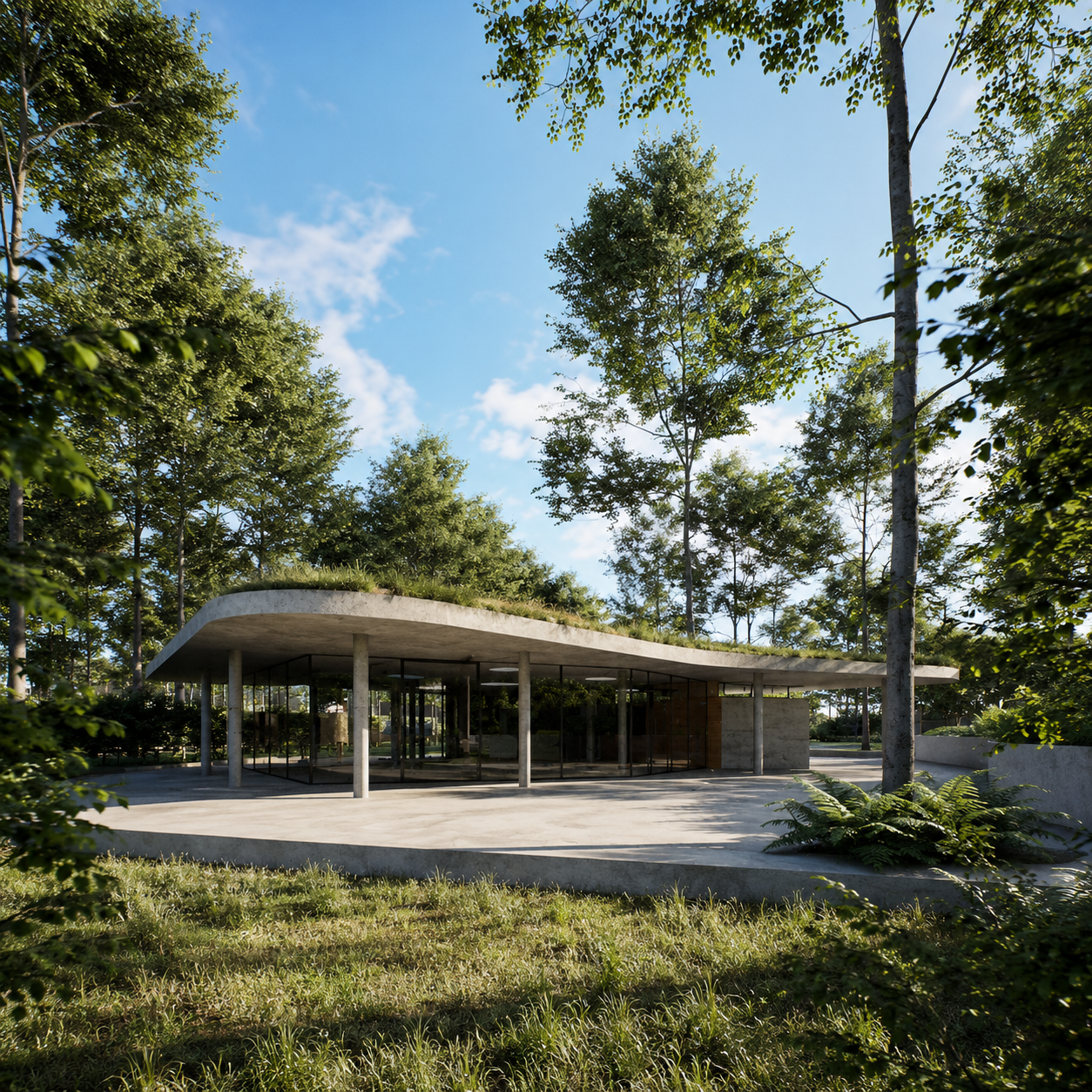
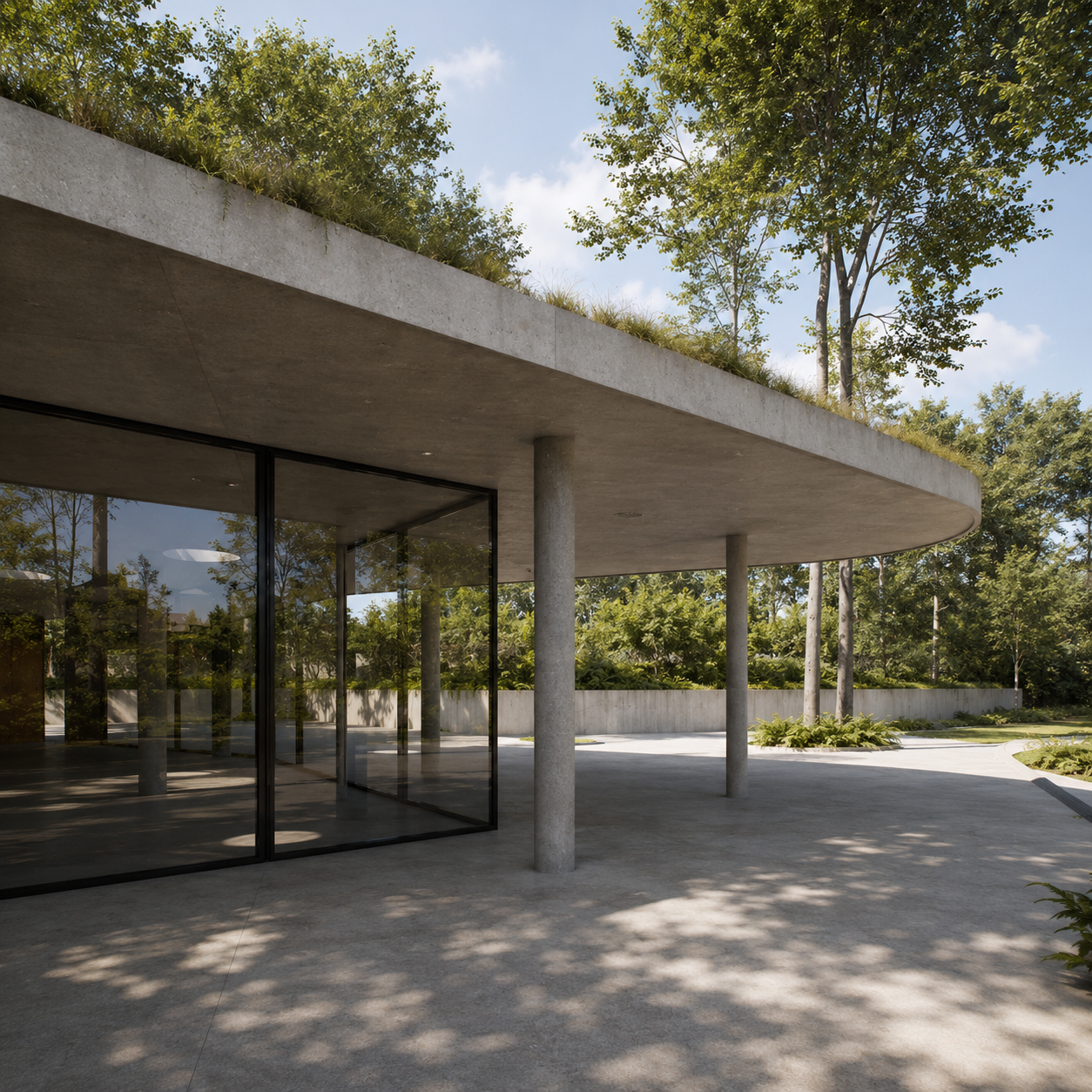
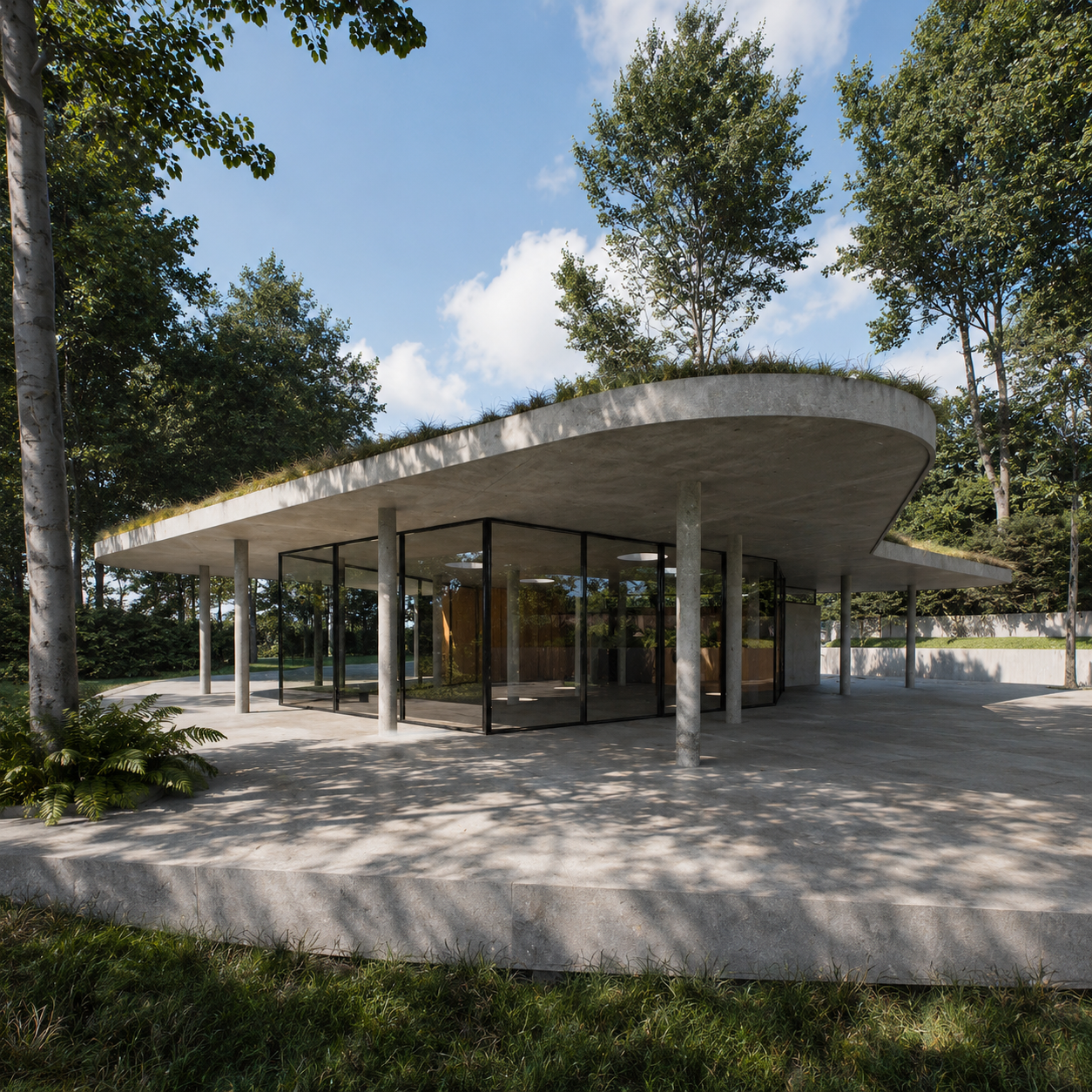
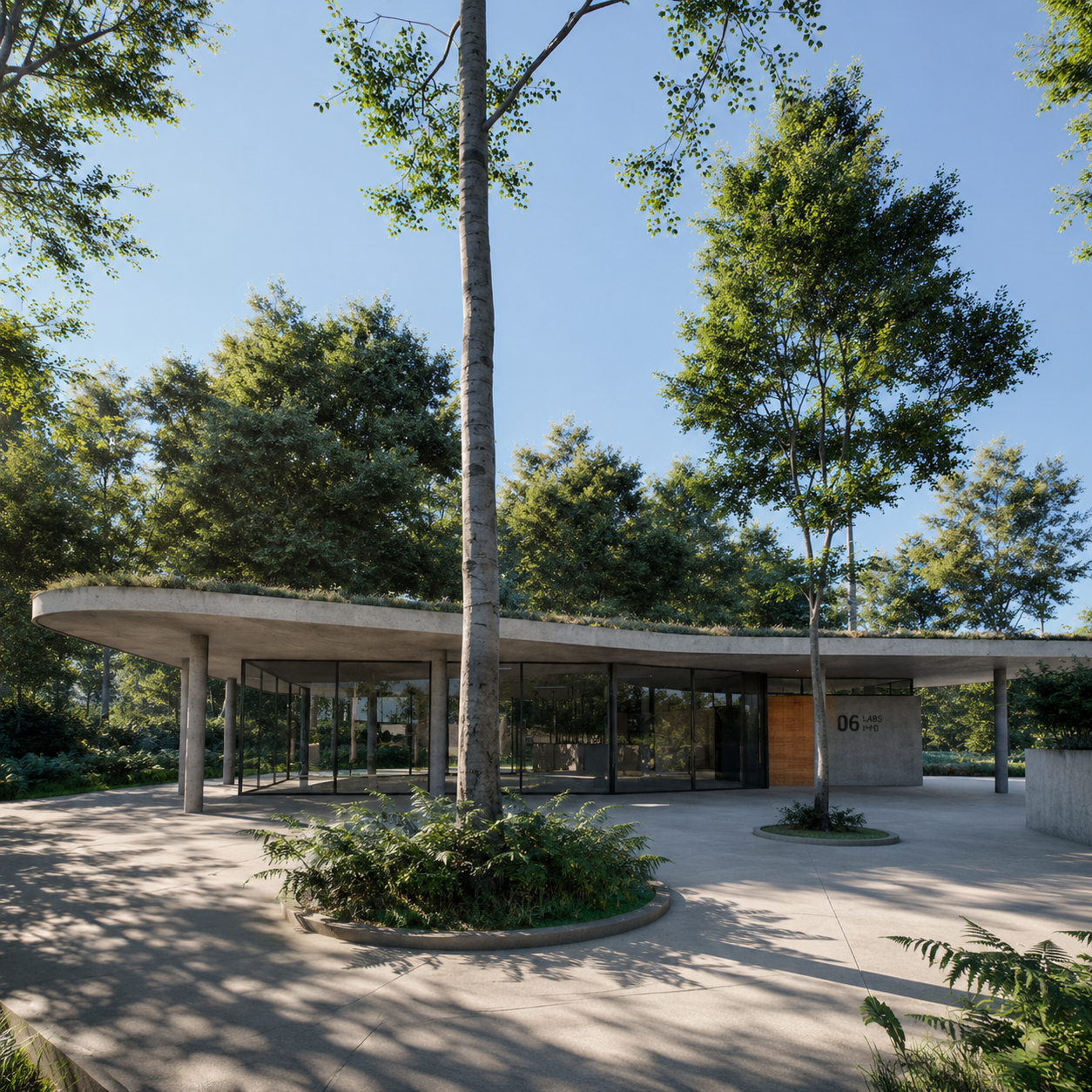
The architecture is organized as a large horizontal roof that seems to float gently above the ground. A continuous concrete slab that protects, contains, and generates shade without interrupting the views or the continuity of the landscape.
The building deliberately avoids monumentality. Its true scale does not emerge from its size, but from its relationship with the landscape. The terraced roof follows the gentle slopes of the terrain and dialogues with the water surface.
More than a closed hall, the project functions as an open infrastructure for inhabiting the climate, the shadows, the vegetation, and the distant views of the Jujuy mountains.
A building conceived from the ecosystem
The lagoon here does not function as a background postcard. It is the true spatial and atmospheric center of the project.
The orientation of the building, the opening of its galleries, and the arrangement of the large glazed panels were designed to maintain a constant relationship with the water, the sky, and the surrounding vegetation.
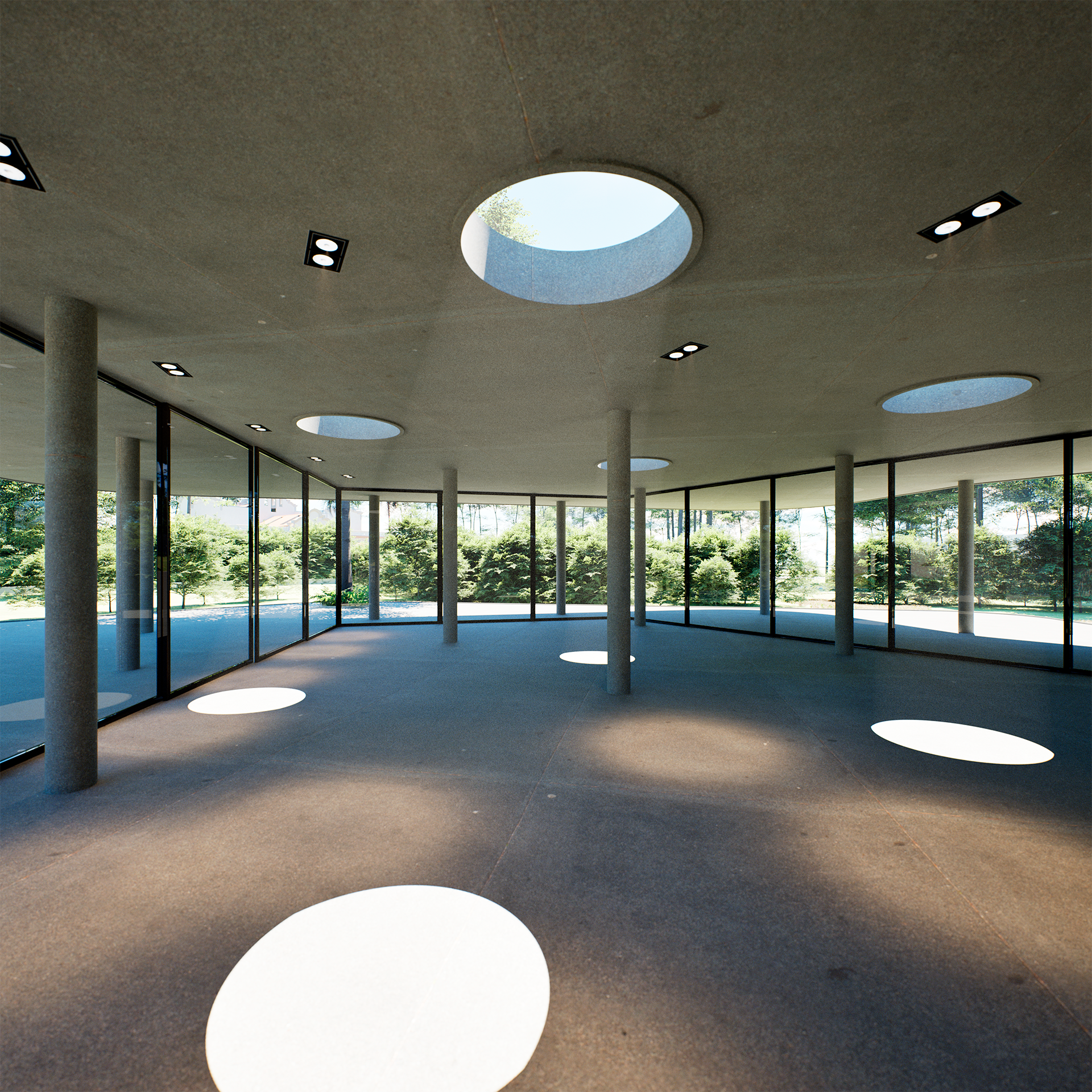
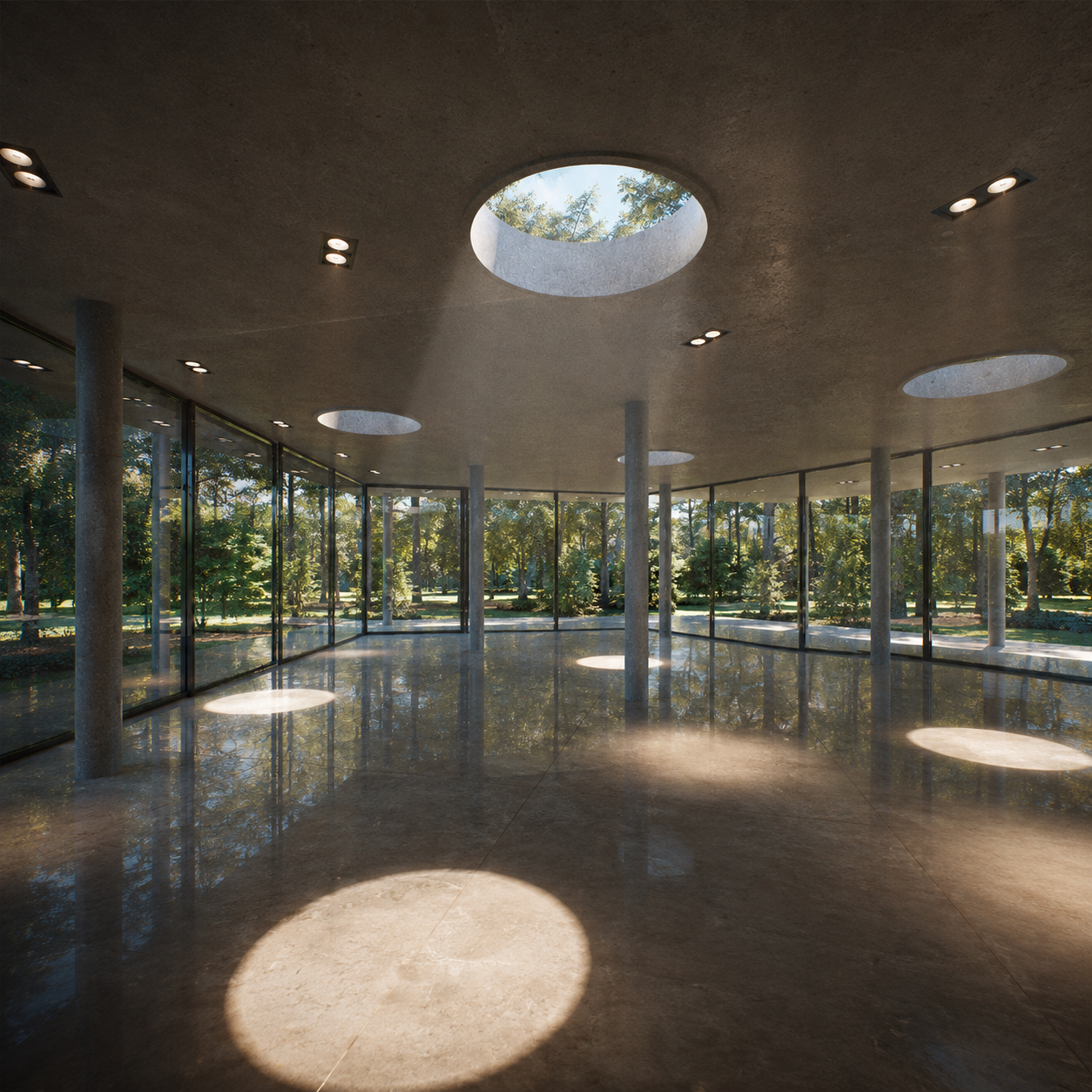
At dawn, the mist over the water and the damp vegetation build a silent and contemplative atmosphere. In the afternoon, the warm light of northern Argentina passes through the galleries and projects changing shadows over the interior.
The building does not try to compete with that natural power. It withdraws. It becomes horizontal, silent, and permeable.
Matter, shadow, and permanence
The materiality responds to a logic of austerity and permanence. Exposed reinforced concrete, glass, and continuous surfaces build a sober and robust language, designed to withstand time and the climatic conditions of the Jujuy highlands.
The independent concrete structure allows the perimeter to be completely freed and generates continuous galleries without visual interruptions. This decision not only improves the conditions for contemplating the landscape, but also allows the interior space to extend naturally toward the exterior.
The architecture here works with essential elements: shadow, reflection, horizon, wind, vegetation, and gravity. It needs no excessive gestures. The spatial experience emerges from the relationship between matter and landscape, not from formal complexity.
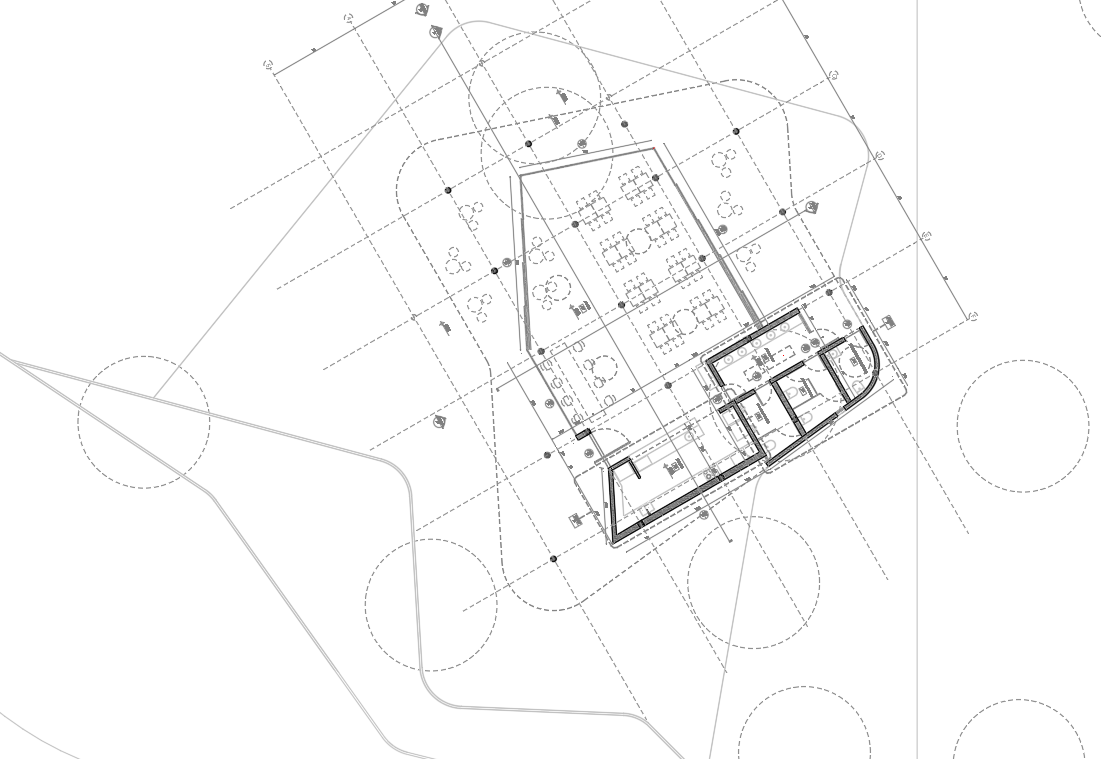
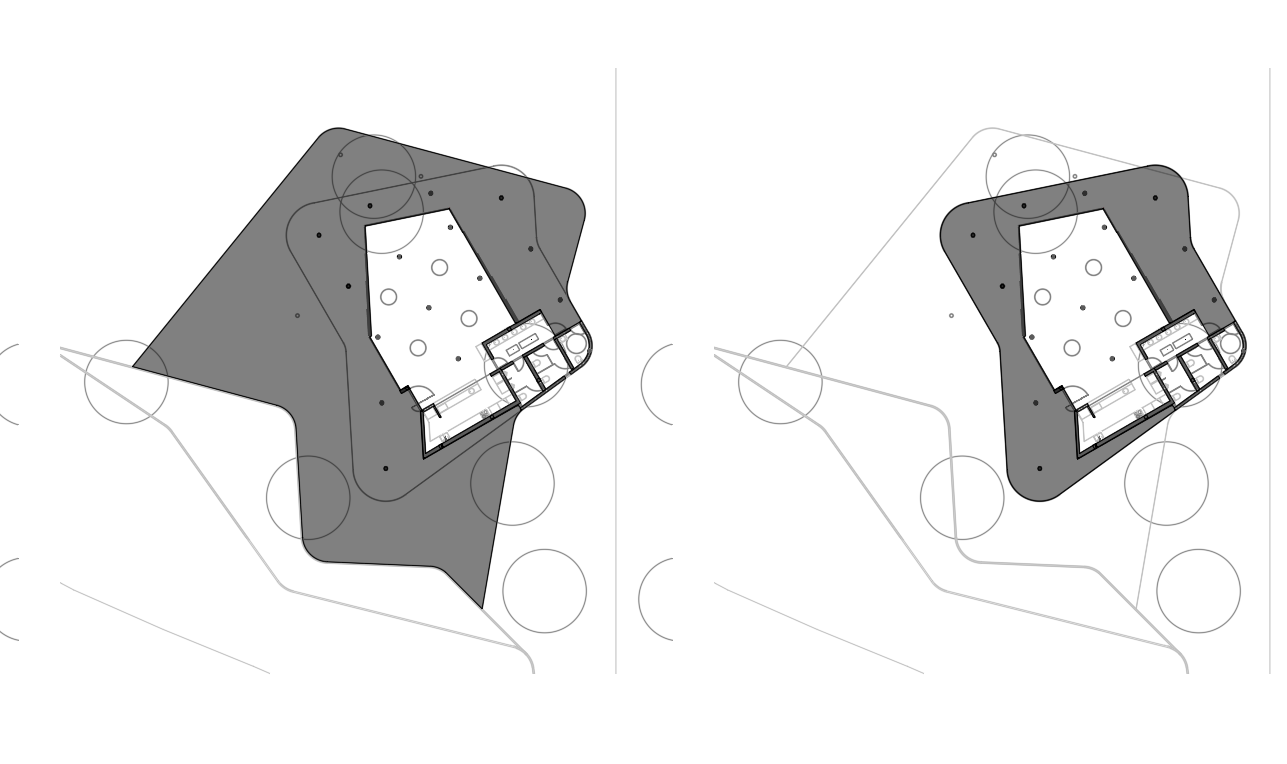
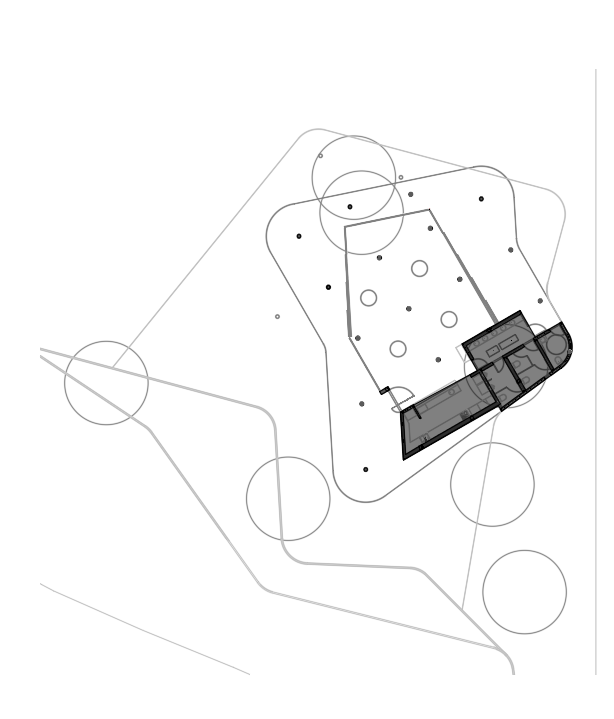
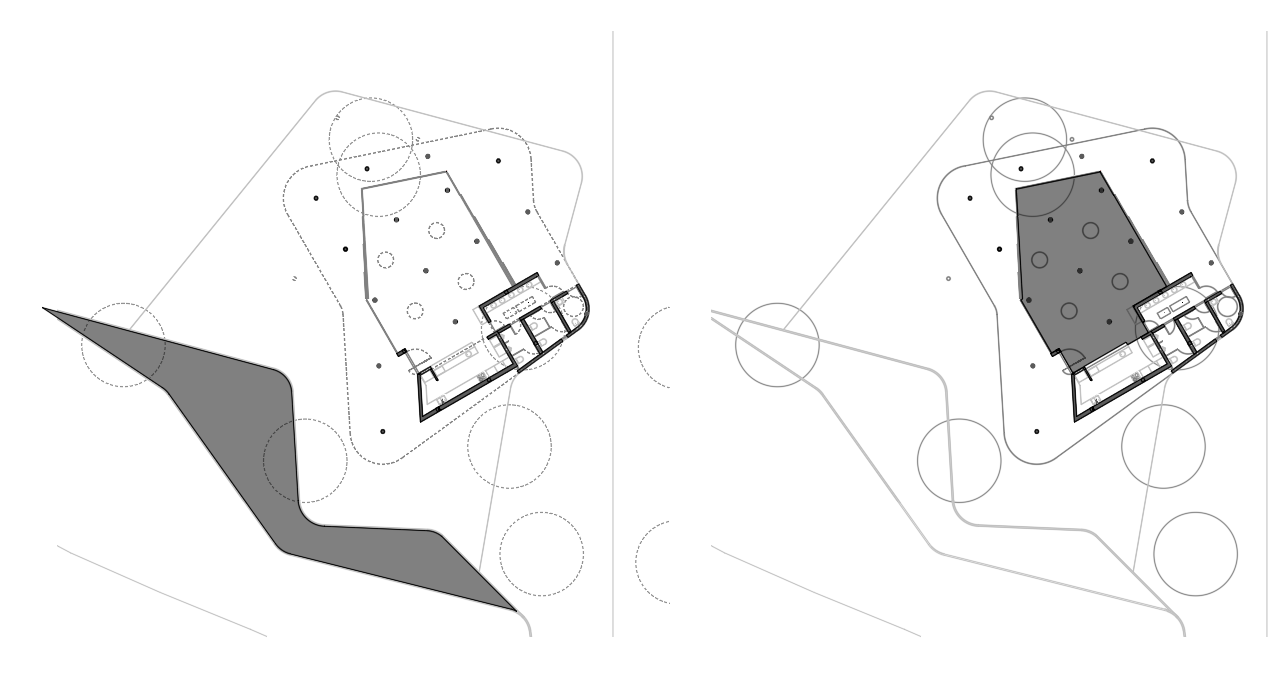
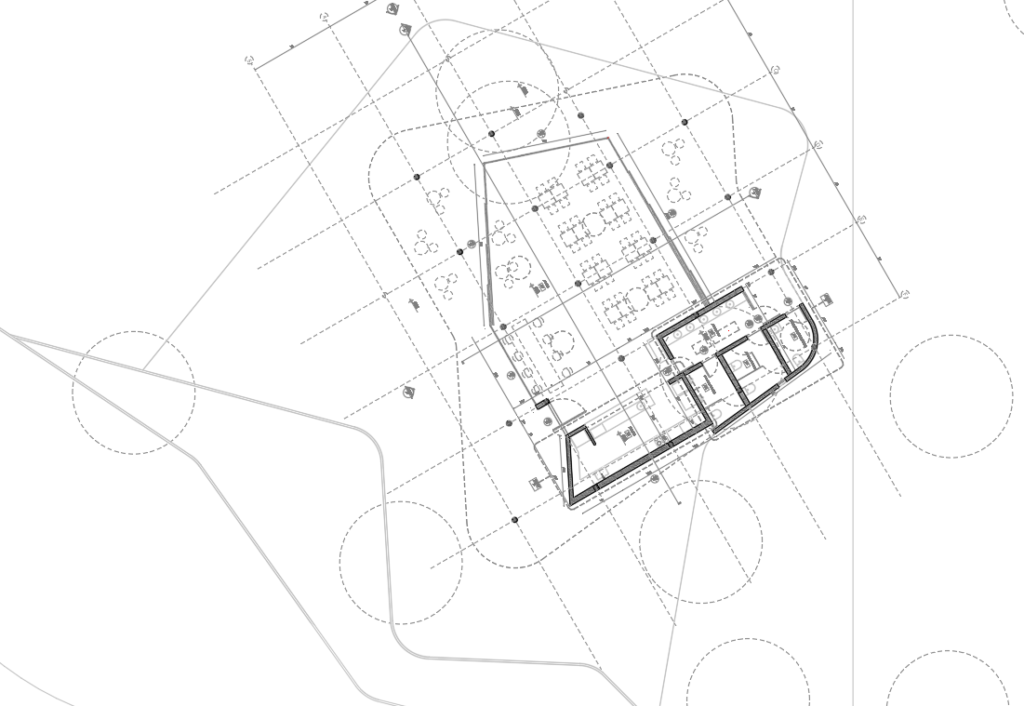
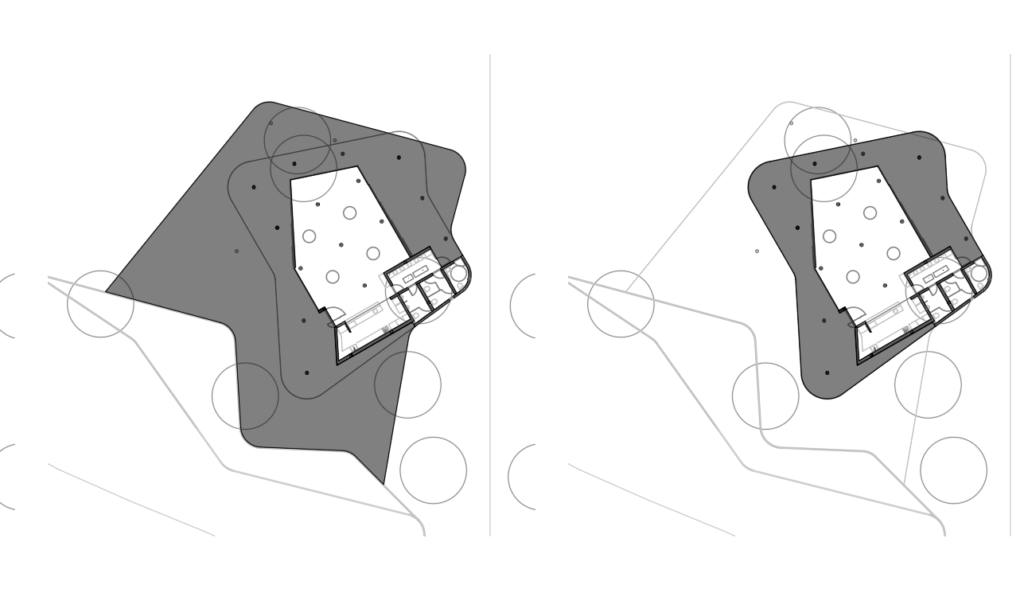
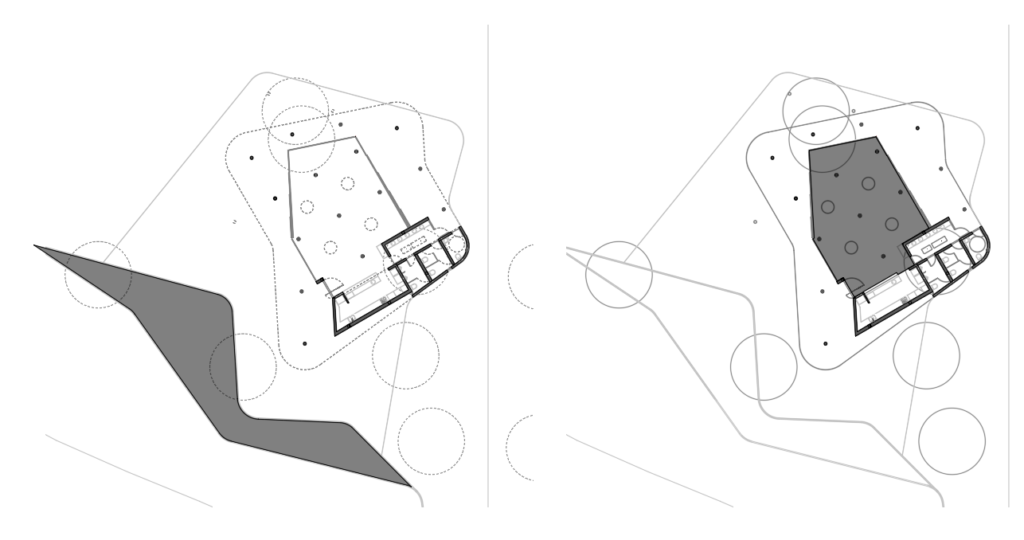
Plans of uncovered and semi-covered exterior spaces
Architecture as mediation
The Lagoon Pavilion does not seek to become the protagonist. Its intention is different: to build a way of inhabiting the ecosystem without interrupting it.
In an exceptional and deeply sensitive natural context, the architecture appears as a mediator between people and the landscape. A space to gather, work, contemplate, and share without leaving the natural environment that surrounds them.
More than an isolated building, the project proposes a complete territorial experience. An architecture where the boundary between interior and exterior slowly disappears, and where the landscape enters, settles, and defines the daily experience of those who work on the estate.
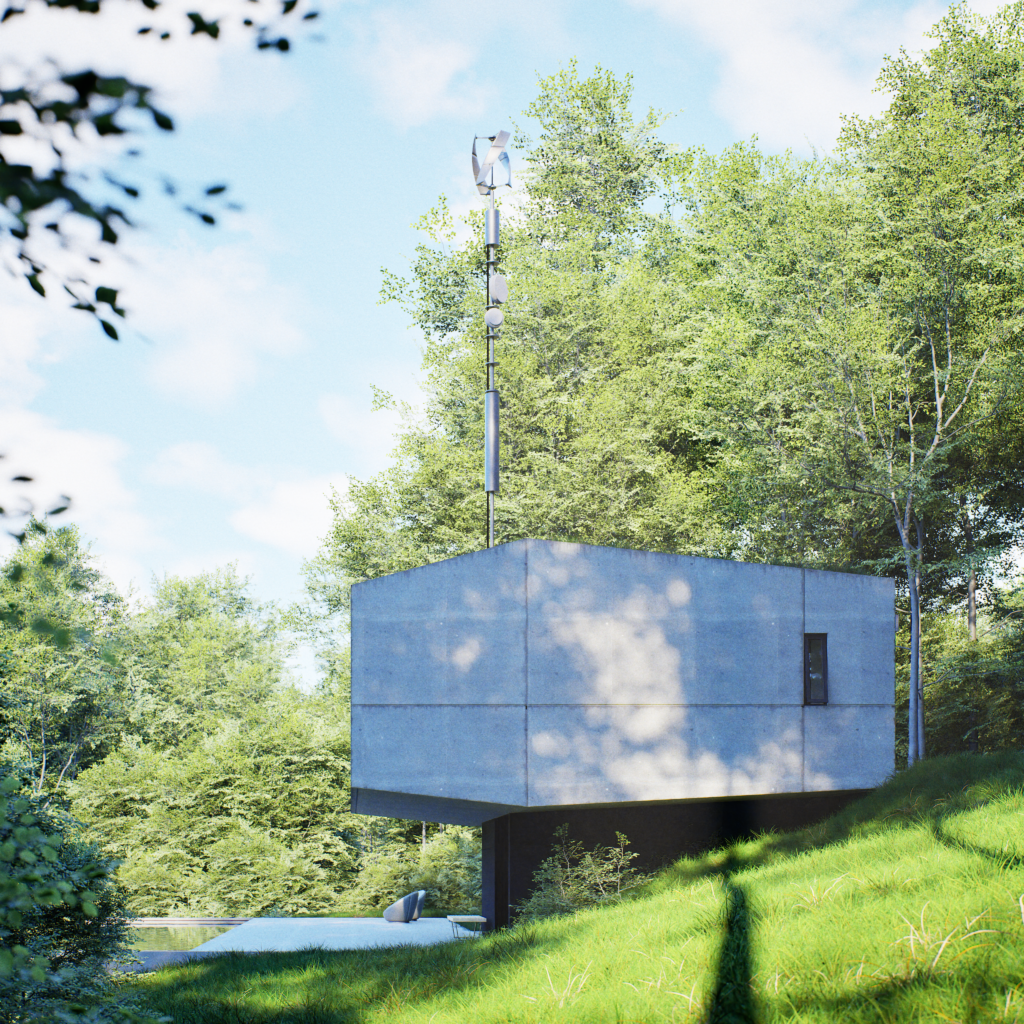
Vista aerea dell pabellón junto a la laguna de la Finca El Pongo en Jujuy, con el gran playón para eventos y el muelle sobre la laguna. Rodeado de bosque y naturaleza. Proyecto Leguía Yias ArquitectosLaguna Finca El Pongo, JujuyExterior del Pabellón de la laguna en Finca El Pongo. Proyecto Leguía Yias ArquitectosVista Interior y exterior del Pabellón de la laguna en Finca El Pongo. Proyecto Leguía Yias ArquitectosVista Interior y exterior del Pabellón de la laguna en Finca El Pongo. Proyecto Leguía Yias ArquitectosPatio de la laguna. Espacio de encuentro y eventos en el pabellón de la laguna en Finca El Pongo Jujuy. Proyecto Leguía Yias ArquitectosIngreso de luz desde los lucernarios del pabellón de la laguna en Jujuy. Proyecto Leguía Yias Arquitectos



 01 / 12