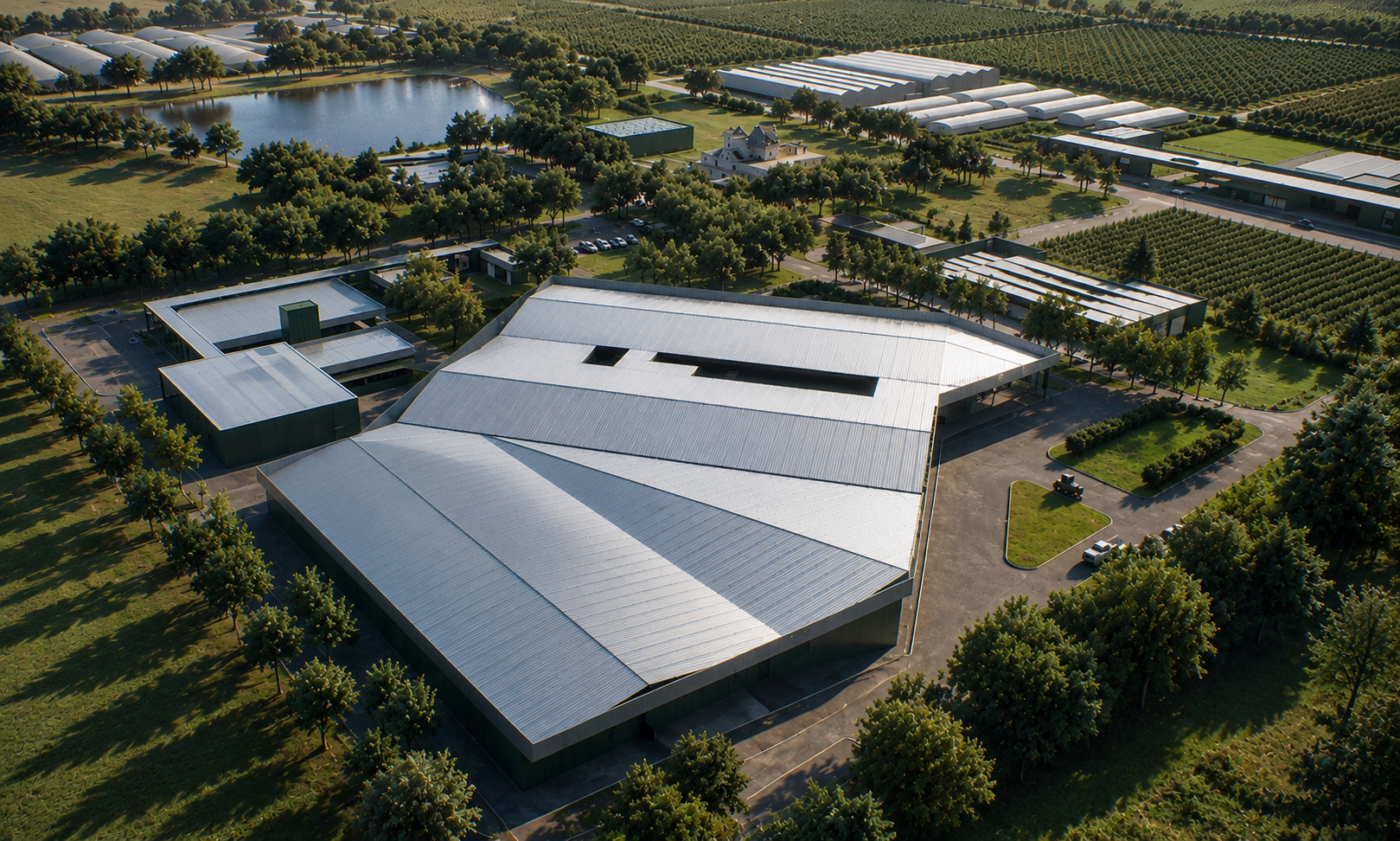
Medical Cannabis Drying Chambers
Cannava jujuy, Finca El Pongo, Jujuy, Argentina — 2023


Architecture
Perico, Jujuy, Argentina — 2022
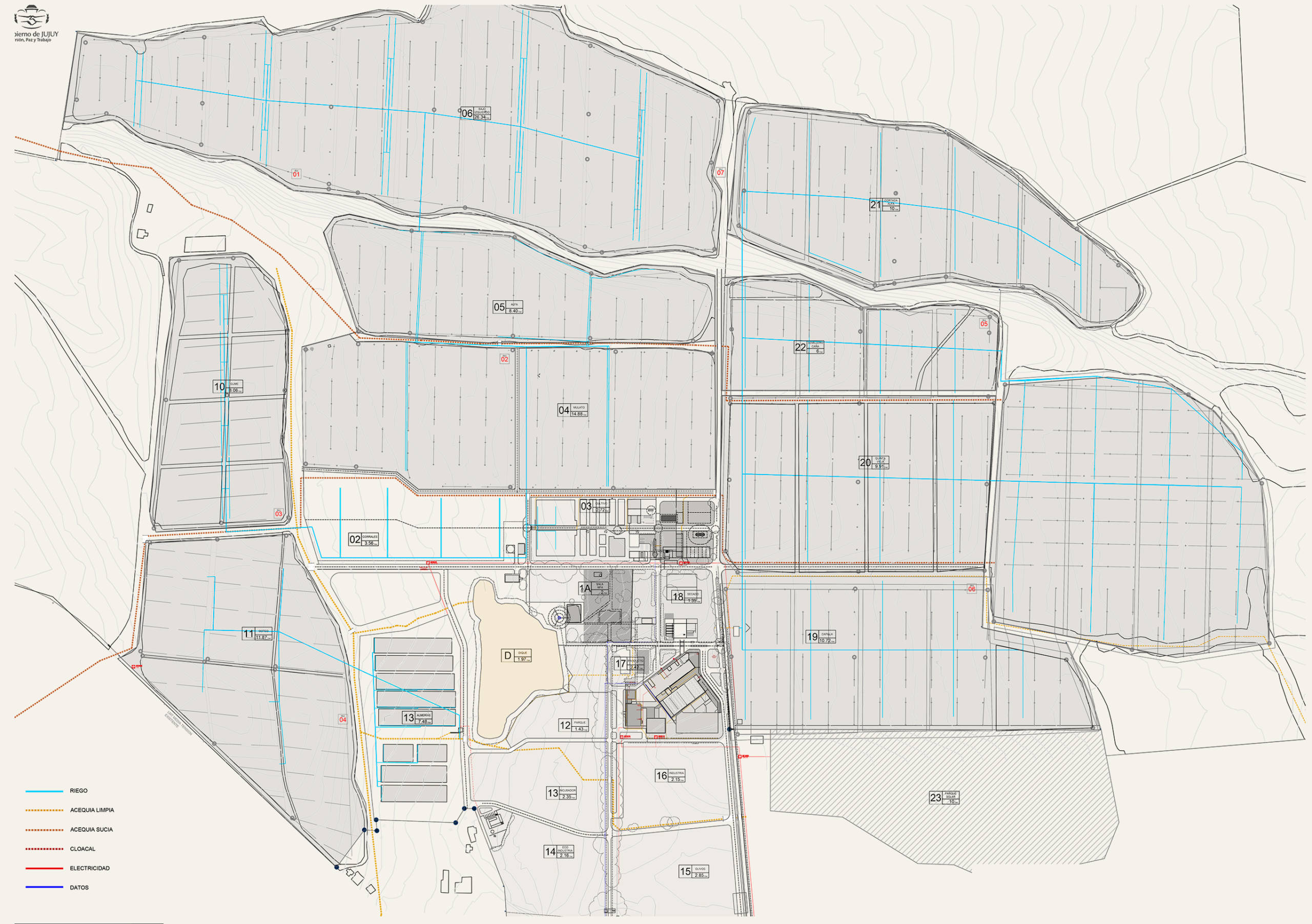
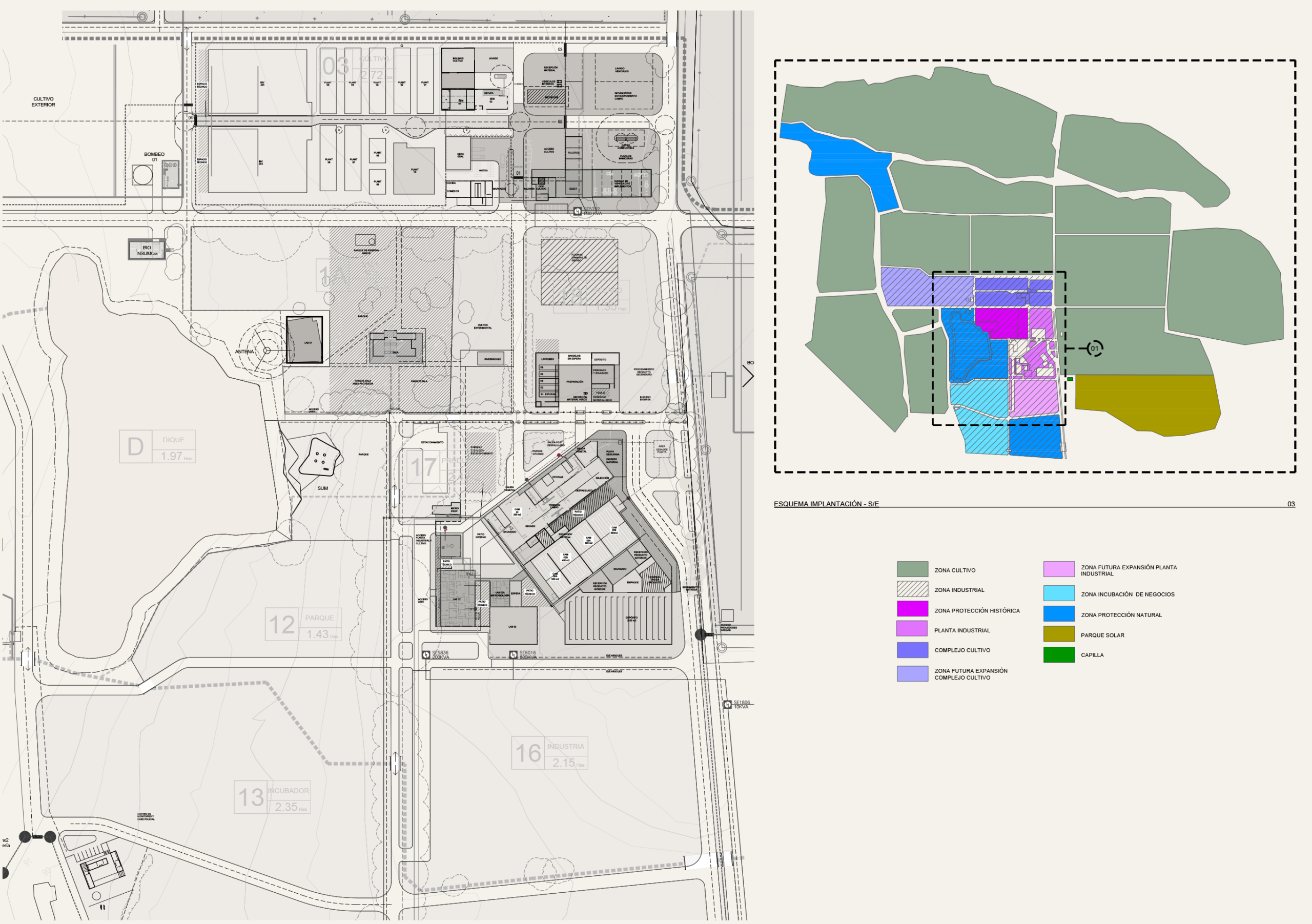
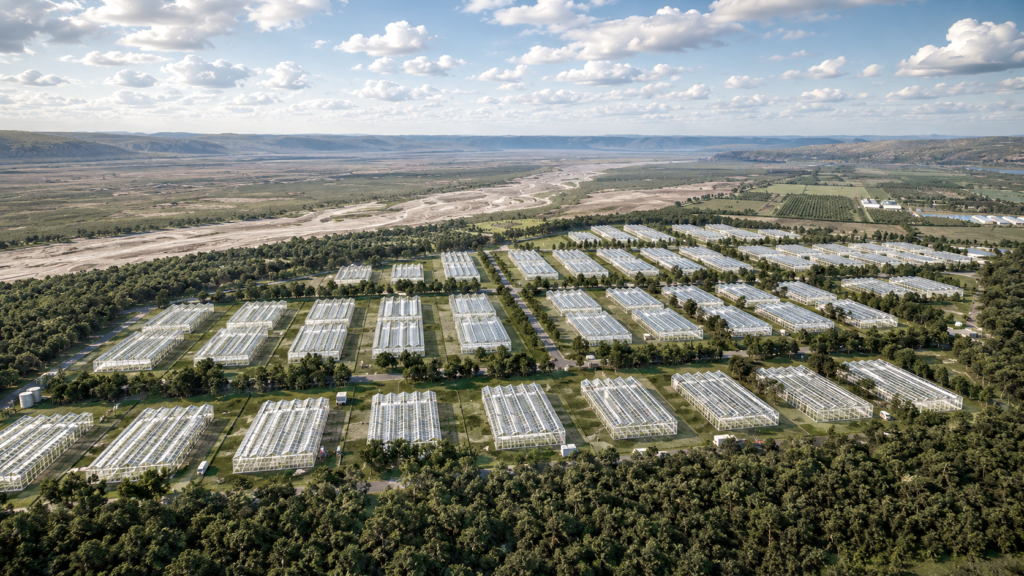
The transformation of Finca El Pongo into an agro-industrial and biotechnological complex of international scale did not begin with a building, but with a territorial question: how to order, connect and project an infrastructure capable of sustaining a new industry in full expansion. Over more than 160 hectares of Jujuy's productive landscape, the studio developed between 2022 and 2023 a comprehensive masterplan that reorganized flows, land uses, operating systems, infrastructure and future growth within the Cannava campus.
In the heart of Finca El Pongo, over more than 160 hectares of agricultural production and historical Jujuy landscape, the studio developed between 2022 and 2023 the comprehensive master plan for the Cannava agro-industrial and biotechnological complex.
When the team arrived at the estate, much of the existing documentation was incomplete, fragmented, or simply nonexistent. There was no consolidated planimetric base nor a precise record of the existing infrastructure systems, water, roads, and buildings.
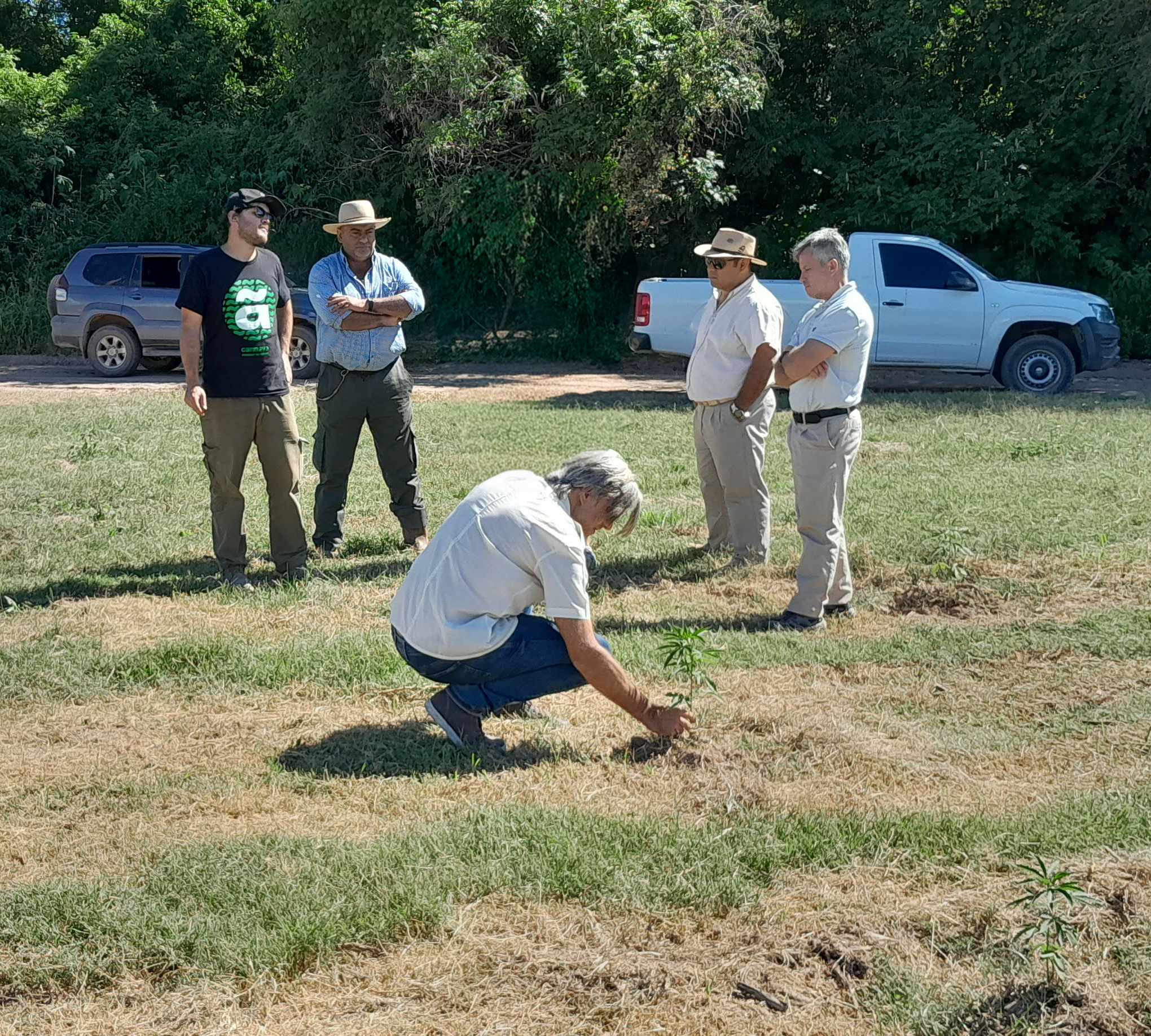
Each irrigation channel, each drain, each building, each road, and each installation were walked, measured, and documented. The project also incorporated strategic interviews with all operational managers of the estate to build a complete understanding of its actual functioning.
The result was much more than a conventional masterplan. It was the construction of a territorial intelligence capable of coordinating growth, production, logistics, infrastructure, and landscape within a long-term vision.
The complexity of the project lay in the fact that the estate did not function as an isolated industrial park, but as a hybrid ecosystem where crops, laboratories, historical irrigation systems, protected areas, heritage buildings, and new constructions in full expansion all coexisted.
The masterplan then proposed a new organizational structure for the territory: a clear, flexible, and scalable zoning, capable of accompanying the accelerated growth of the operation without compromising the landscape, heritage, and environmental values of the place.
The work included:
The territorial scale required thinking about the project almost as a small industrial city in permanent transformation.
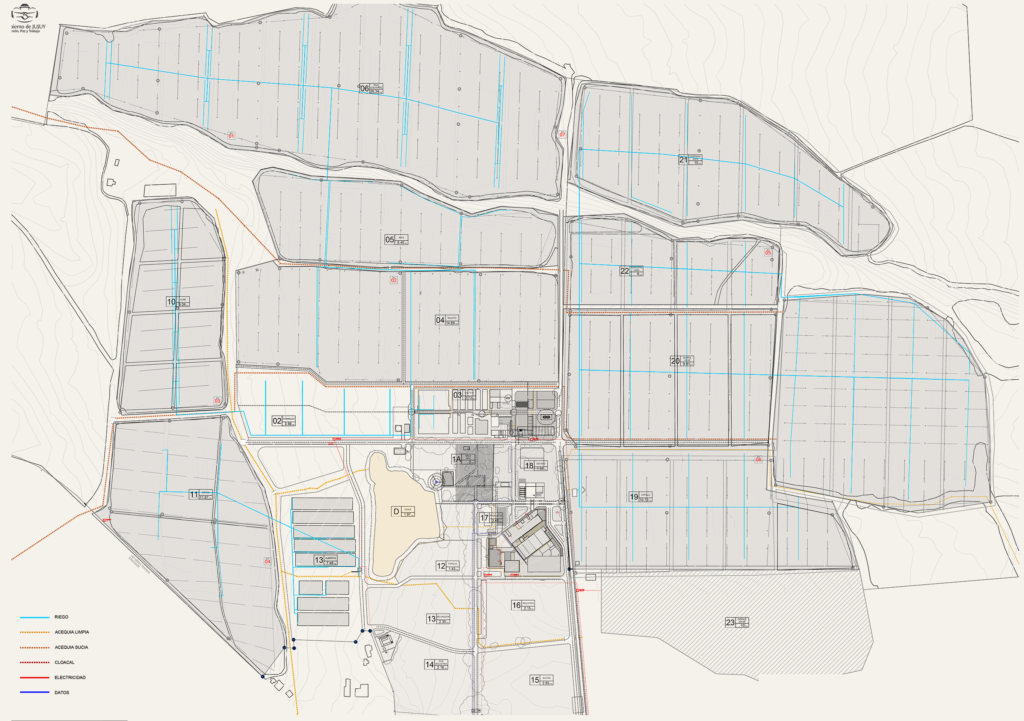
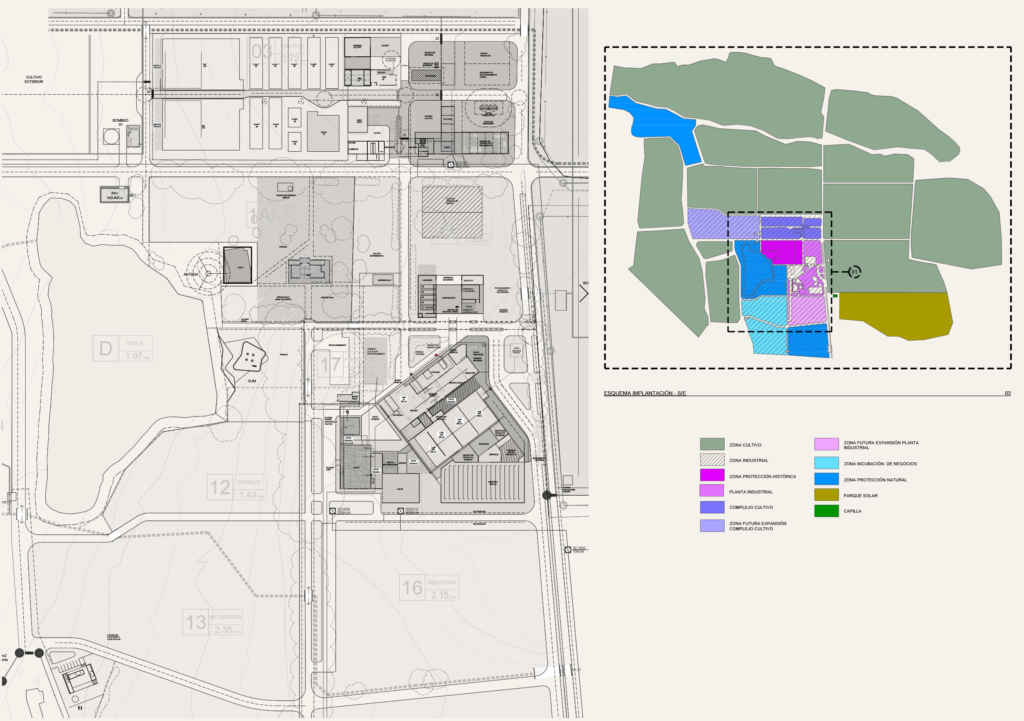
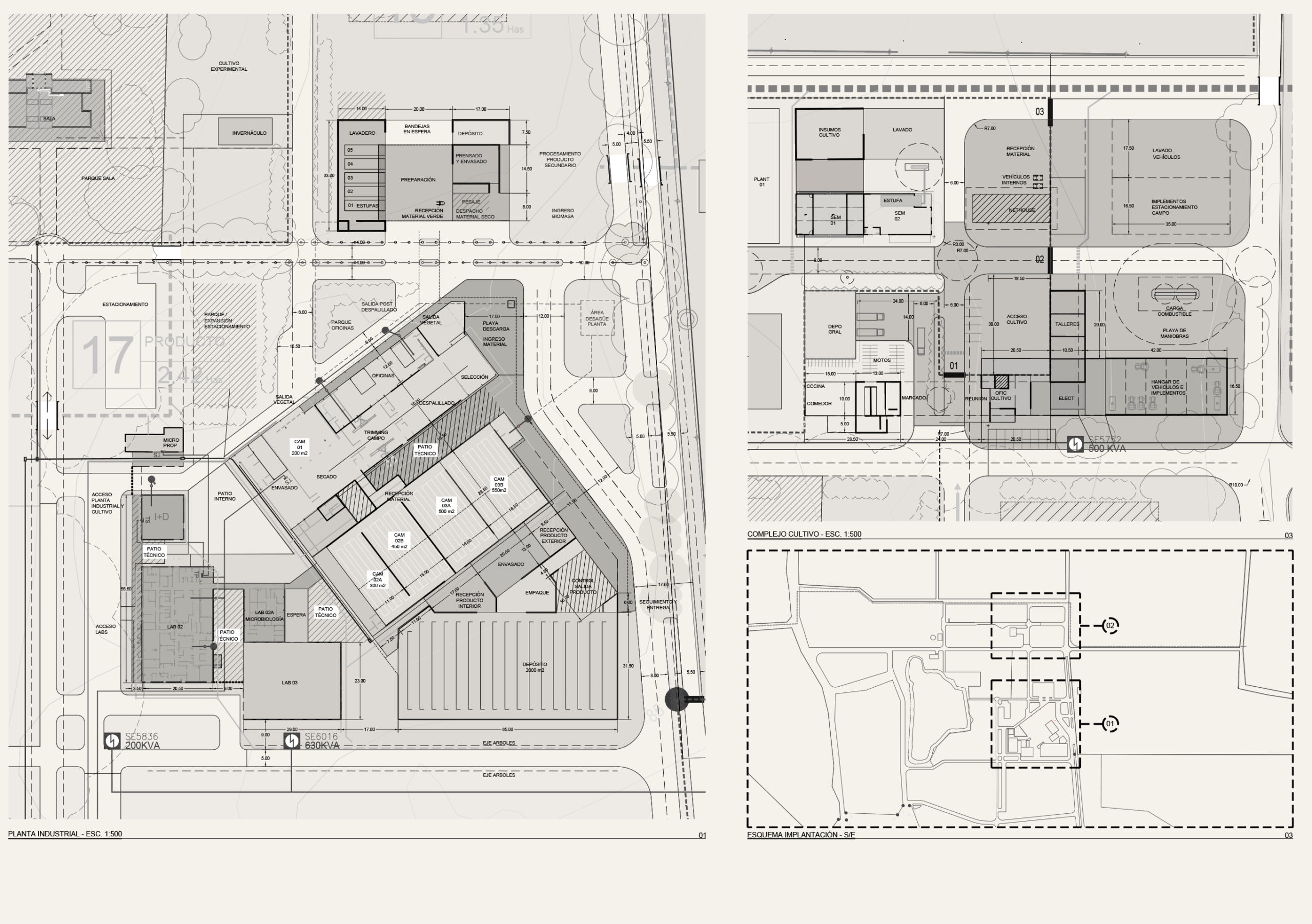
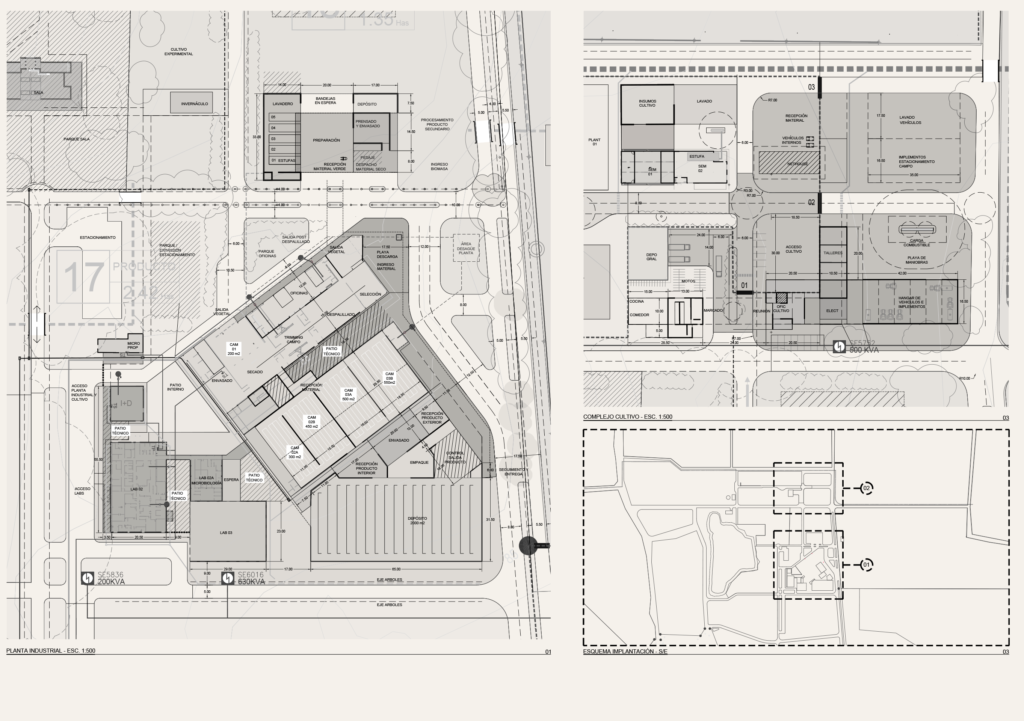
The master plan integrated a series of strategic buildings developed by the studio together with local architects and engineers from Jujuy. Each one responded to specific technical, operational, and environmental needs within the campus.
Among the projects incorporated in the masterplan are:
The drying oven complex, for example, was conceived as a large operational platform for agricultural machinery and industrial drying systems, integrated under a single roof that efficiently coordinates flows, technical spaces, and circulations.
The architecture was not conceived as a set of autonomous objects, but as a coordinated system of production, circulation, and growth.
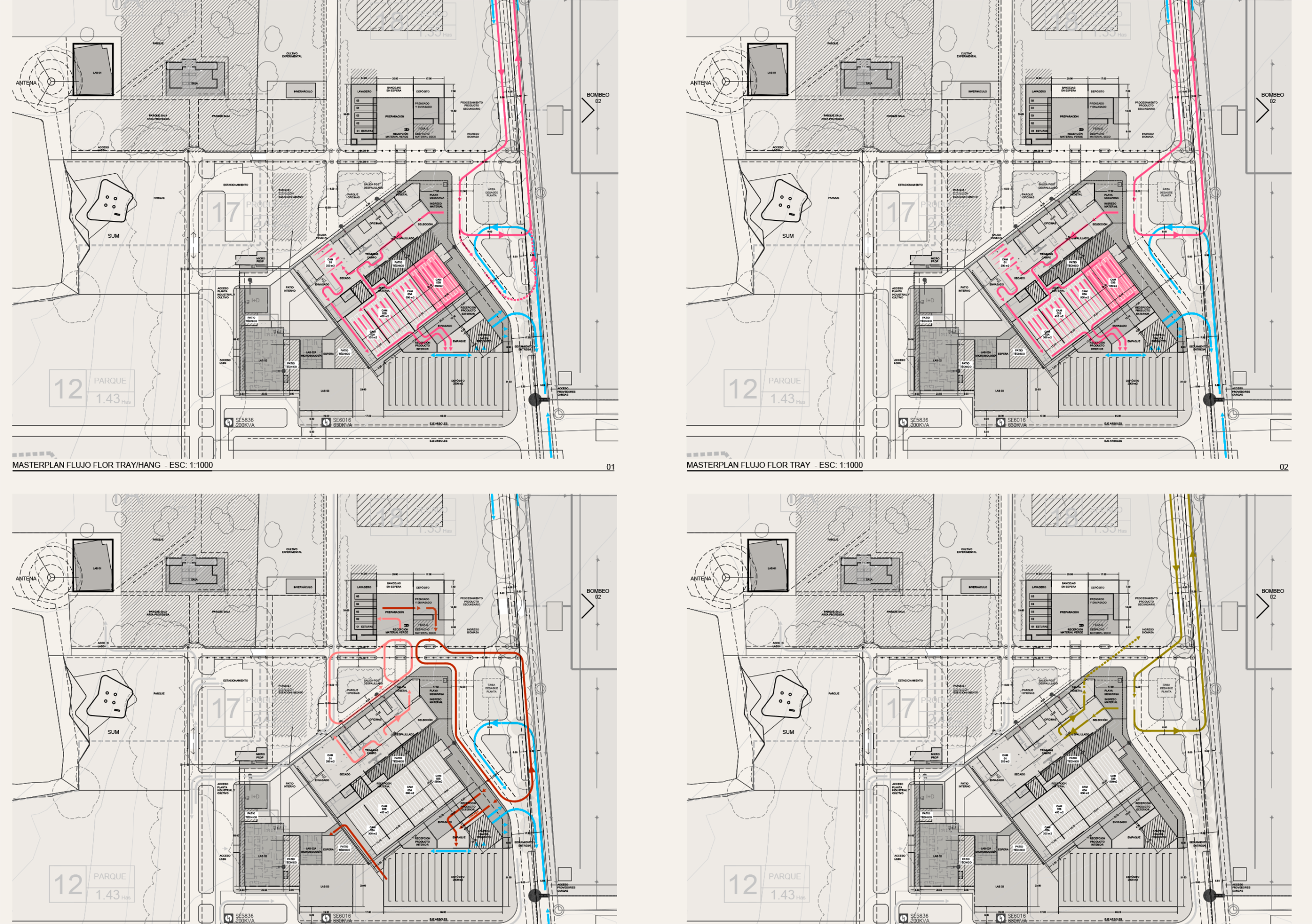
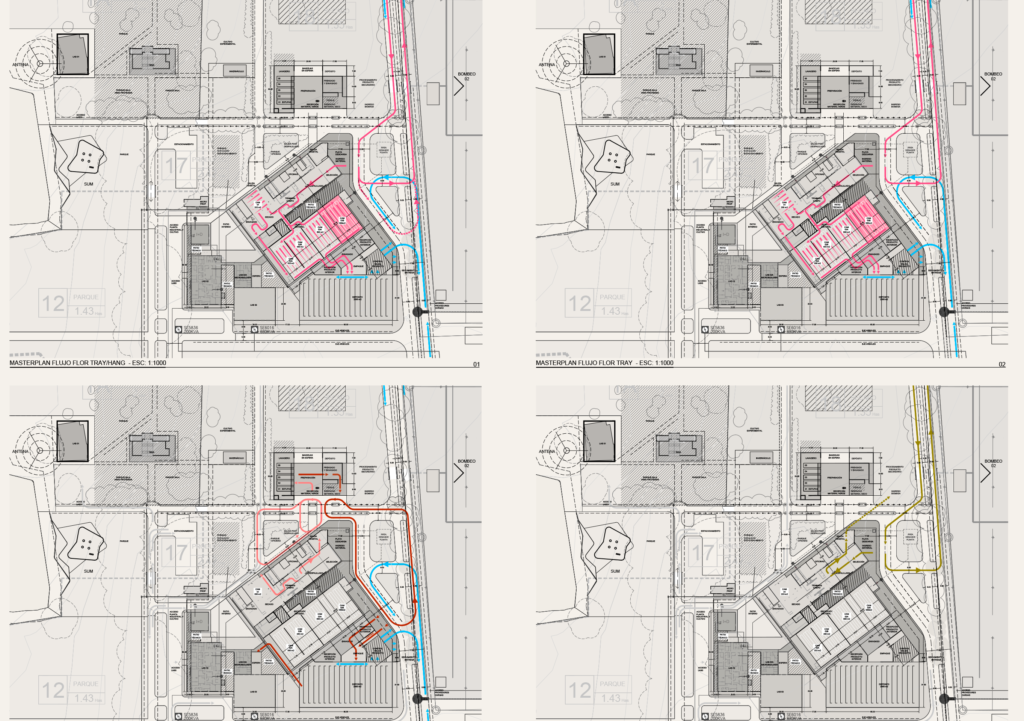
One of the central aspects of the project was the detailed study of the productive flows of medical cannabis. The masterplan modeled the complete product journeys from cultivation through to final storage and dispatch, identifying bottlenecks, optimization opportunities, and future expansion needs.
These schemes allowed:
The estate then began to be thought of as a dynamic infrastructure, where architecture, logistics, and production worked simultaneously.
Far from imposing an industrial logic isolated from the surroundings, the project sought to integrate with the existing agricultural and landscape structure of El Pongo.
The historical irrigation channels, the irrigation systems, the natural slopes, and the existing vegetation became an active part of the territorial design. The landscape ceased to be a backdrop and became structure.
The masterplan also incorporated sustainability and efficiency criteria at a large scale:
The intention was not only to build more, but to build with the capacity for adaptation.
Perhaps the most complex aspect of the work was organizational.
The studio not only developed architecture and infrastructure: it also collaborated in the construction of new coordination and planning methodologies for an operation of enormous operational and temporal complexity.
A local team of Jujuy architects was also formed and coordinated to sustain the surveying, documentation, and evolutionary maintenance of the estate.
In that sense, the masterplan functioned simultaneously as an architectural project, an operational tool, and a territorial management platform.
The project for Finca El Pongo represents one of the most complex agro-industrial and biotechnological planning experiences developed by the studio.
More than designing isolated buildings, the work consisted in projecting relationships: between production and landscape, between infrastructure and territory, between industrial growth and environmental preservation.
In an emerging industry, shaped by permanent technological, regulatory, and productive changes, the real challenge was not only to build architecture, but to build structure where no structure existed.
 01 / 06