FARO House
Los Reartes, Córdoba, Argentina — 2024


Architecture
Pasaje Doctor Honorio Leguizamon 3800, Ciudad Autónoma de Buenos Aires, Argentina — 2025
The project emerges as a response to a particularly unstable urban condition. On one side, the low, quiet scale of the passage; on the other, the growing density and height of a heavily built street. Between these two situations lies a tension difficult to absorb through traditional housing typologies. The architecture arises precisely within that point of friction. Neither tower nor isolated house. Neither compact building nor suburban dwelling.
The proposal seeks to build an intermediate condition capable of linking two completely different ways of inhabiting the city. Instead of reproducing the repetitive logic of the conventional rental building, the architecture develops a new form of residential density capable of articulating the scale of the passage with the intensity of the consolidated street.
Each dwelling maintains its own domestic logic, with spatial sequences, expansions, double heights, and internal visual relationships closer to a contemporary urban house than to a compact apartment. The open plan, the section, and the visual relationships work together to build a more complex and surprising spatial experience.
The architecture does not try to hide that duality.
On the contrary, it makes it visible.
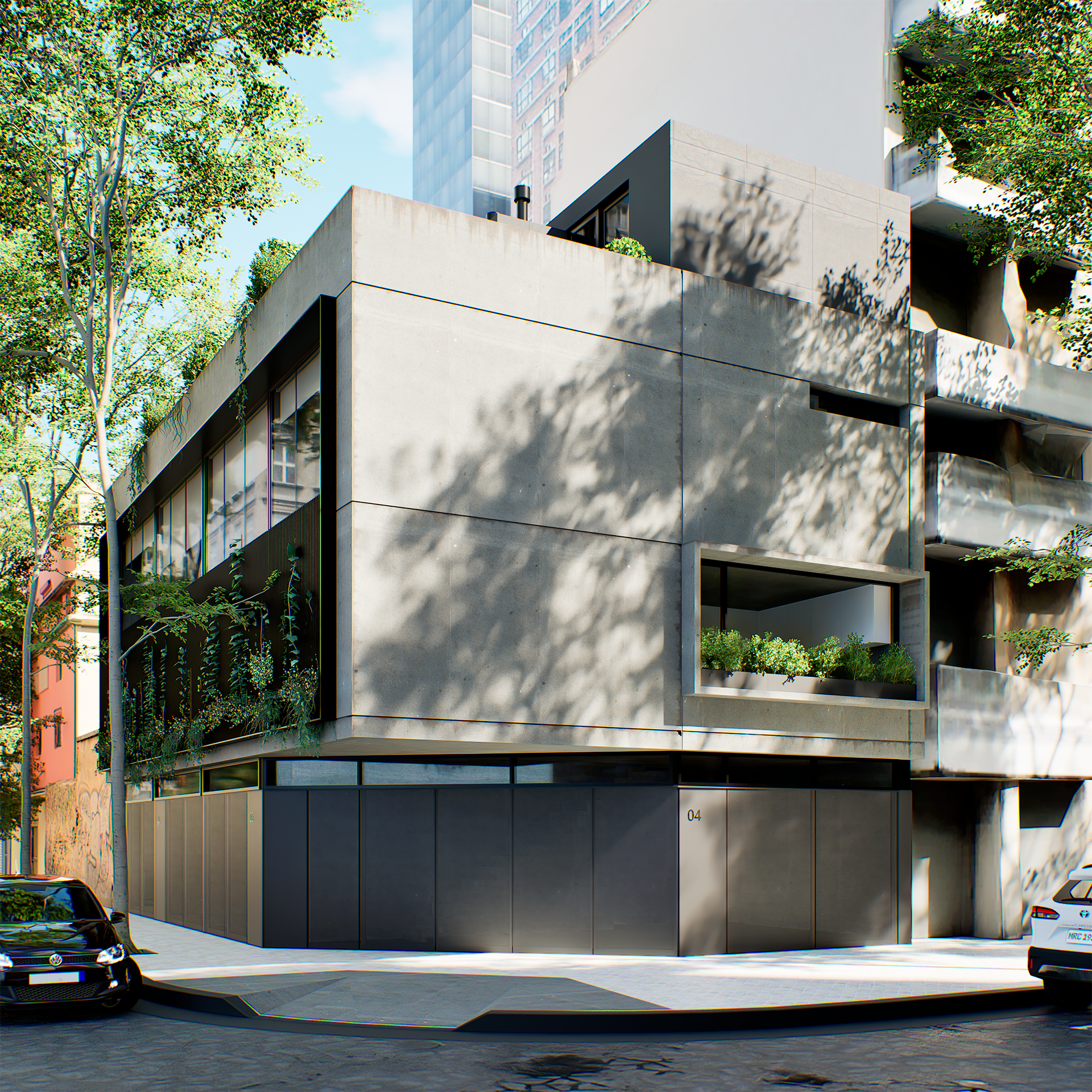
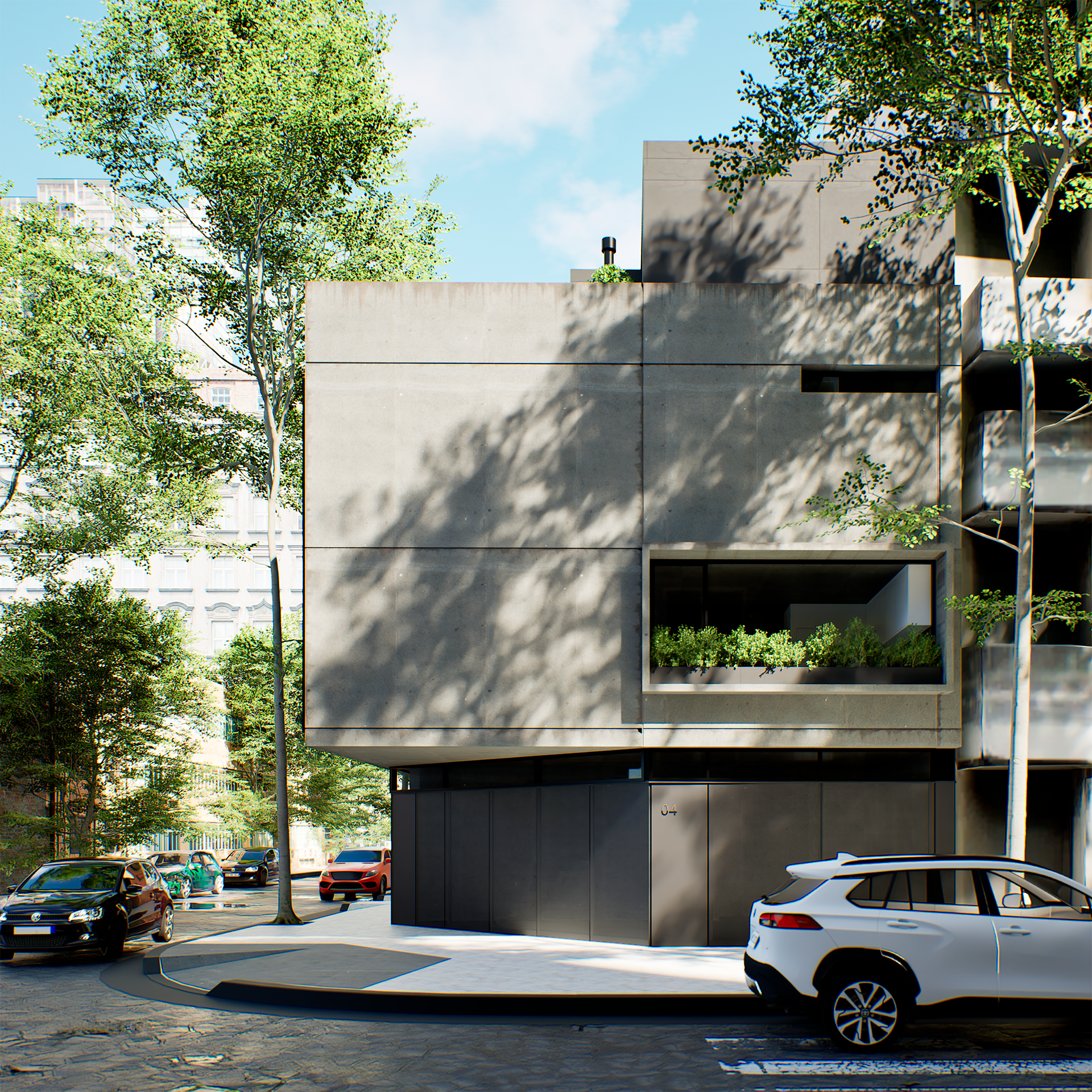
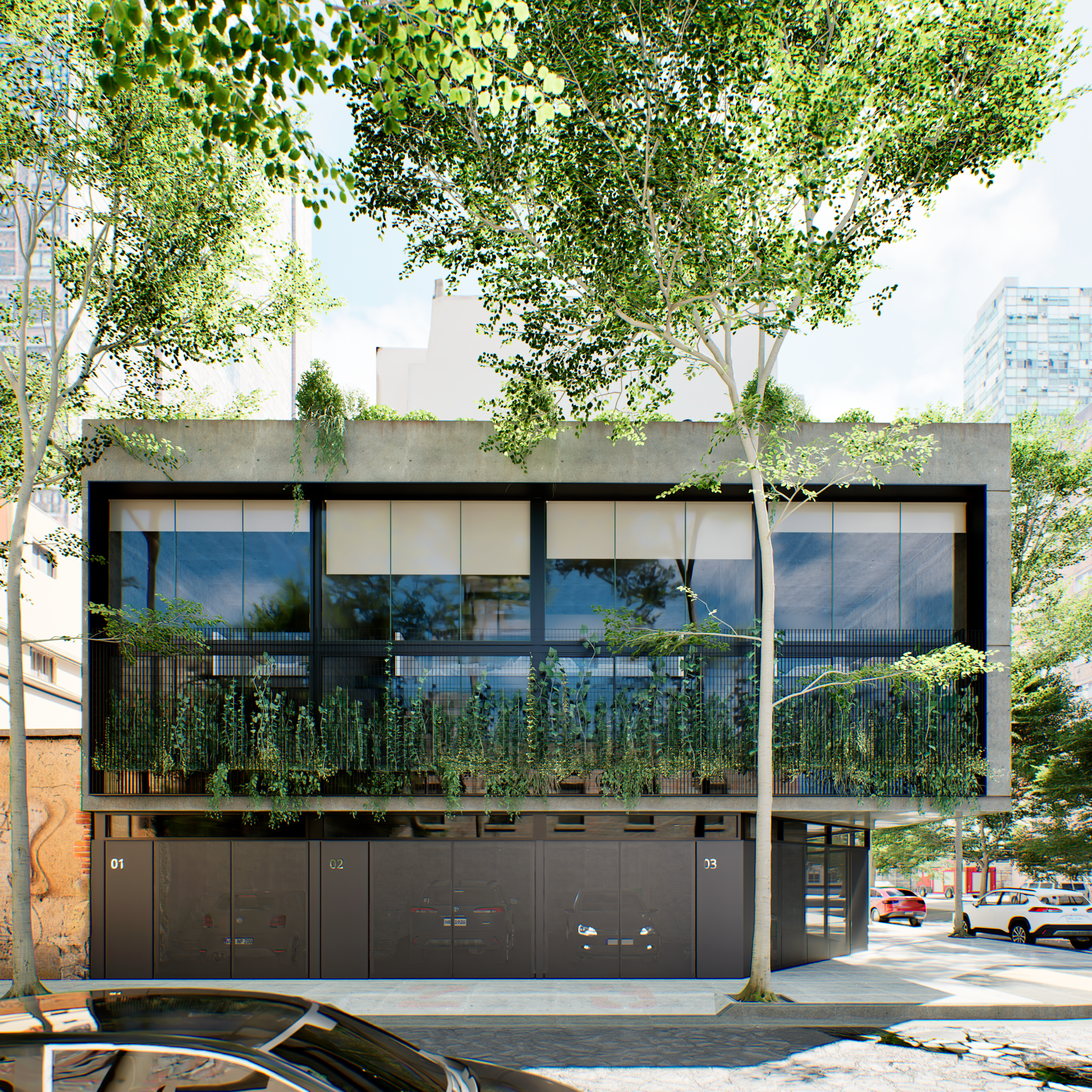
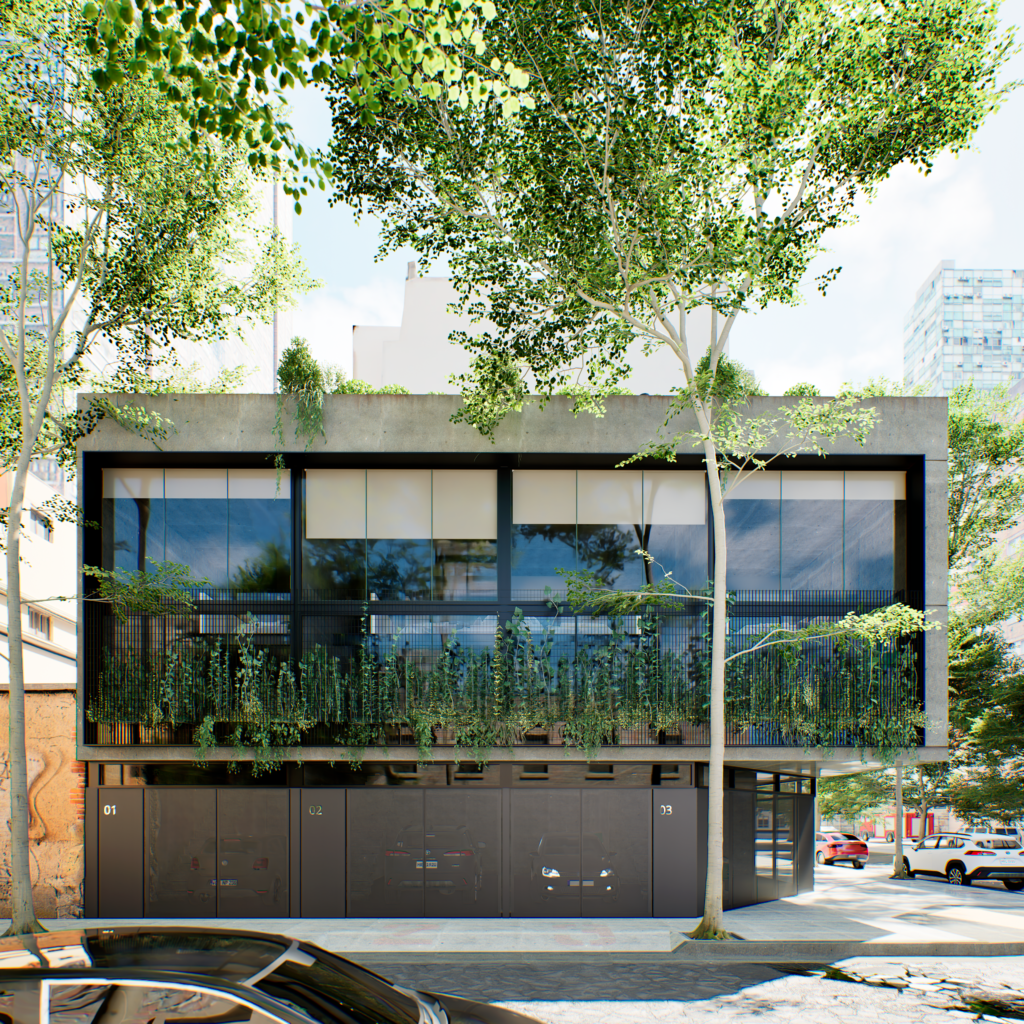
The ground floor functions as a contained and quiet urban threshold. Here the entrances, garages, and storage spaces are concentrated, while domestic life begins to build itself from the first level upward.
The decision to elevate the main spaces does not respond solely to functional or regulatory concerns. There is a more precise intention: to separate everyday experience from the city and build a more private and tranquil interior within a high-density urban environment.
As you climb the stairs, the perception changes abruptly. The city partly disappears and the views begin to connect with the treetops, the northeastern light, and the sky. The immediate urban space becomes more distant, quieter.
On the first level, the kitchen, dining room, and living area integrate into a single continuous space. The architecture avoids unnecessary compartmentalization and proposes a broad, versatile spatiality capable of adapting to different forms of daily use.
The double heights located alongside the facade deepen that sense of expansion even further. The section thus becomes the true organizer of the project: a device capable of multiplying spatial richness beyond what the floor plan alone would suggest.
More than working on the plan, the project was conceived through the section.
The vertical organization of each dwelling allows different degrees of intimacy to overlap without losing spatial continuity. The social area occupies the most open and luminous level; the bedrooms and intimate areas are located on the upper floors, with greater privacy and visual control from the unit.
The visual relationship between levels prevents the spaces from feeling isolated from one another. Light passes longitudinally through the dwelling, while cross-views expand the perception of the habitable space and build an enriched spatial continuity.
On the top level, the sequence culminates in a private terrace conceived as a direct extension of domestic life. An additional bedroom, laundry room, and barbecue area complete the program, giving each unit a usable and differentiated exterior surface.
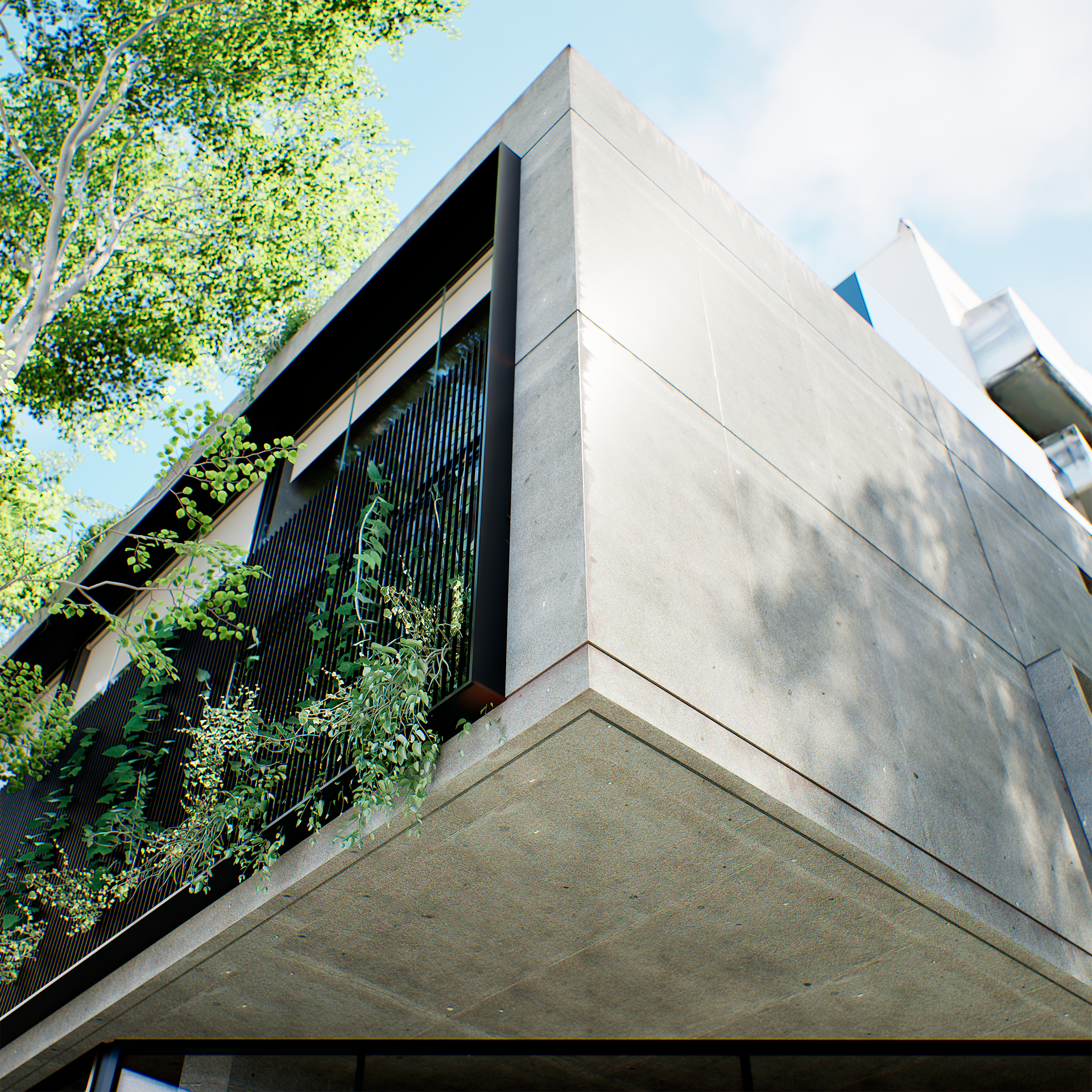
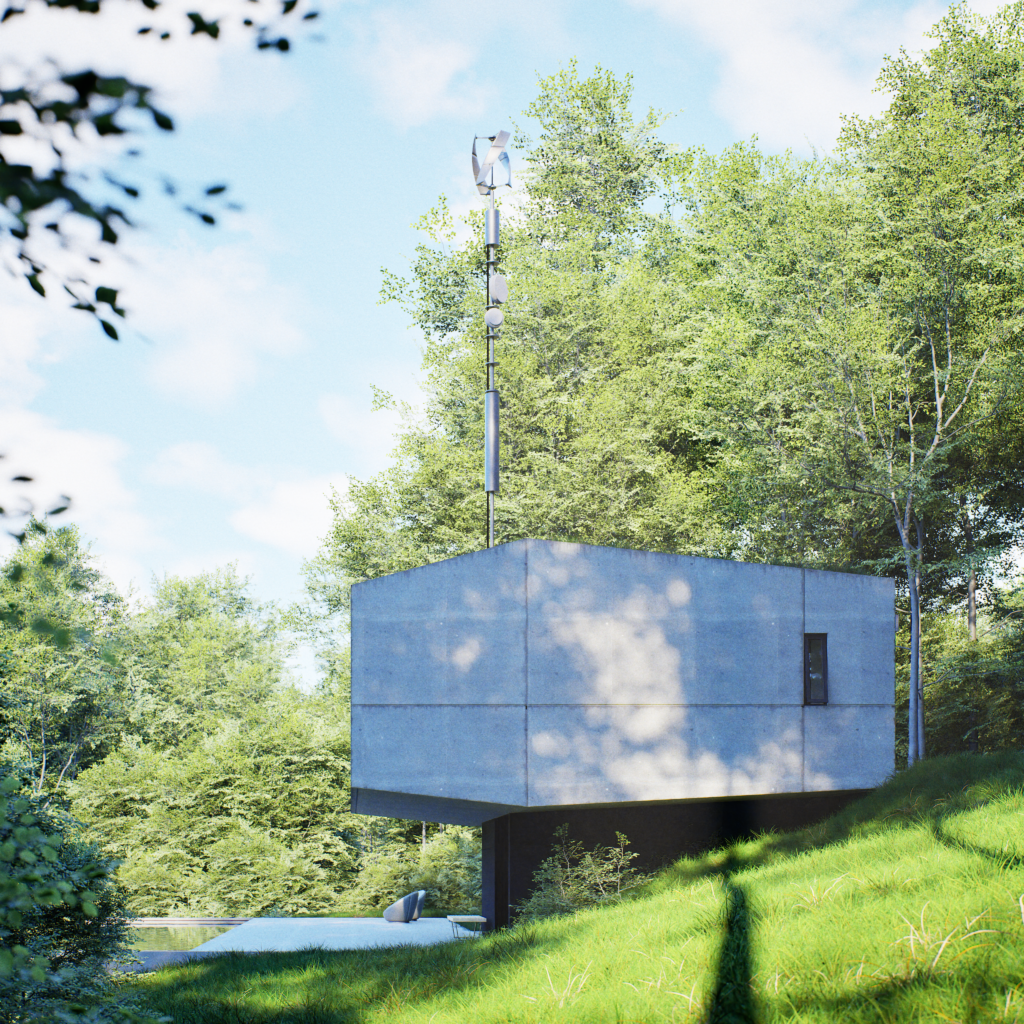
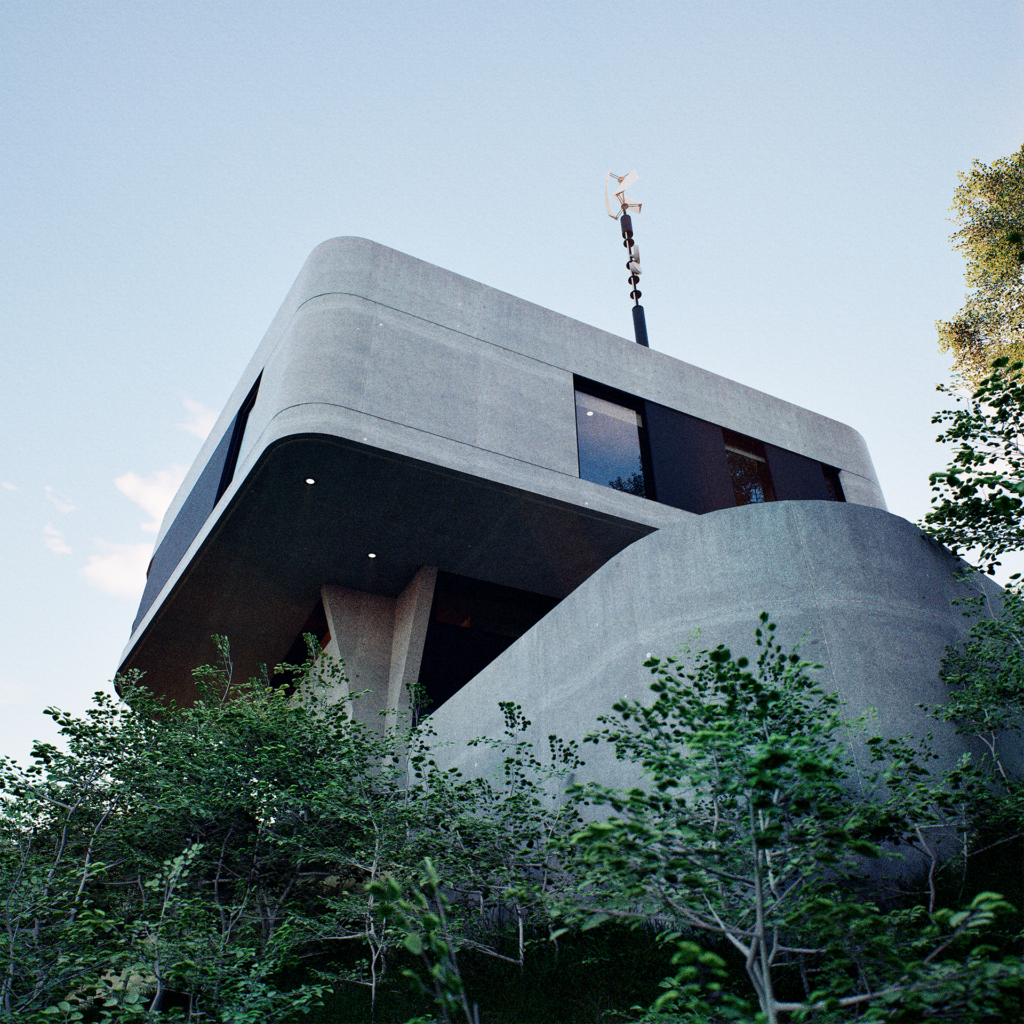
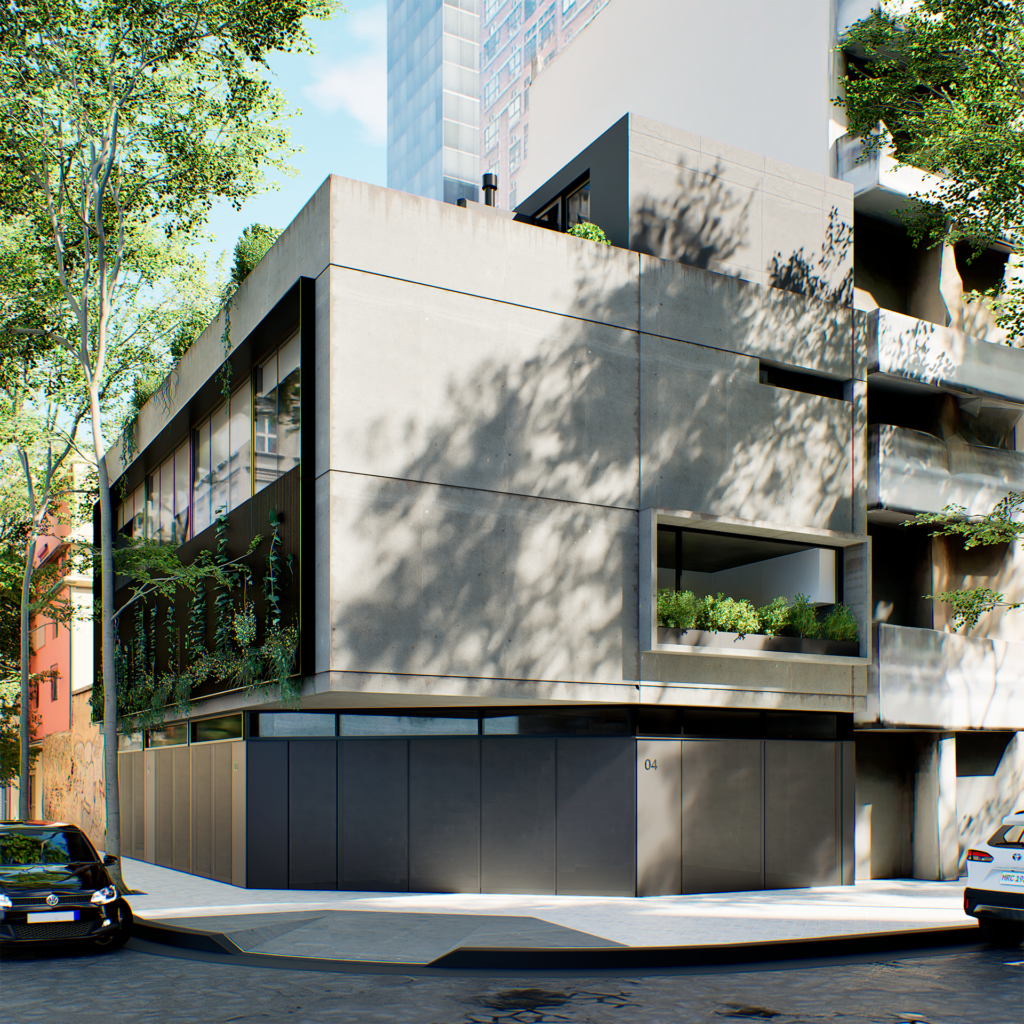
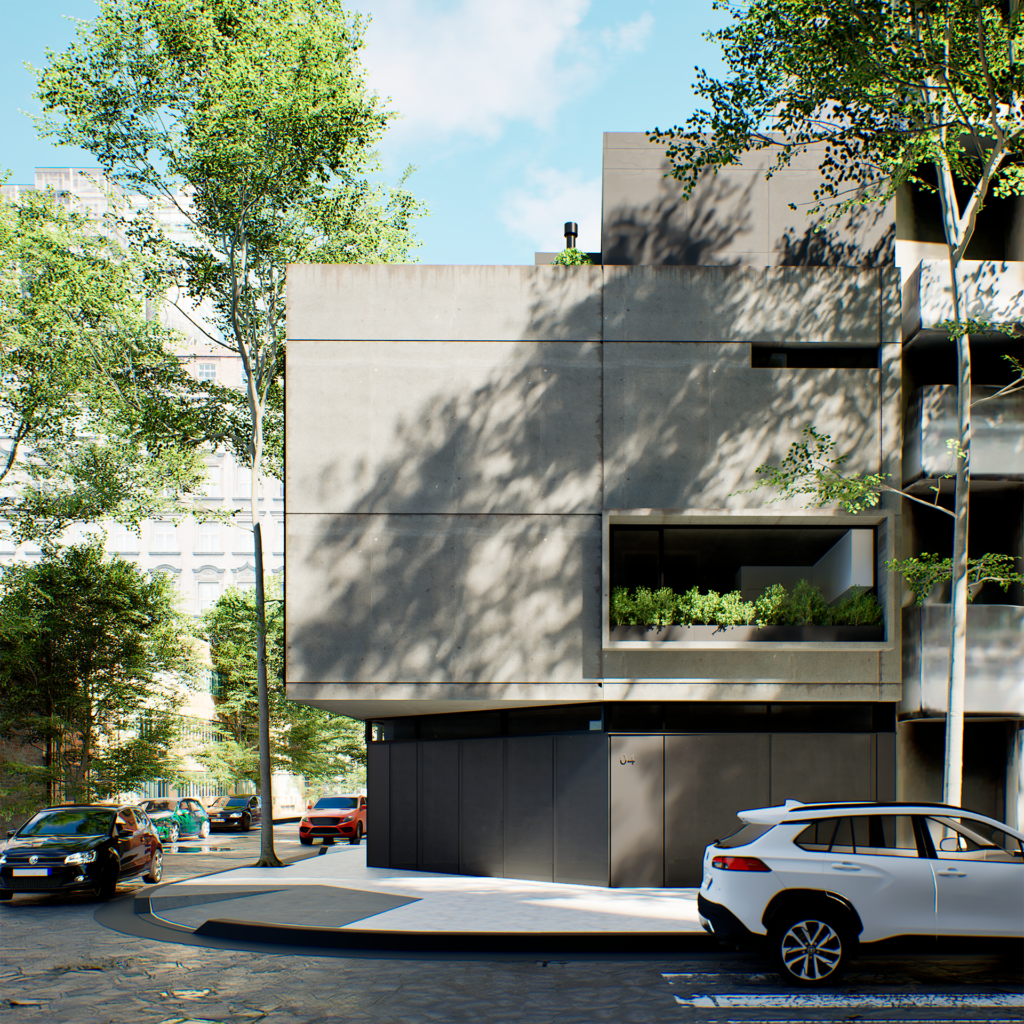
Volumetrically, the building presents itself as a monolithic concrete piece suspended above a dark, recessed base.
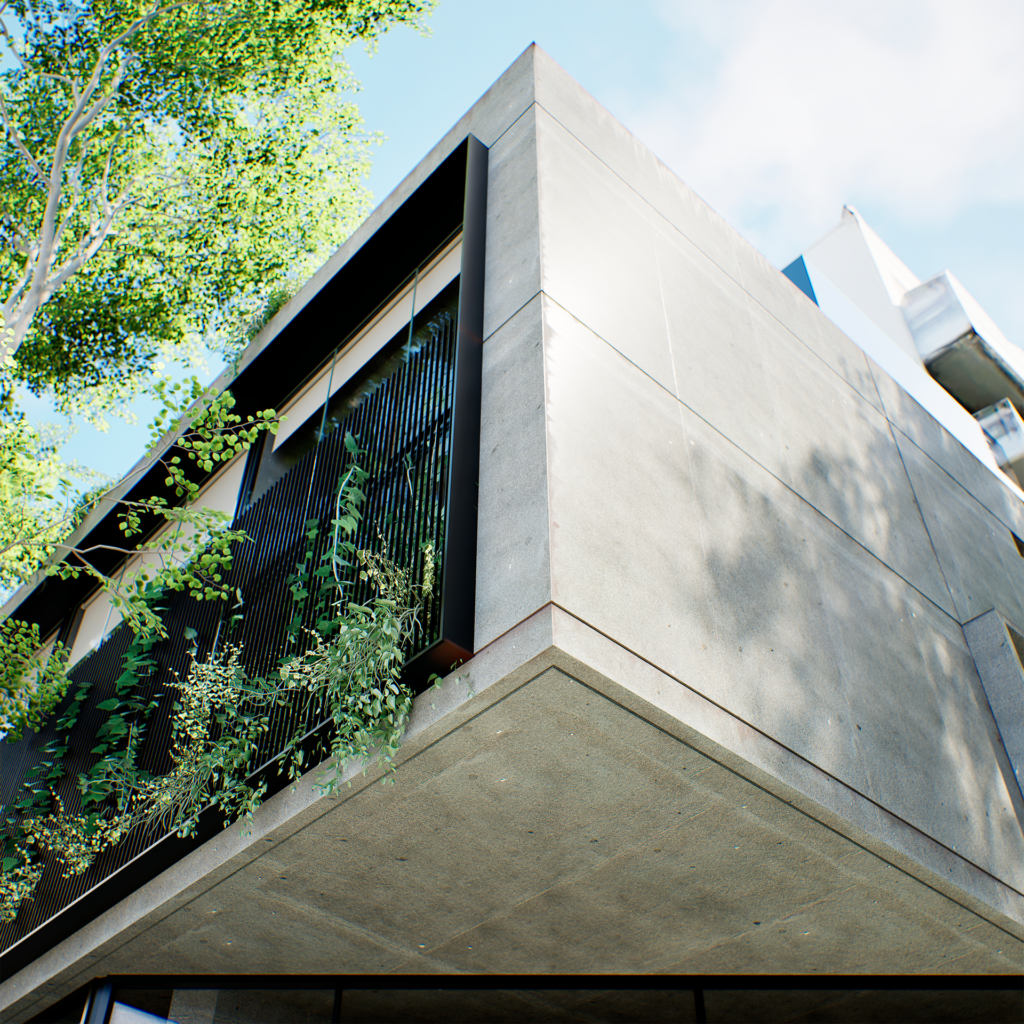
The large cantilever over the corner deliberately emphasizes the condition of weight and unstable balance of the ensemble. The architecture does not seek lightness; it seeks presence.
In relation to the neighboring buildings, the project responds through a robust and quiet materiality capable of holding its own within a much more intense urban scale without losing its own compositional logic.
Exposed concrete, dark aluminum, glass, and integrated vegetation build a contained and enduring language, where each material directly expresses its physical condition without resorting to unnecessary cladding or surface treatments.
The northeast-facing green facade plays a central role in this strategy. More than an ornamental gesture, it functions as a second environmental envelope capable of filtering light, reducing heat gain, incorporating biodiversity, and building an active visual relationship with public space.
The architecture thus becomes more ambiguous: heavy and permeable at the same time. Mineral toward the city, domestic toward the interior.
In an urban environment marked by accelerated growth and overlapping scales, the project proposes an alternative form of domestic density.
An architecture capable of absorbing the tensions between house and building, between intimacy and city, between expansion and compaction, using section, light, and vegetation as the project’s main tools.
 01 / 04